
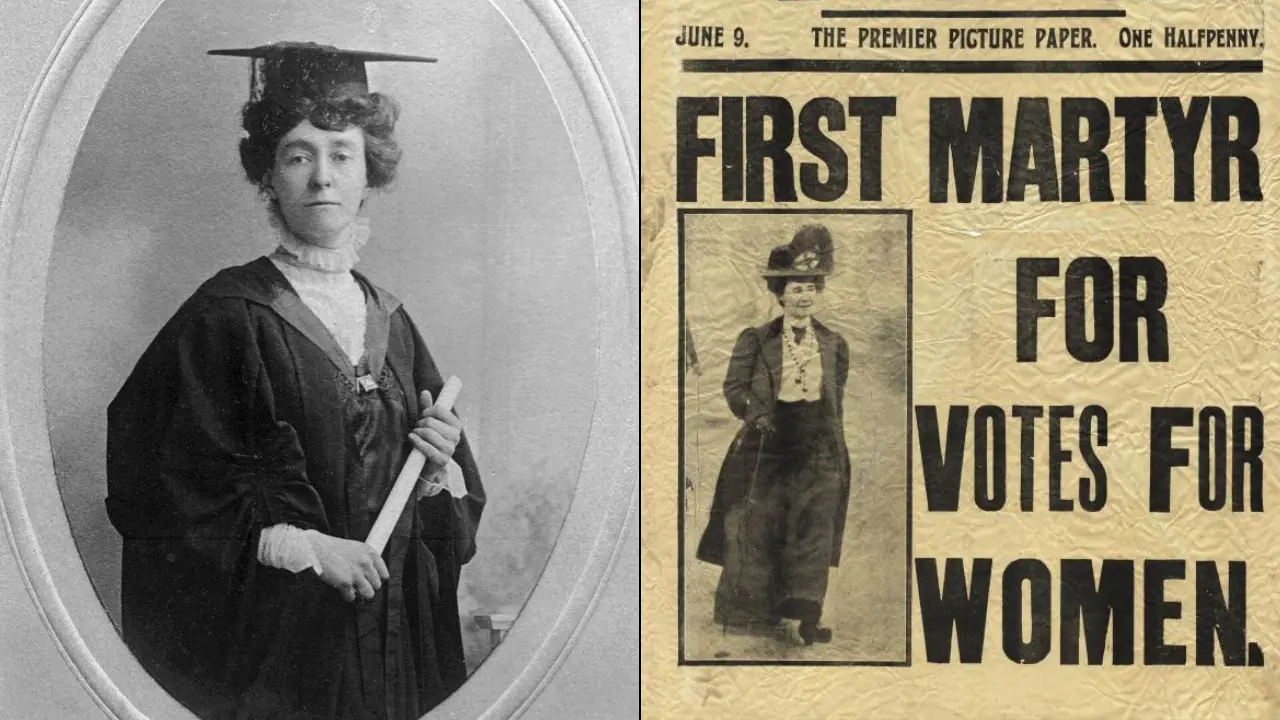
On June 4, 1913, Emily Wilding Davison ducked under a guardrail at the Epsom Derby and into the path of King George V’s horse Anmer. She died four days later without ever explaining why.
As the horses rounded Tattenham Corner on the afternoon of June 4, 1913, a 40-year-old woman slipped past the crowd and onto the open track. She reached toward the reins of a horse traveling at roughly 35 miles per hour. The horse’s chest struck her down. Four seconds after she stepped onto the course, Emily Wilding Davison had suffered the injury that would kill her, and she left behind no note, no confession, and no explanation.
She was carrying two suffragette flags in the colors of purple, white, and green. She was also carrying a return train ticket to London for that same afternoon.
A Governess Denied Her Own Degree
Davison was born on October 11, 1872, at Roxburgh House in Greenwich, southeast London, the third of four children born to Charles Davison, a merchant nearing 50, and his second wife, Margaret Caisley, then 23. Charles’s first marriage had produced nine children before his first wife’s death in 1866. Money was never secure in the household that followed.
Davison’s father died in early 1893, ending her studies at Royal Holloway College before she could finish. She went to work as a live-in governess, tutoring the children of wealthy families by day and studying by candlelight in the evenings. She saved enough to enroll for a single term at St Hugh’s College, Oxford, where she earned first-class honours in English literature. Oxford did not award degrees to women. She left with nothing but the grade.
She would spend nine more years teaching in Birmingham and Worthing before finally earning a degree from the University of London in 1908, third-class honours, sixteen years after the education that should have granted her one at Oxford.
Davison described herself, in her own later writing, as a Christian feminist who believed socialism was a moral force as much as a political one. She saw the vote not as a bureaucratic entitlement but as a kind of sacred inheritance, one she compared, in language borrowed from scripture, to a pearl worth selling everything to obtain. That framework, faith fused to militancy, would explain far more of her later choices than any single political grievance could.
In November 1906, while working as a private tutor, Davison joined the Women’s Social and Political Union.
The Suffragette Who Escalated Every Time
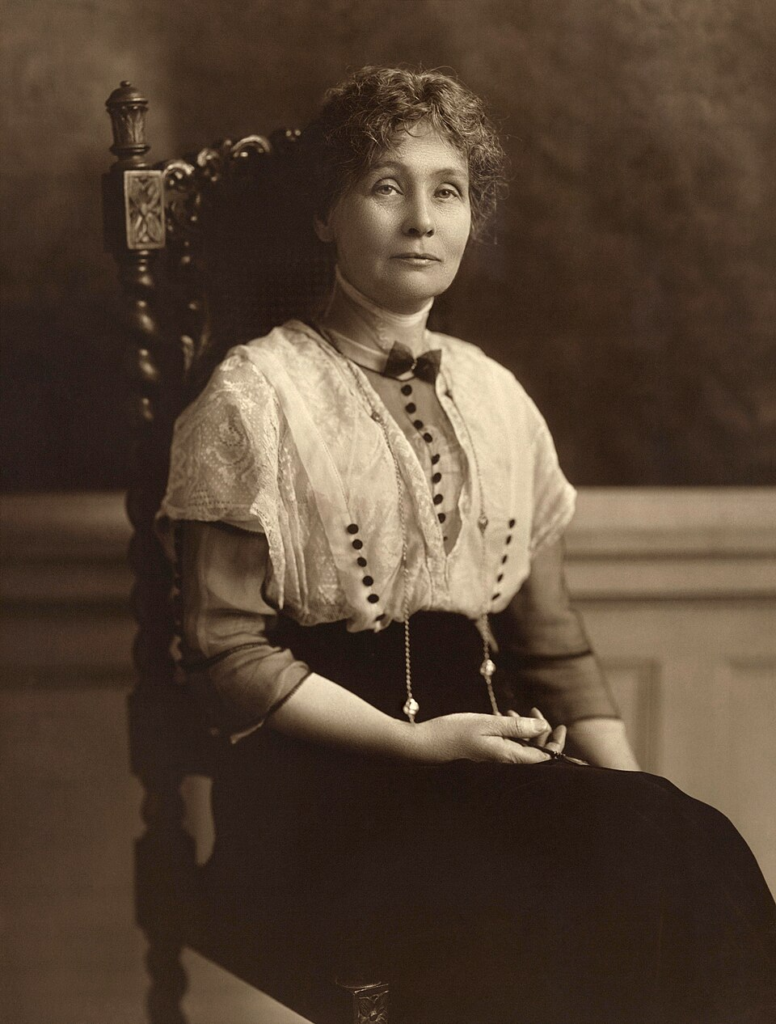
The WSPU had been founded in 1903 by Emmeline Pankhurst on the conviction that peaceful petitioning had failed women for a generation. Davison agreed, and then went further than most of her fellow suffragettes were willing to go.
Her militancy did not begin at full intensity. In 1909, after a hunger strike at Strangeways prison, Davison barricaded herself inside her cell to avoid a second force-feeding. Prison staff broke a windowpane and turned a fire hose on her for fifteen minutes until the cell stood six inches deep in water. She sued the prison authorities and was awarded 40 shillings in damages, a small legal victory against a government that had just tried to drown her into submission.
The turning point came in November 1910. A WSPU delegation of roughly 300 women attempted to deliver a petition to Prime Minister Asquith and were met with an aggressive police response that suffragettes later described as sexual assault by another name. Davison was not among the 122 people arrested that day, later remembered as Black Friday, but she was incensed by it. The following morning she broke several windows at the Crown Office in Parliament, an act of retaliation that marked her shift from stone-throwing to sustained arson.
She set fire to postboxes beginning in December 1911, a tactic she pioneered within the movement. On three separate occasions she broke into the Palace of Westminster and hid overnight, once concealing herself inside a cupboard in St Mary Undercroft, the chapel beneath the chamber, so that she would not be recorded in the 1911 census. A cleaner eventually found her and reported her presence. She was arrested but never charged, and in a twist she likely appreciated, the Clerk of Works filled out a census form listing her anyway, while her landlady separately recorded her as present at her lodgings. The woman who tried to vanish from the record was counted twice.
In November 1912, mistaking a Baptist minister on a stationary train at Aberdeen railway station for the Chancellor David Lloyd George, she struck him with a horsewhip.
The government’s response hardened as her tactics did. Davison was arrested nine times. She went on hunger strike seven times. She was force-fed on forty-nine occasions, a practice she later described as leaving her “haunted” by its horror for the rest of her life.
In June 1912, after being force-fed at Holloway Prison, Davison climbed an interior staircase and threw herself onto a wire safety net some twenty to thirty feet below. “One big tragedy may save many others,” she wrote afterward, calling the act a deliberate protest against forced feeding rather than a genuine attempt at death. She cracked two vertebrae and badly injured her head.
She survived. The injury left her in discomfort for the rest of her life, which would last just one more year.
Four Seconds at Tattenham Corner
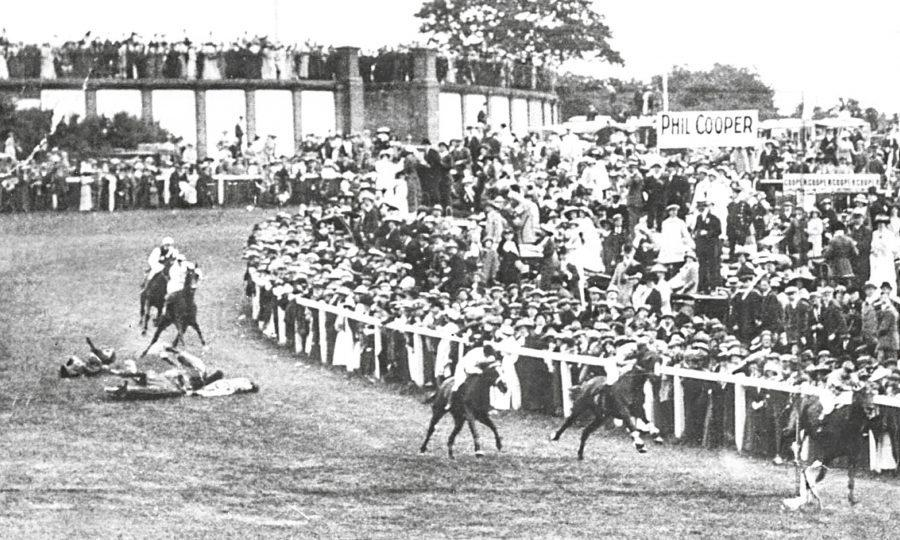
Davison arrived at Epsom on June 4, 1913, having collected two WSPU flags from the union’s offices that morning. She positioned herself at Tattenham Corner, the final bend before the home straight, and waited as the field of horses passed.
Then she ducked under the rail.
She reached for the reins of Anmer, ridden by jockey Herbert Jones and owned by King George V, who watched from the royal box with Queen Mary. The horse struck her and fell, partially rolling over Jones in the process. Bystanders rushed the track. Davison was carried, unconscious, to Epsom Cottage Hospital.
She regained partial consciousness before surgeons operated on her two days later. She never recovered. On June 8, 1913, Emily Wilding Davison died of a fracture at the base of her skull.
Among her effects, police found both suffragette flags, still folded and pinned inside her jacket. They also found the return half of her train ticket to London, a ticket to a suffragette dance planned for that same evening, and a diary with appointments penned in for the following week.
A Motive She Took to Her Grave
Davison told no one what she intended to do at Epsom, and the not knowing has shaped every account of her life written since.
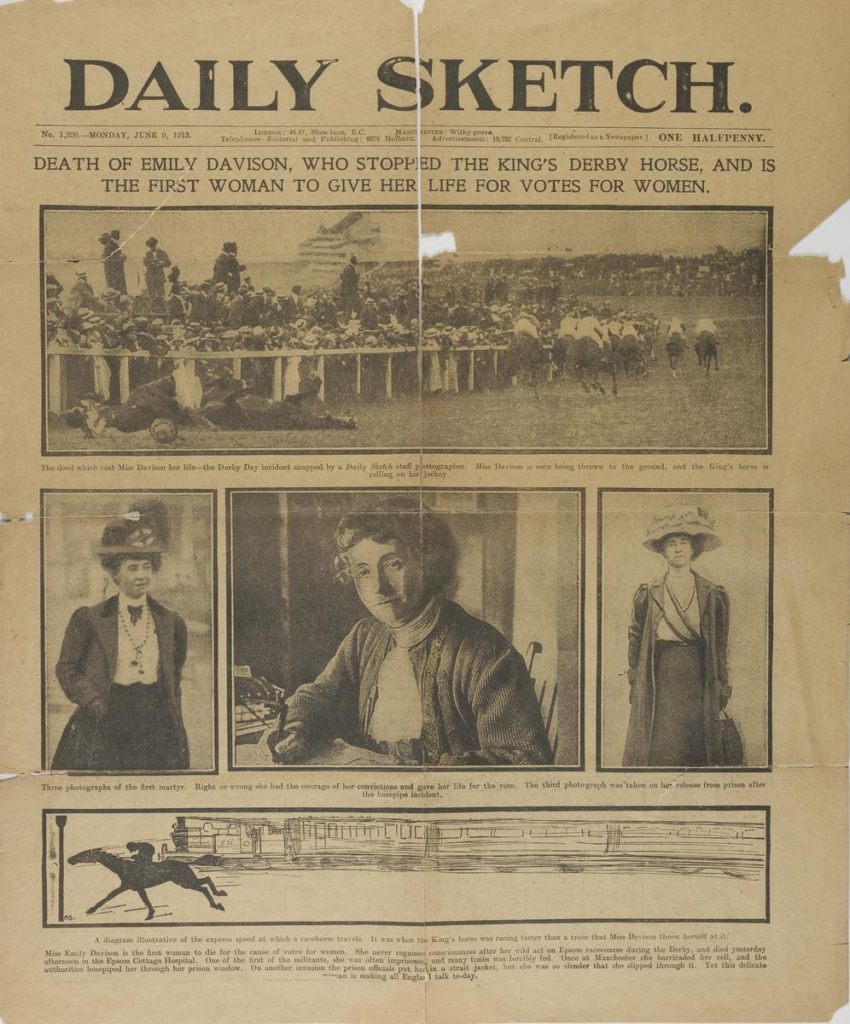
The contemporary press was largely unsympathetic. The Pall Mall Gazette wrote of “the dementia which led an unfortunate woman to seek a grotesque and meaningless kind of martyrdom.” Queen Mary, in her private journal, called Davison a “horrid woman.” The coroner’s inquest returned a verdict of “misadventure,” finding no evidence that she had specifically targeted the King’s horse or intended to die.
A century later, historians remain divided on what those four seconds meant. In 2013, a Channel 4 documentary digitized the original nitrate newsreel footage from three cameras present at the race and concluded that Davison had likely meant to throw a flag around a horse’s neck or fasten it to a bridle, not to kill herself. One flag reportedly recovered from the course was later auctioned and now hangs in the Houses of Parliament, though the horse-racing historian Michael Tanner has publicly doubted its authenticity, noting discrepancies between the item’s dimensions and the flags police actually catalogued among Davison’s possessions. Even the physical evidence of that day remains contested.
Biographers June Purvis, along with Ann Morley and Liz Stanley, have separately concluded she did not mean to die. A devout Anglican, Davison held beliefs that would have barred her from burial in consecrated ground had her death been ruled a suicide. Others who knew her, including fellow suffragette Cicely Hale, called her a fanatic prepared to die for the cause even if death was not her specific plan that afternoon.
No one has resolved it. The train ticket in her pocket argues for a woman who expected to go home. The decade of escalating, self-endangering protest argues for a woman who had already decided her body was a weapon she was willing to spend.
The Vote That Came After
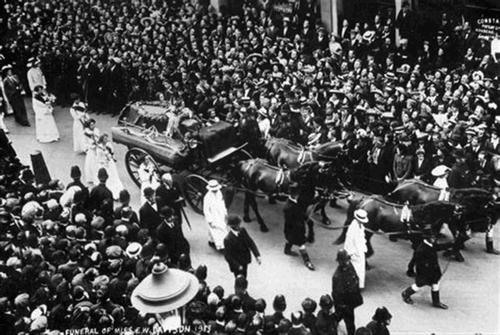
Davison’s funeral, on June 14, 1913, drew 50,000 people who lined the route between Victoria and King’s Cross stations in London. Emmeline Pankhurst had planned to march in the procession herself, but police arrested her that same morning under the Cat and Mouse Act, a law built to return hunger-striking suffragettes to prison the moment they regained enough strength to be seen in public. Even Davison’s funeral could not pass without the government making its point. Her coffin was carried north to Morpeth, Northumberland, for burial, inscribed with the words “Fight on. God will give the victory.”
Five years later, Parliament passed the Representation of the People Act of 1918, granting the vote to women over 30 who met property qualifications. A decade after that, the Equal Franchise Act of 1928 extended the vote to all women over 21 on the same terms as men, closing a gap that had defined Davison’s entire adult life.
Her name did not fade with the century. A play was staged in Northumberland in 1968. An opera bearing her first name premiered in 2013, the year of her centenary, and a cantata followed in 2018. She appears in the 2015 film Suffragette, and her name is etched into the plinth of the Millicent Fawcett statue that has stood in Parliament Square since 2018. In 2021, a bronze statue of Davison by sculptor Christine Charlesworth was installed in the Epsom marketplace, near the ground where she fell. The Women’s Library at the London School of Economics still holds her personal papers, along with the objects recovered from the scene of her death.
She never wrote down what she meant to do at Tattenham Corner. Whatever she intended, the flags stayed pinned inside her jacket, never reaching the horse at all.
Leave a Reply