
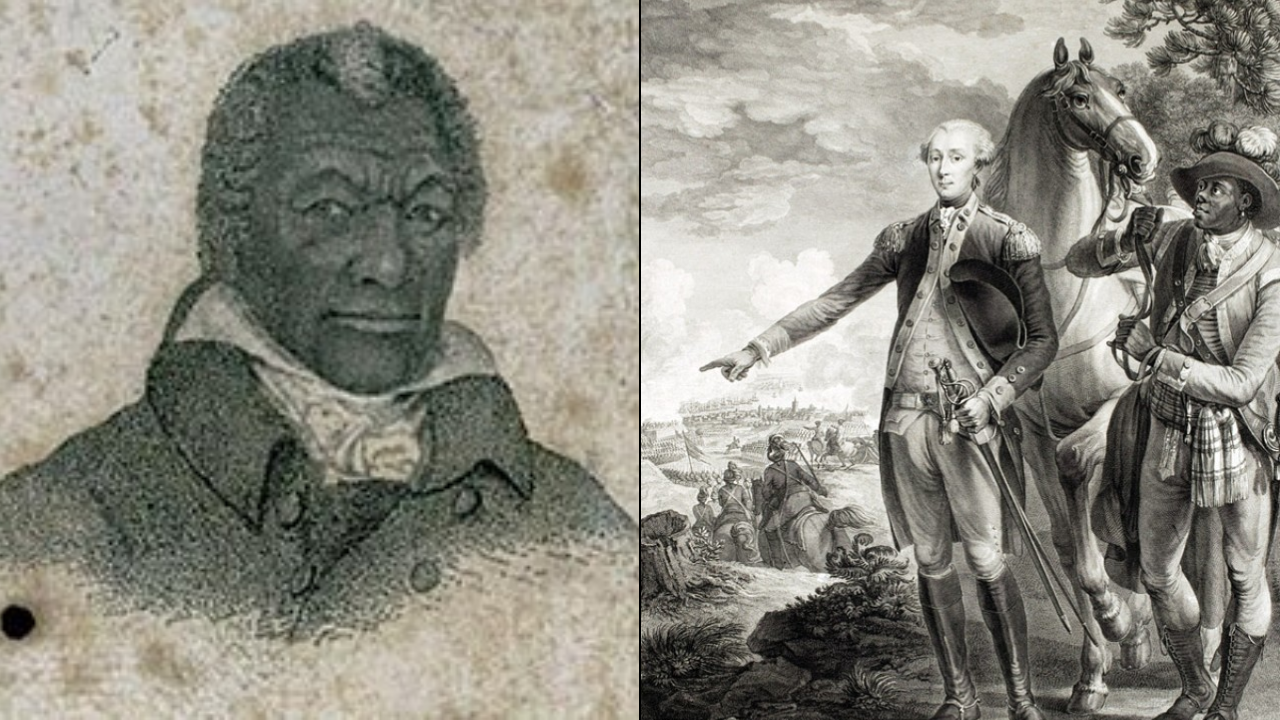
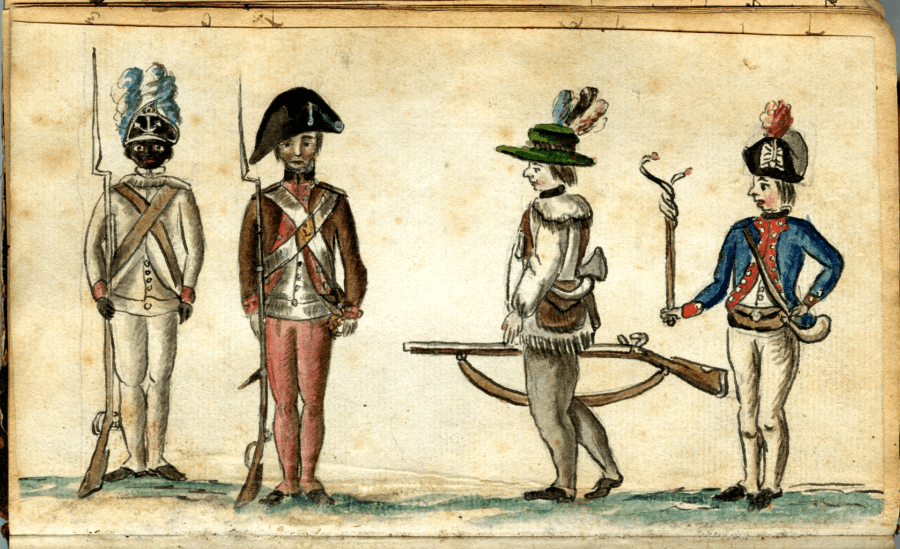
On October 19, 1781, a column of British soldiers marched onto a field north of Yorktown, Virginia, to perform the ceremony of defeat. General Charles Cornwallis, citing illness, had sent his second-in-command to deliver the surrendered sword in his place. The assembled officers on the victorious American side included the Marquis de Lafayette and General George Washington, men whose names the history books would preserve in careful detail. Standing among them, in a Continental Army uniform, was a black man named James Armistead.
The British soldiers would have recognized his face. For the past several months, many of them had assumed he was one of their own assets, an enslaved man who had defected from the Patriot side to spy for the Crown. They had trusted him with troop movements, supply routes, and the private discussions of their commanding general.
Every piece of intelligence they had received from him in return was a lie.
New Kent
James was born into slavery sometime in the mid-1700s, most likely between 1748 and 1760, on the New Kent County plantation of William Armistead in southeastern Virginia, roughly midway between Williamsburg and Richmond. His parentage is unknown. His early life is largely undocumented, as was the case for nearly all enslaved people of the era, with one significant exception: he received an education.
William Armistead was a committed Patriot who sold livestock and provisions to the Continental Army. He had grown up alongside James, both raised in the household of Colonel John Armistead, and Virginia law, unlike that of the Carolinas, did not prohibit the education of enslaved people. James was taught to read and write, reportedly in both English and French. William likely calculated the investment as a way to increase the value of his property. He could not have anticipated what James would eventually do with it.
In 1775, Virginia’s Royal Governor Lord Dunmore issued a proclamation that any enslaved man who defected to the British Army would receive his freedom. The offer was not humanitarian. It was strategic, designed to drain the Patriot cause of its labor force while bolstering British ranks. Thousands of enslaved people across the colonies took Dunmore’s offer, calculating that a guaranteed freedom under the Crown was worth more than the uncertain promises of a revolution whose own Declaration of Independence had failed to extend its stated ideals to them. For James, with a wife, young children, and a master who was not cruel, the gamble carried real risk. He did not take it. Something else was coming.
A choice without guarantees
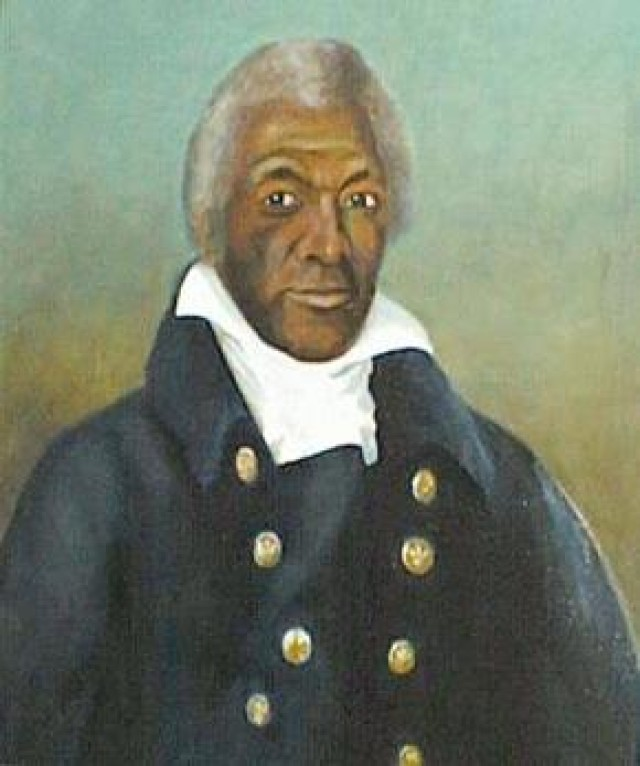
When Lafayette made his proposal to James in March 1781, he was not in a position to offer guarantees. He could not promise freedom. He could not promise survival. What he could offer was a mission and a friendship, and James had to decide whether either was worth the risk.
The choice was not as simple as it appeared from the outside. The British Empire had offered enslaved people a concrete path to liberty in exchange for loyalty to the Crown. America had offered them nothing, voicing its commitment to freedom and inalienable rights in sweeping language while maintaining the institution of slavery that held James, his wife, and his children in servitude. To serve the Continental cause was to serve a nation that, by any reasonable measure, had not yet earned his allegiance.
James chose to serve it anyway. His reasons were his own, and he left few writings to explain them. What the record does show is that he trusted Lafayette, a man whose public commitment to the rights of the individual person extended, unusually for the era, to people who looked like James. That trust was not given carelessly. It was a calculated bet on a specific friendship, made in full knowledge of what failure would mean.
The Marquis’s offer
The Marquis de Lafayette had arrived in Virginia in the spring of 1781 to command Continental forces against a British campaign that had been ravaging the state for months. Leading those British raids was Benedict Arnold, the American general who had defected to the Crown in 1780 and was now directing attacks on Virginia’s towns, supply depots, and plantations. Arnold’s operations had destabilized the region, and Lafayette’s mandate was to contain them and defend the state against the larger British force under General Cornwallis pressing in from the south.
Lafayette was a French nobleman who had volunteered to fight under Washington and was known publicly for his opposition to slavery, a conviction rooted in his belief in natural law and the rights of the individual. That conviction would later find him a role in drafting the Declaration of the Rights of Man and a central place in the French Revolution. In Virginia in 1781, it found him a spy.
He recognized in James what other officers had overlooked. The young enslaved man’s literacy, his encyclopedic knowledge of Virginia’s roads and terrain between Williamsburg and Richmond, and what Lafayette would later describe as his exceptional intelligence made him not a useful soldier but something far more valuable. In March 1781, the Marquis proposed that James cross into British lines, posing as a runaway slave seeking the freedom Dunmore’s proclamation had promised, and work as a double agent from inside the British camp.
The operation carried a specific danger beyond the standard risk of capture. James could carry no papers identifying him as a Continental operative, since being found with such documents would mean immediate execution. But carrying no papers also meant he had no proof of his true loyalties if questioned. He would be entirely at the mercy of whatever the British chose to believe about him. For a black man caught spying in the service of the rebellion, the mercy of the British Army was not something to count on.
He accepted.
The invisible man
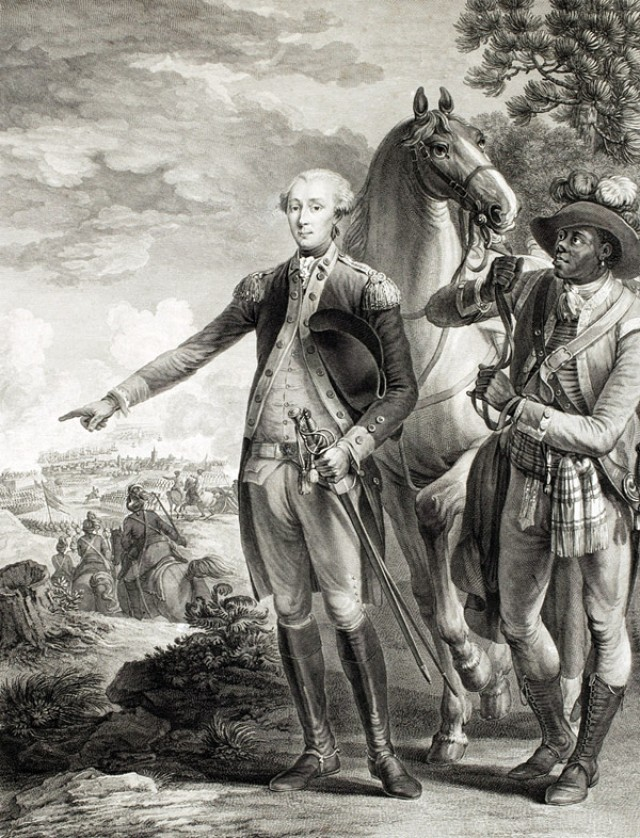
James crossed into British territory with nothing but his wits and the racial assumptions of the men he was about to deceive. The British needed men and local intelligence, particularly men who knew the land. An educated, literate black man who had apparently defected from a Patriot household and who could navigate every road between Williamsburg and Richmond was exactly the asset they were looking for. They accepted him without serious question.
He was put to work as a servant, the role he had filled his entire life, and the role that gave him access to nearly everything. This was the operational heart of James’s value, and it rested on something the British officer class did not even recognize as a vulnerability: the assumption that enslaved servants were invisible. In the tents and meeting rooms where officers gathered to plan, the men pouring drinks and carrying messages were treated as furniture. Nobody lowered their voice when a servant entered the room. Nobody paused a sensitive discussion because a black man was nearby. The people with the most accurate picture of British intentions were the people the British command had decided were not worth noticing.
James noticed everything.
He worked his way up from general servant to courier for Benedict Arnold, carrying dispatches between British commanders as Arnold’s Virginia raids continued. When Arnold’s role was superseded by General Cornwallis, James came into the orbit of the British campaign’s most senior commander in North America. He carried communications for Cornwallis, attended his meetings, and moved through the general’s headquarters as freely as any officer on the staff.
Cornwallis was a veteran of the Seven Years’ War and a major architect of British operations in North America, most notably the decisive Crown victory over Patriot forces at the Battle of Camden in 1780. He was also a British aristocrat whose views on race were typical of England’s upper classes of the period, which is to say he considered enslaved people to be beneath serious consideration. That view, which in other contexts was merely prejudice, was in this context a fatal operational blind spot. A general who did not consider black men worth heeding would never suspect one of running the longest and most damaging intelligence operation of the entire war.
When the British sent James into Continental Army camps to gather intelligence on Patriot supply lines and troop movements, he arrived in those camps, told Lafayette and the Continental officers everything he had learned from the British side, received false information carefully constructed by American commanders, and carried that disinformation back to Cornwallis as genuine. Every piece of intelligence Cornwallis received from James about Patriot movements was fabricated. Every piece James carried back about British plans was real.
Cornwallis trusted him completely.
The tide turns
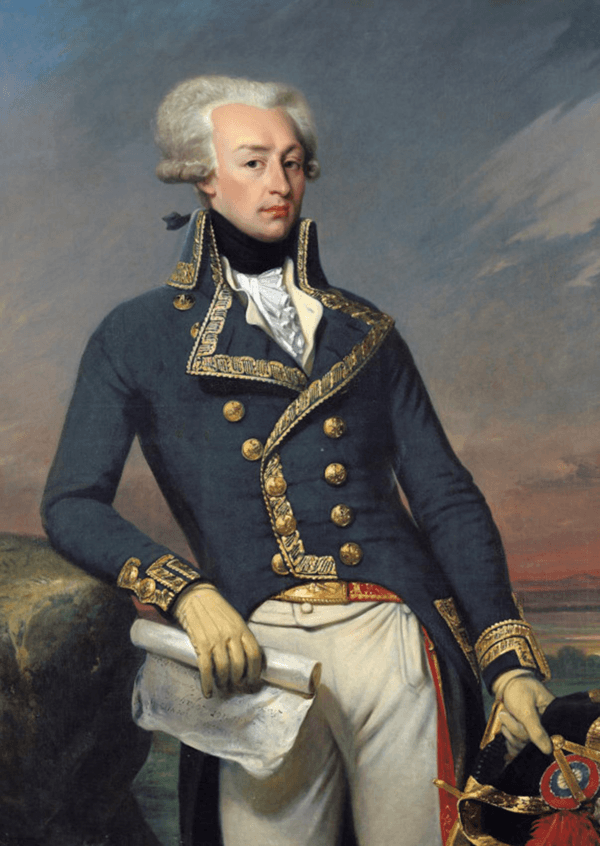
In August 1781, James discovered that Cornwallis was planning to move his forces from Portsmouth to Yorktown on the Virginia peninsula, where the general expected to receive reinforcements and supplies through the Chesapeake Bay. Cornwallis believed the move would give the British a defensible position and a reliable sea-based supply line that the Continental Army, fighting on land, could not easily cut. He also believed his intelligence on American and French intentions was sound.
James passed the information to Lafayette immediately.
The trap that followed depended entirely on the British not knowing it was coming. The French navy moved to blockade the Chesapeake Bay, sailing to cut off any possibility of British relief or resupply by sea. Without that naval corridor, Yorktown was not a stronghold. It was a peninsula with no exit. The Continental Army advanced by land simultaneously, digging siege trenches less than a thousand yards from the British lines and opening a sustained artillery bombardment. On the night of October 14, Lieutenant Colonel Alexander Hamilton led a ground assault on key British fortifications. Cornwallis, surrounded by land and blockaded by sea, with no reinforcements coming from New York and no viable route of escape, surrendered on October 19, 1781.
Without the intelligence James had provided, the French navy would have had no reason to position itself in the Chesapeake at that moment. Cornwallis would have received his reinforcements. The Yorktown operation, which depended entirely on sealing the British in before they could be resupplied, might well have failed. The opportunity to end the war would have slipped through Patriot fingers.
The defeat cost the British approximately a third of their entire force in North America and broke the will of the Crown to continue fighting. The Treaty of Paris, signed in 1783, formally ended the conflict.
James Armistead had helped win it.
Shortly after the surrender, Cornwallis made a visit to Yorktown to settle the terms of the British withdrawal. He encountered James, now in Continental uniform, standing with the American officers. The general, by one account, looked at him and said: “Ah, you rogue, then you have been playing me a trick all this time.”
He had.
Still enslaved
James returned to William Armistead’s plantation in New Kent, where he resumed his prior work as a serving man. The nation he had helped create did not extend its liberty to him. Virginia law, codified since 1723, held that slaveholders could not free their enslaved people without the approval of the governor and council, reserved by statute for those who had performed “meritorious services.” In 1782, the Virginia legislature passed an act extending that standard to enslaved people who had served as soldiers in the Revolution.
James had never been a soldier. He had been a spy. And the very nature of his work as a spy was what excluded him from the law that should have freed him. He had carried no papers, worn no uniform, and declared no official identity, not out of negligence but out of operational necessity. The clandestine requirements that made him effective were now, legally, the reason he could not be freed. He returned to servitude as a direct result of having served his country too well.
He remained enslaved for five years.
William Armistead, who held a seat in the Virginia House of Delegates for part of that period and actively supported James’s freedom, pressed the legislature repeatedly. The machinery did not move. The state had drawn its boundary around the word “soldier,” and no amount of evidence that James’s contribution had surpassed that of most soldiers appeared sufficient to move it.
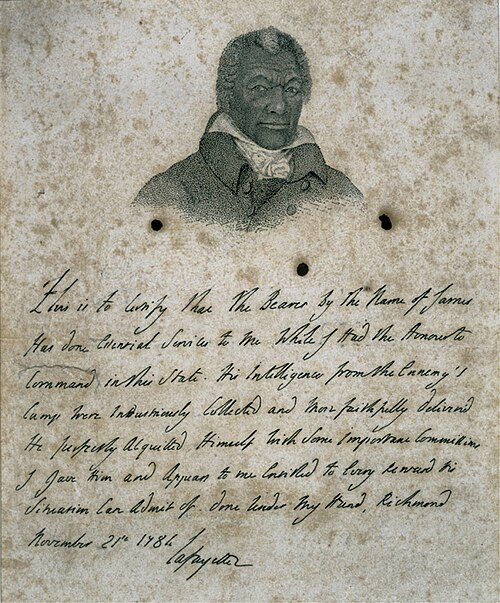
Lafayette was incensed. In 1784, he wrote to the Virginia legislature on his friend’s behalf. “This is to certify that the bearer by the name of James has done essential services to me while I had the honour to command in this state,” he wrote. “His intelligences from the enemy’s camp were industriously collected and faithfully delivered. He perfectly acquitted himself with some important commissions I gave him and appears to me entitled to every reward his situation can admit of.”
A letter from one of the most celebrated commanders in the Revolution, testifying in explicit terms to James’s wartime contribution, moved the legislature where five years of petitions had not. On January 9, 1787, the Virginia governor signed the act granting James his freedom. The state compensated William Armistead 250 pounds for the loss of his slave. James had spent five years waiting to be free after the war he helped win was already over.
Freedom, finally
James settled on a farm in eastern Virginia near William Armistead’s land in New Kent. He raised his family, built a prosperous life as a landowner, and drew a pension for his wartime service. He eventually came to own slaves himself, a fact that sits uncomfortably alongside his own history, and one historians note was not uncommon among freed Black landowners in the antebellum South, navigating a society in which slavery was also the dominant path to economic security for those who could access it. His choice does not resolve easily, and it was not meant to.
In 1824, Lafayette returned to the United States on a celebrated tour of the country he had helped liberate. He visited Yorktown, the ground where James’s intelligence had made the decisive victory possible. James was there to meet him. The two men had not seen each other since the war. The reunion, by contemporary accounts, was a warm one. James was so moved by what Lafayette had meant to him across the decades, from the original offer of the espionage mission to the letter that had finally secured his freedom, that he took the Marquis’s name as his own. From that point forward, he was James Armistead Lafayette.
He died in the early 1830s, reportedly in his early seventies, surrounded by his family. His final resting place has never been located.
At Yorktown, where the intelligence he gathered set the terms of the British defeat and, with it, the end of the Revolutionary War, the history plaques describe artillery positions and troop movements. The name of the man who made those movements possible does not appear on most of them.
Leave a Reply