
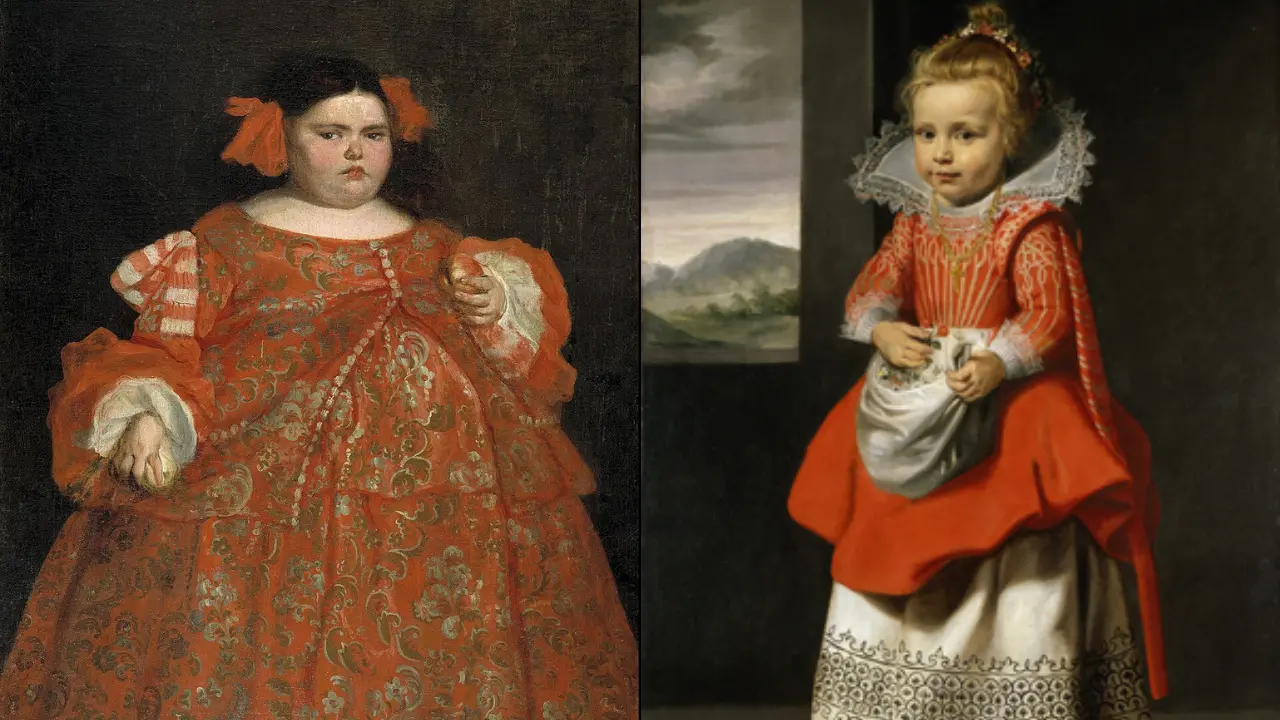
In 1680, a royal messenger arrived at a farmhouse in rural Burgos to summon a six-year-old girl to the court of Charles II of Spain. She would never live at home again. Two centuries later, the paintings made of her still hang in Madrid’s Prado museum, and she is still called by the name the court gave her: La Monstrua.
A messenger from the royal household arrived at the Martínez Vallejo farmhouse in 1680 with a request few peasant families could refuse. The Spanish king wanted to see their daughter. Eugenia was six years old.
Her parents did not know why. Perhaps they believed the crown could cure her. What waited for her in Madrid was not medicine.
A Birth in Church Foreshadows Her Fame
Eugenia Martínez Vallejo was born in 1674 in Merindad de Montija, a remote settlement in the province of Burgos in northern Spain. Her mother, Antonia de la Bodega, went into labor unexpectedly one Sunday morning during Mass. There was no time to get home. Eugenia was born inside the church itself.
At the time, an unplanned birth on consecrated ground during a religious service was widely interpreted as a sign of divine favor rather than misfortune, a mark that the child arriving this way was destined for something notable. The Spanish scholar María Jesús Jabato has suggested this belief may explain her name: Eugenia, from the Greek for “well born.”
As an infant, Eugenia was healthy and ate well, and in the 17th century a plump baby girl was considered a good sign rather than a cause for concern. Heavier frames in women were associated with fertility and, in some cases, wealth. Her parents had no reason to worry.
Then she kept growing.
By her first birthday, Eugenia weighed roughly 25 kilograms, several times the weight of a typical infant. Her siblings grew at an ordinary pace. Hers did not. A physician was consulted and prescribed a strict diet, the standard 17th-century medical response to unexplained weight gain, since the underlying genetic cause of her condition was centuries away from being understood. Restricting food was the only remedy available to a doctor who had no other framework for what he was seeing. It did nothing to slow what was happening to her body.
As Eugenia’s size continued to increase, her neighbors ridiculed her, and her parents began keeping her inside the house to shield her from the harassment she faced whenever she went outdoors. It made little difference. Word of “the giant girl” spread to nearby villages, and strangers began showing up at the family’s door hoping to see her for themselves.
By age six, she weighed approximately 70 kilograms. She spent most of her time confined to her room, away from the eyes of the people who came to gawk.
Her isolation ended the moment her fame reached the capital.
Charles II Summons Her to Court
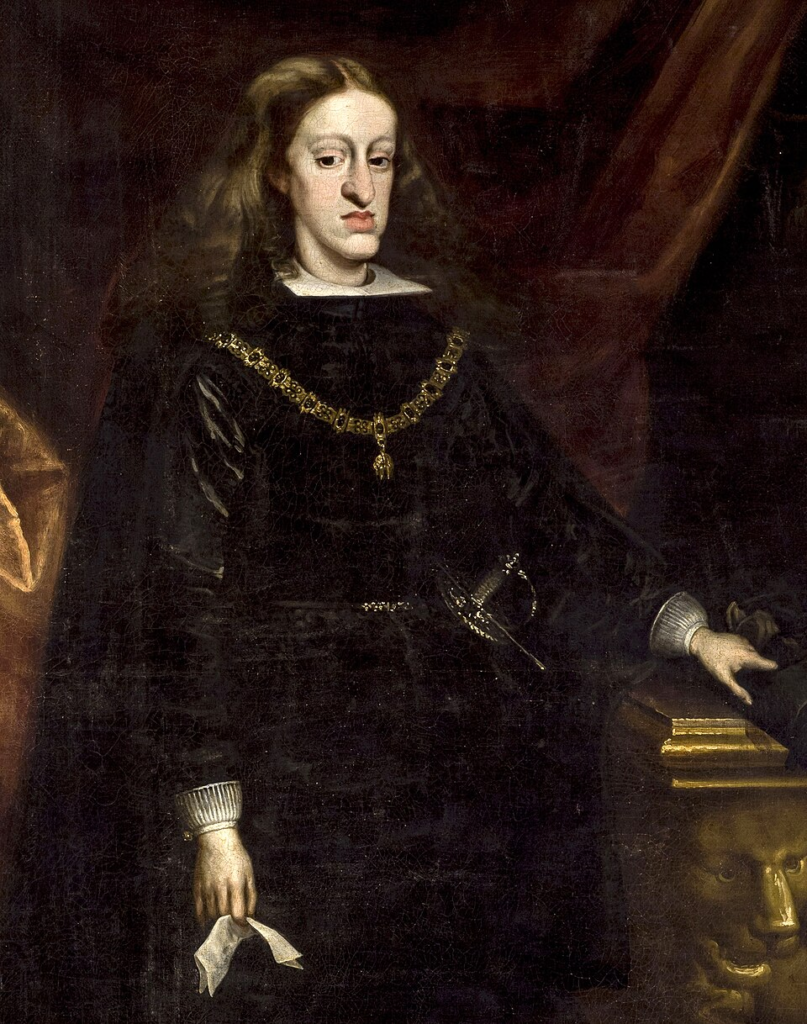
News of Eugenia’s size traveled far enough to reach King Charles II of Spain, known to history as “the Bewitched,” a nickname rooted in the severe physical ailments widely attributed at the time to generations of Habsburg intermarriage. A king whose own body was already a subject of court fascination and rumor took a particular interest in a six-year-old whose body drew the same reaction from strangers. Intrigued, he sent for her. In 1680, Eugenia arrived in Madrid with her parents. A royal tailor fitted her for a formal dress before she was brought before the king.
Charles II was reportedly fascinated. He proposed that she remain at court permanently. Her parents, with little standing to refuse a king, agreed.
The invitation was not an act of charity. Since medieval times, European royal courts had kept people with unusual appearances, disabilities, or behavior for entertainment, a practice the Spanish court called gente de placer, “people of pleasure.” The group included jesters, people of short stature, and people with visible disabilities or mental illness.
Their presence served a second, quieter function beyond amusement: by keeping bodies the era considered abnormal visibly nearby, the court reinforced, by contrast, the idea that its own rulers, disabilities and all, remained the natural and superior order of things. Eugenia was absorbed into this arrangement.
She received no recorded wages for her presence at court, though she was fed, clothed, and sheltered, comforts most Spanish peasants of the era did not have. She and others like her lived entirely at the discretion of their lords, who could dismiss them without warning or compensation.
Two Portraits Turn Her Into a Curiosity
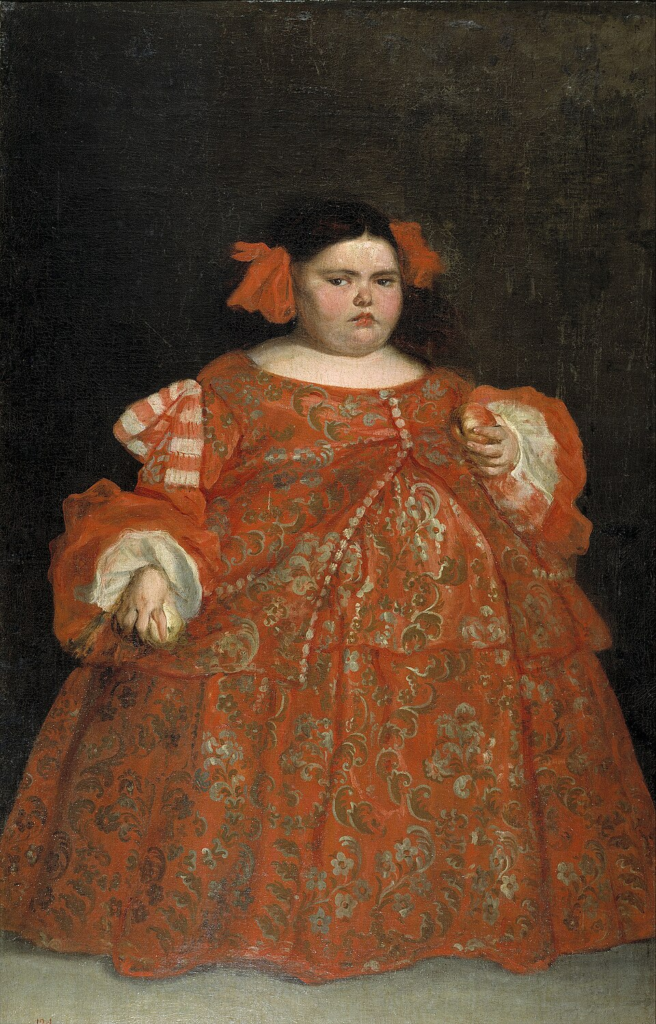
What set Eugenia apart from others at court was Charles II’s decision to commission not one but two full portraits of her from Juan Carreño de Miranda, the era’s leading Baroque court painter. One portrait shows her clothed. The other shows her nude. The pairing was not an artistic flourish. Clothed-and-nude portrait sets were a documentary convention the court used specifically to record bodies it regarded as marvels of nature, treating Eugenia less as a portrait subject than as a specimen to be catalogued from every angle.
Both paintings still hang side by side in Madrid’s Museo del Prado, titled The Monster, Dressed and The Monster, Nude.
A chronicler of the period, Juan Cabezas, described her arrival at court in a published pamphlet, calling her one of the “prodigies of nature” to have reached the Spanish capital. In his account, she was pale and not unpleasant to look at, though her head, stomach, and limbs were, in his words, disproportionately large, a description that closely tracks what is now understood as a distinct clinical presentation rather than simple childhood obesity.
In both paintings, Eugenia appears uncomfortable. Historians have noted that her condition likely made it physically painful to hold a pose for the length of time formal portraiture required.
She was not the only person exploited this way. Charles II’s father, Philip IV, is known to have kept a large retinue of court dwarfs during his reign, part of the same pattern of using unusual bodies to visually reinforce the ruling dynasty’s own claim to normalcy and superiority.
A Modern Diagnosis Arrives Centuries Late
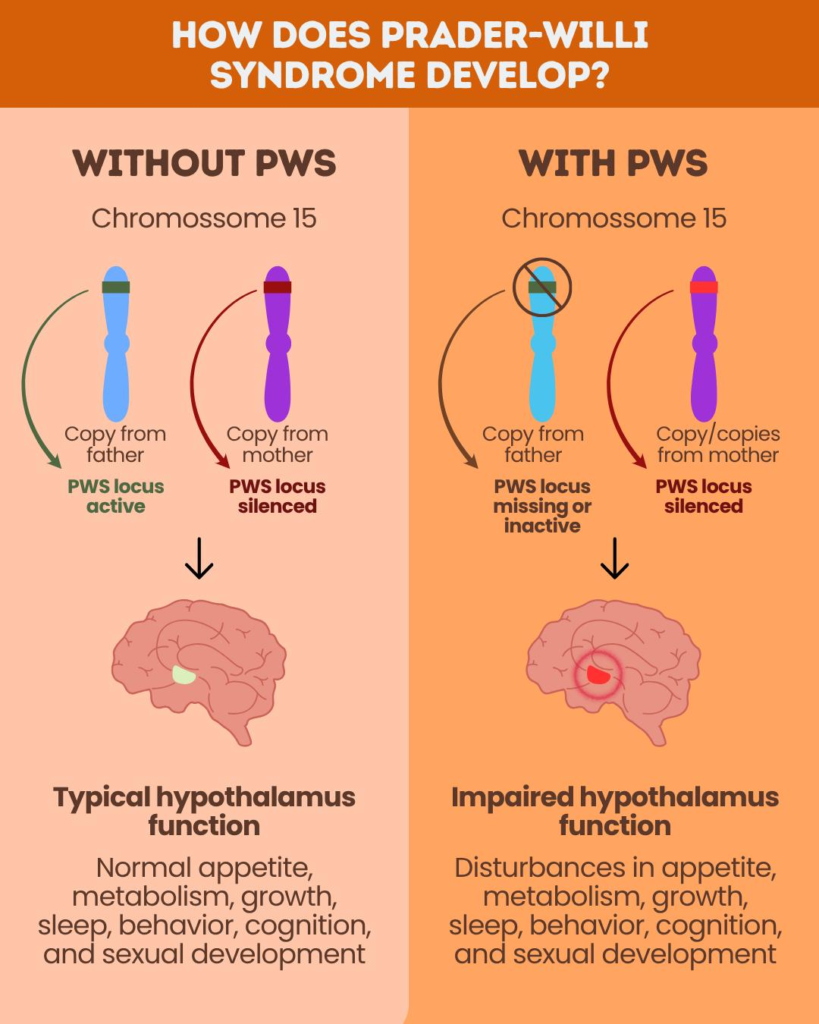
No one at the Spanish court understood what caused Eugenia’s size. Today, researchers believe she likely had Prader-Willi syndrome, a genetic condition caused by the loss of function of specific genes on chromosome 15. The syndrome produces a persistent, unrelenting hunger that can lead to severe obesity, alongside a cluster of physical traits including a narrow forehead, small hands and feet, and hormonal disruptions that commonly prevent affected individuals from reaching puberty or having children.
Nearly every element of that clinical picture appears somewhere in the contemporary record: Cabezas’s description of her disproportionately large head and stomach, the account of her difficulty walking and quick exhaustion, and the report that she never menstruated. No single detail proves the diagnosis on its own, but together they form a pattern consistent enough that historians treat Prader-Willi syndrome as the most likely explanation, while stopping short of certainty a modern genetic test would be needed to confirm.
Despite the mockery that shaped her daily life, she is described as having been well liked at court, remembered as good-natured even into adulthood.
Eugenia Martínez Vallejo died in 1699, at 24 or 25 years old. The cause of her death and the location of her remains were never recorded, a final erasure that mirrors how little agency she was ever permitted over how her own body was seen, displayed, or explained.
Legacy & Close
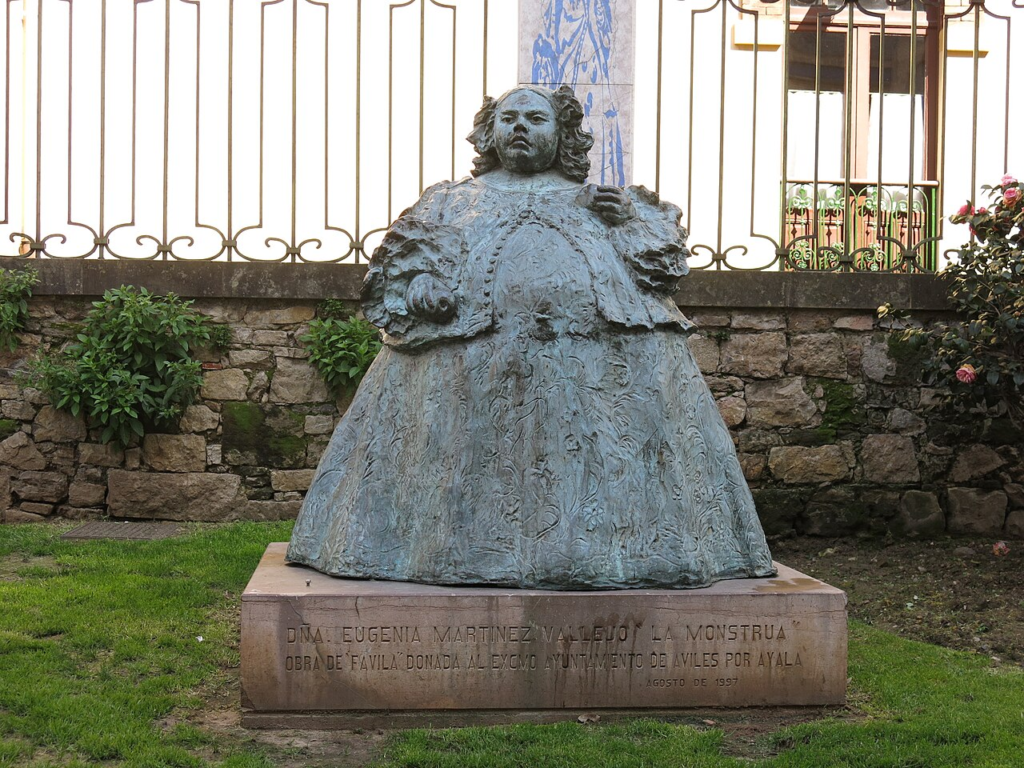
Nearly three hundred years later, in 1997, the city of Avilés commissioned a bronze statue of Eugenia from sculptor Amado González Hevia, modeled on Carreño de Miranda’s clothed portrait, honoring the painter’s local legacy rather than Eugenia’s own life.
It stands today along Calle Carreño Miranda, a minor tourist attraction in a city she likely never visited.
The two paintings that made her a curiosity in her own lifetime remain on public view in the Prado, hung exactly as Charles II intended: side by side, clothed and nude, for anyone to look at.
They are still looking.
Leave a Reply