
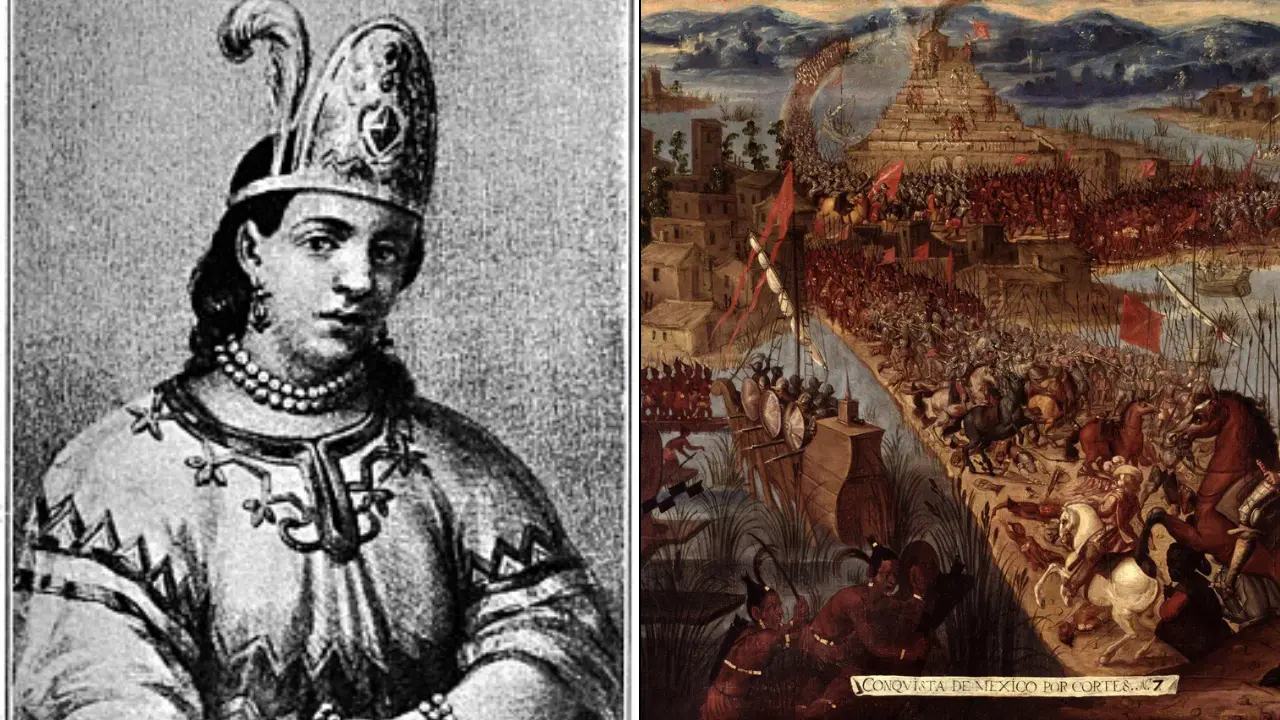
Around 1519, a Nahua noblewoman’s daughter, enslaved as a child and traded across hundreds of miles, became the sole interpreter between Hernán Cortés and Moctezuma II, and the woman Mexico would blame for the fall of an empire.
On November 8, 1519, on the great southern causeway leading into Tenochtitlan, the two most consequential men in the Americas faced each other for the first time. Hernán Cortés, commander of the Spanish expedition, stood at one end. Moctezuma II, emperor of the Aztecs, stood at the other. Between them stood a young Nahua woman who had been enslaved as a child, sold across hundreds of miles, and handed to the Spanish as a gift less than a year earlier. She was the only reason either man could have spoken a single intelligible word to the other. The Nahua called her Malintzin. The Spanish called her Doña Marina. The country her translations helped build would name treachery after her.
Slavery Claims a Noblewoman’s Daughter
She was born around 1500, most likely in the altepetl of Olutla, near the Coatzacoalcos River on the Gulf Coast of what is now southern Mexico. Her family, according to the Spanish soldier Bernal Díaz del Castillo, who later chronicled the conquest in The True History of the Conquest of New Spain, was of noble background; her father was reportedly related to a local ruler.
Her actual birth name is not known with certainty. Accounts from the 19th century claimed she was named after the Aztec day sign Malinalli, but modern historians have largely rejected this as mythic invention: the Nahua associated the Malinalli sign with ill omen and were known to avoid using day signs as personal names.
She was somewhere between eight and twelve years old when she was enslaved. Díaz del Castillo attributed this to a stepfather who wished to secure an inheritance for another child, though historians treat his account with caution. He wrote decades after the events, and his narrative is shaped throughout by Catholic providential framing that casts her enslavement as the prelude to a larger divine plan.
What the record confirms is where she ended up. She was taken first to Xicalango, a major Gulf Coast trading port, then purchased by Chontal Maya traders and brought to Potonchán in the Tabasco region. Living among the Maya, she learned Chontal Maya and probably Yucatec Maya, adding them to her native Nahuatl.
She was becoming, without any way of knowing it, the most linguistically consequential enslaved person on the continent.
Cortés Takes Marina from His Own Captain
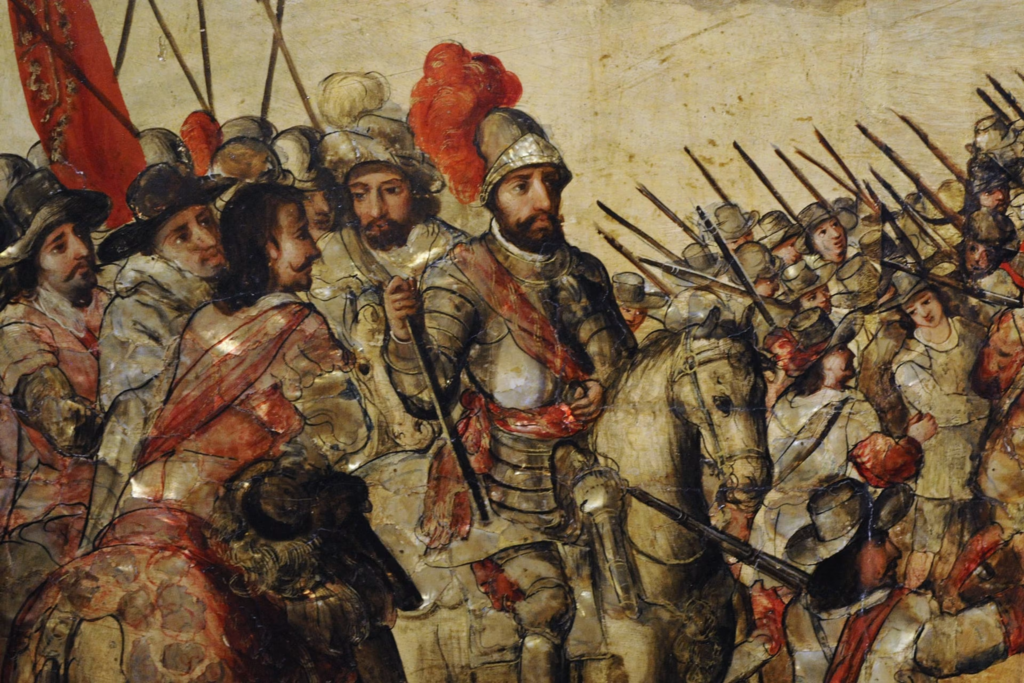
In early 1519, Hernán Cortés led a Spanish expedition from the colony of Cuba toward the Mexican mainland, determined to reach the Aztec capital he had heard described by the first Spanish explorers the year before. When he arrived at Potonchán, the Chontal Maya people, having lost an initial military engagement, sued for peace and presented the Spaniards with gifts: food, gold, and twenty enslaved women. Marina, baptized and renamed upon her conversion to Christianity, was among them.
She was given to Alonso Hernández Puertocarrero, one of Cortés’s senior officers, and attracted no particular attention.The discovery that altered everything came weeks later. When the expedition reached San Juan de Ulúa and encountered Nahuatl-speaking emissaries from Moctezuma II, Cortés turned to his existing interpreter: Gerónimo de Aguilar, a Spanish soldier who had been shipwrecked near the Yucatan coast in 1511 and spent eight years among the Maya before the expedition retrieved him. Aguilar spoke Yucatec Maya.
He could not understand a word of Nahuatl. Marina could. Cortés immediately reclaimed her from Puertocarrero. The communication chain that followed was extraordinary in its complexity: Cortés spoke Spanish to Aguilar, who rendered it into Yucatec Maya for Marina, who translated into Nahuatl for the Aztec emissaries, before the entire process reversed. The historian Frances Karttunen has observed that it was something of a miracle the arrangement worked at all.
It worked. And within months, Marina had learned sufficient Spanish to translate directly. The chain collapsed to a single link. She was now irreplaceable.
Malintzin Negotiates the Alliance That Breaks an Empire
Cortés’s expedition numbered in the hundreds. The Aztec Empire extracted tribute from dozens of subject peoples across central Mexico, many of whom resented Aztec rule with particular bitterness, especially the obligation to provide human tributes for the sacrificial ceremonies at Tenochtitlan. If Cortés was to take the capital, he needed those peoples as military allies. Marina was the mechanism through which he secured them.
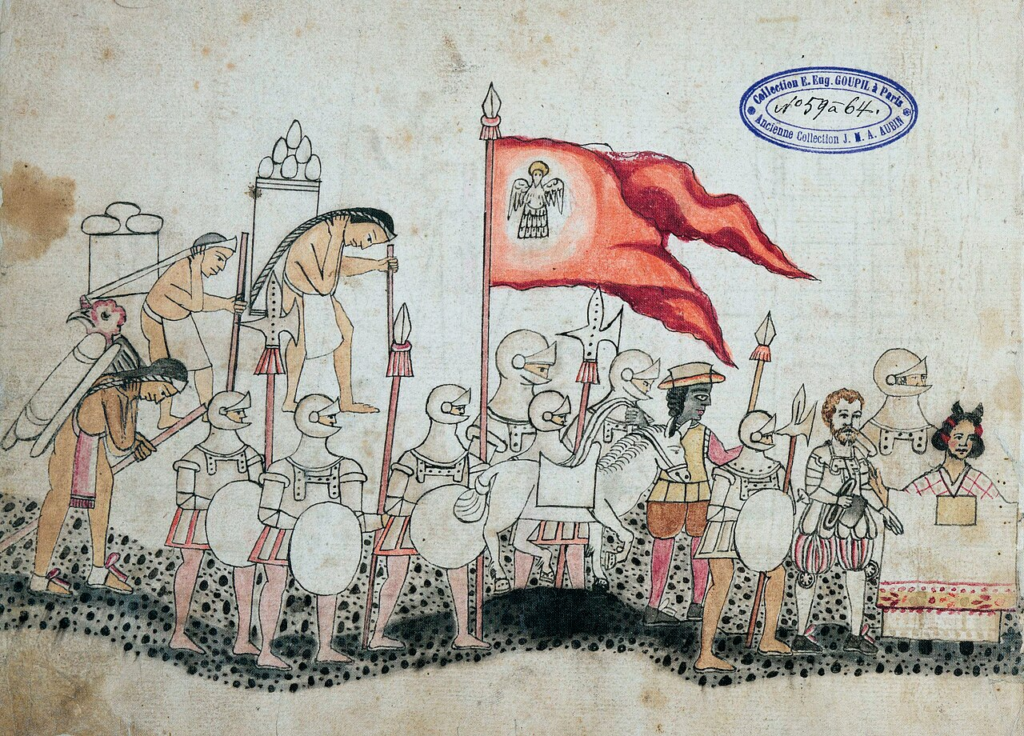
She translated the terms of the alliance with the Tlaxcalans, the most powerful subject state to join the Spanish cause. Later Tlaxcalan visual records of the negotiations are unambiguous: she appears not as a background figure but as a directing authority, depicted larger than some of the Spanish officers surrounding her. Among Nahua-speaking audiences, she delivered negotiations in tecpillahtolli, the formal register of Nahuatl nobility, projecting an authority and legitimacy the Spaniards alone could not have conveyed.
At Cholula, an important city on the road to Tenochtitlan, Díaz del Castillo later claimed that Marina uncovered a Cholulan plot to massacre the Spanish expedition, presenting this discovery as one of her most decisive acts. Modern historians, including Ross Hassig and Camilla Townsend, have argued that the story was almost certainly fabricated after the fact to provide Cortés with political justification for a massacre he had already planned with his Tlaxcalan allies, who had long-standing grievances against Cholula.
Whether Marina genuinely discovered a conspiracy or whether the Cholula narrative was constructed around her, the result was identical: hundreds died, the road to Tenochtitlan was clear, and the story of Marina’s loyalty to the Spanish cause was fixed in the record.
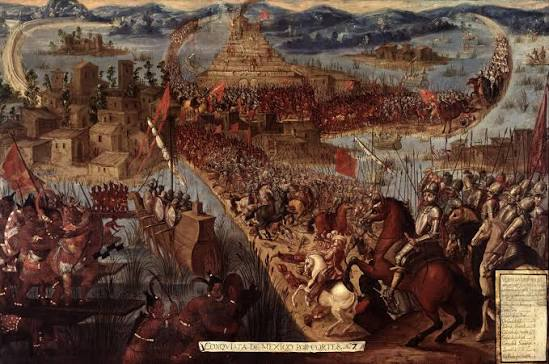
The combined forces arrived at Tenochtitlan in November 1519. Marina stood at the center of the causeway meeting, translating between Cortés and Moctezuma II. The Aztec emperor’s formal speech of welcome, delivered through the elaborate ceremonial register of tecpillahtolli, was interpreted by the Spanish as a submission of sovereignty. Modern historians do not read it that way.
The deferential language was a feature of courtly Nahuatl, known for indirection and complex honorific construction. The Spanish, deliberately or through genuine incomprehension, chose to understand a ceremonial courtesy as surrender. Some nuance, historians suggest, was lost in translation.
La Noche Triste Fails to Stop the Conquest
The Spanish occupied Tenochtitlan for months as guests whose welcome had long expired. Relations corroded through the winter and into the summer of 1520, strained by Spanish interference in religious practice and by the structural impossibility of the arrangement: a foreign military force quartered inside the city it intended to conquer.
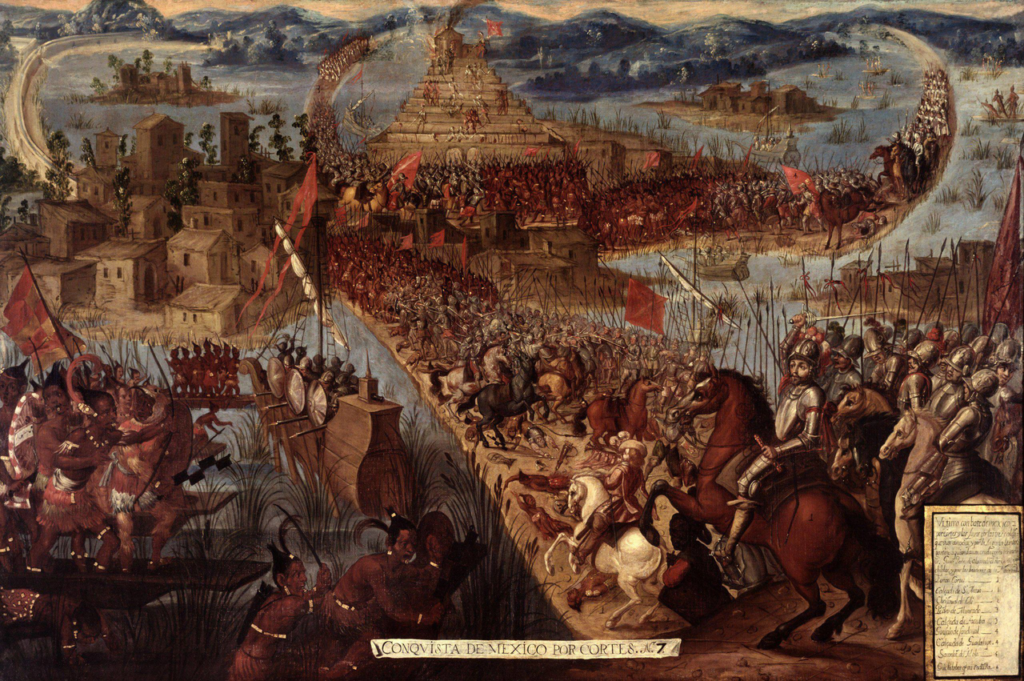
On the night of June 30, 1520, the situation collapsed. The Aztecs attacked, and Cortés’s forces fought their way out of Tenochtitlan across the lake causeways in a desperate night retreat, losing hundreds of dead among both Spanish and their native allies. The night has been known ever since as La Noche Triste: the Night of Sorrows.
Moctezuma II died during this period under circumstances the historical record does not resolve. Some accounts hold that the Aztec population, outraged by his accommodation of the Spaniards, stoned him to death. Others contend Cortés had him killed. Marina survived the retreat.
The reconstituted expedition spent months gathering allies across central Mexico before returning to Tenochtitlan in 1521. The city they found was catastrophically diminished. Smallpox, introduced by the Spanish and against which the Aztec population had no immunity, had devastated Tenochtitlan’s inhabitants. The siege that followed was brutal and prolonged.
On August 13, 1521, the last Aztec emperor, Cuauhtémoc, was captured. The Aztec Empire ceased to exist.
Cortés later declared that after God, no one had been more responsible for his success than Marina.
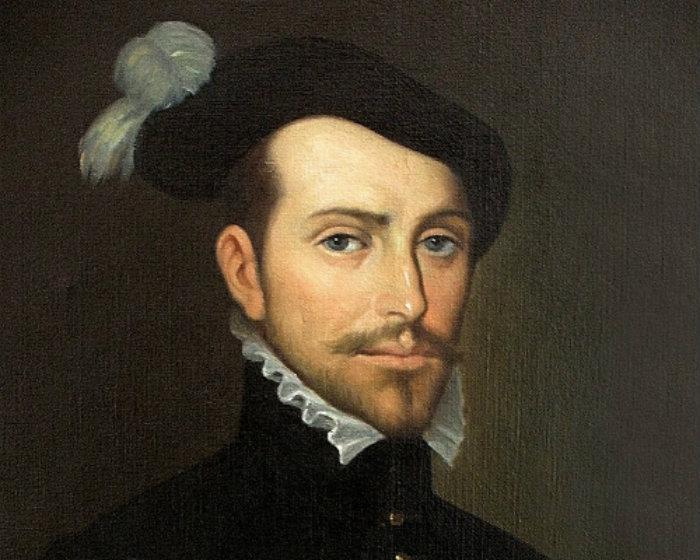
A Son Is Born; a Civilization Is Buried
In 1522, Marina bore Cortés a son, Martín Cortés, in the town of Coyoacán while the Spanish demolished and rebuilt the ruins of Tenochtitlan into the colonial capital that would become Mexico City. Martín is among the earliest documented mestizos, the people of mixed European and indigenous ancestry who would become the demographic foundation of colonial and modern Mexico.
For this reason, Marina has been called “the mother of the mestizo race,” a designation that grants her symbolic motherhood of a nation while quietly erasing the specific circumstances under which she bore a child with the man who owned her.When it became expedient to remove Marina from Cortés’s household, he arranged her marriage to Juan Jaramillo, a Spanish officer, during the expedition to Honduras in 1524.
The marriage conferred on her formal status as a Spanish noblewoman. She bore Jaramillo a daughter, Doña María. Her son by Cortés was raised by his father’s family. She died before February 1529, most likely from disease, at approximately twenty-eight or twenty-nine years of age. The cause of her death is not recorded.
Her Name Becomes a Word for Treason
The word she left behind in the language is not a monument. In Mexican Spanish, malinchismo denotes the preference for foreign culture over one’s own, a betrayal of heritage. A malinchista is a disloyal compatriot, someone who sides with outsiders against their own people. Her name, in the country her translations helped assemble, became a synonym for selling out.
Whether that verdict is just has been argued with intensity ever since. Bernal Díaz del Castillo wrote reverentially of her importance, insisting that without Marina the Spanish would not have understood the language of New Spain or Mexico at all. Some historians credit her diplomatic skill so highly that they are, as one scholar put it, “almost tempted to think of her as the real conqueror of Mexico.
” Others, including the historian Inga Clendinnen, have questioned whether her role has been overstated, arguing that the most consequential exchanges in the conquest took place through gesture and gift rather than speech, and that Marina, an enslaved woman, was unlikely to have shaped those exchanges in the way Spanish sources suggest.
Feminist scholarship, beginning with the Mexican poet Rosario Castellanos in the 1960s and extending through Chicana intellectual history, has recast Marina not as a traitor but as an enslaved child who survived the only way available to her, and who has since been made to carry the guilt of a conquest she did not design and could not have stopped.
What Marina thought about any of it, the historical record does not preserve. She left no letters, no diary, no testimony in her own words. The speeches she gave on the causeways, in the palaces, outside the burning city, were recorded only by the men who needed them. She was, as she had always been, a voice for someone else’s purposes.
Her name became an insult. Her face appears in conquest-era codex drawings larger than the Spanish officers standing beside her. Her son helped found a nation she did not live to see. The question her name has carried for five centuries is not really about what she did. It is about what a conquered people needed her to have done.
Leave a Reply