
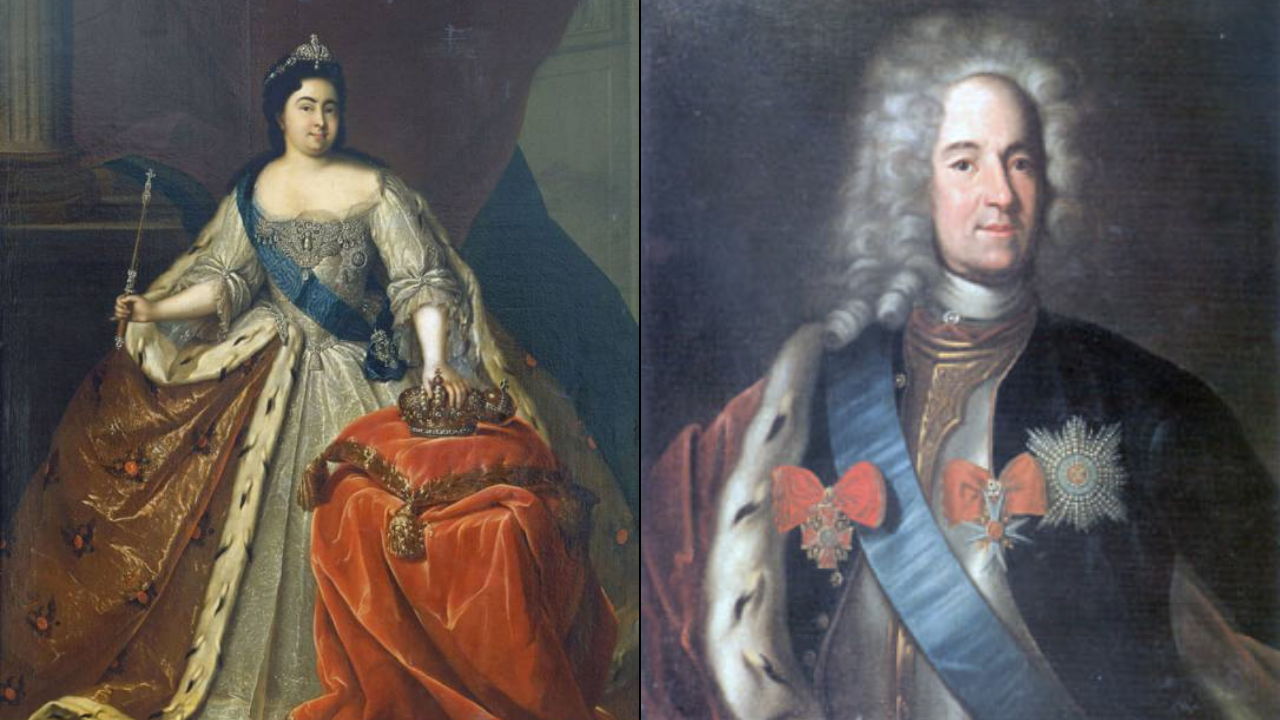
An orphaned washerwoman who could not read and had outlived ten of her own children seized the Russian imperial throne in 1725, opening nearly a century of female rule over the largest empire in the world.
The Guards Summoned a Servant to Rule Russia
On February 8, 1725, the Imperial Guards regiments of St. Petersburg gathered outside the Winter Palace and called a name. Inside, Peter the Great lay dead without having named a successor. The council of nobles assembled to settle the question should have elevated Peter Alexeyevich, a nine-year-old grandson from Peter’s first marriage. The soldiers had other intentions.
The woman they named had been born in a plague village. She could not read or write. She had worked as a washerwoman and a scullery maid. She had been married for eight days to a soldier who vanished with a retreating army. She had borne twelve children and buried ten of them.
By the time the council finished deliberating, she was Empress of Russia.
Plague and War Left Marta With Nothing
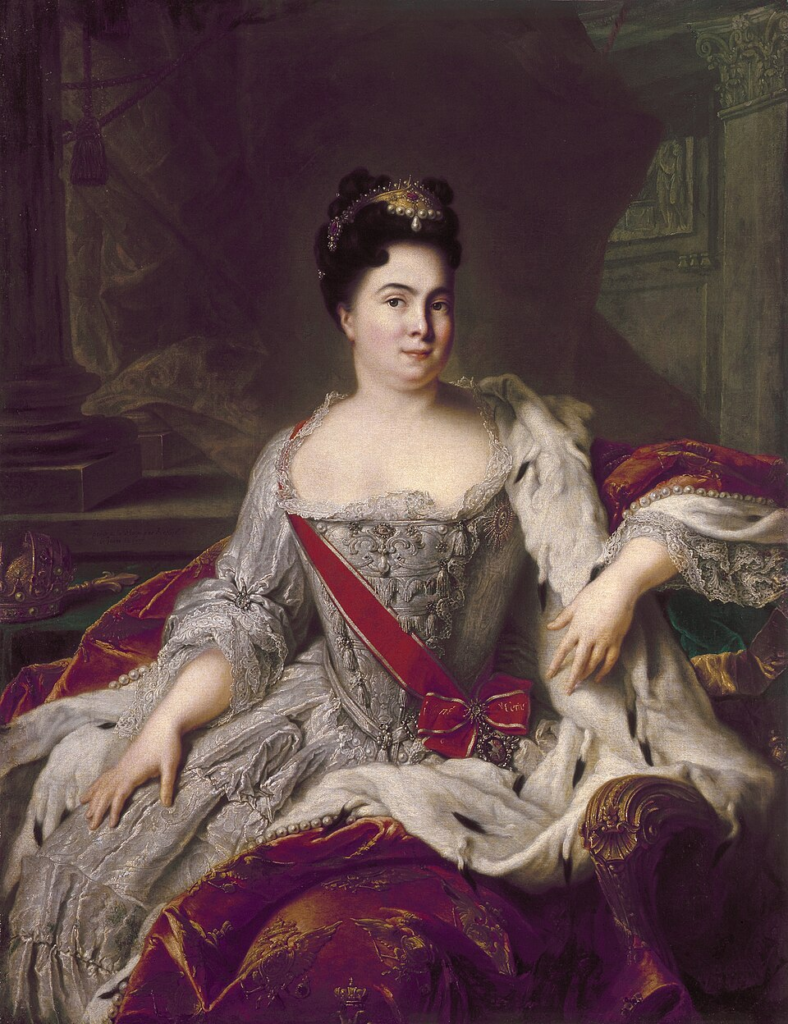
Marta Helena Skowrońska was born on April 15, 1684, in the Baltic borderlands of the Polish-Lithuanian Commonwealth, most likely in the vicinity of modern Latvia or Estonia. Her father, Samuel Skowroński, was a Roman Catholic farmer whose family had roots near Minsk. By around 1689, when Marta was approximately three to five years old, both parents were dead. Plague had swept through the region in one of Eastern Europe’s last major outbreaks. Four siblings survived alongside her. The family scattered.
She ended up in Marienburg, a garrison town in Swedish Livonia in what is now Alūksne, Latvia, in the household of Johann Ernst Glück, a Lutheran pastor who produced the first major translation of the Bible into Latvian. She worked there as a washerwoman and scullery maid. No effort was made to teach her to read or write, and she remained functionally illiterate for the remainder of her life. She eventually spoke four languages fluently: Russian, German, Swedish, and Polish. The written word stayed beyond her entirely.
In 1700, Russia and Sweden entered what would become a twenty-one-year conflict: the Great Northern War. The fighting consumed the Baltic borderlands where Marta lived. In 1702, at seventeen, she was married to a Swedish dragoon named Johan Cruse. The marriage lasted eight days. Swedish forces withdrew from Marienburg under Russian military pressure, and Cruse withdrew with them.
She never saw him again.
When Russian troops captured the town, Field Marshal Boris Sheremetev, Peter the Great’s senior commander in the region, took Marta into his household. From Sheremetev, she passed to Prince Alexander Menshikov. From Menshikov, she passed to a Tsar.
Catherine Saved the Tsar’s Life and Married Him
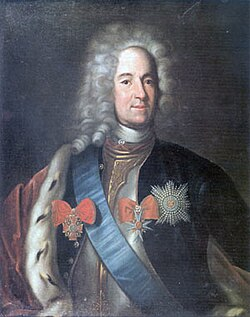
Menshikov was Peter the Great’s closest confidant and among the most powerful figures in Russia. Whether he and Marta became lovers is disputed. He was already engaged to his future wife at the time. What historians have since suggested is more probable: Menshikov recognized an exceptional woman and placed her deliberately in the Tsar’s path, knowing that proximity to Peter was proximity to power itself. In 1703, Peter visited Menshikov’s household and met Marta.By 1704 she was established in the Tsar’s household as his mistress and gave birth to a son named Peter.
Around the same time she converted from Roman Catholicism to Russian Orthodox Christianity, taking the name Catherine Alexeyevna.Their private marriage ceremony was held between October 23 and December 1, 1707, in St. Petersburg, leaving no surviving records. Their official public marriage came four years later, on February 9, 1712, at Saint Isaac’s Cathedral. Between those two dates, something had happened that made the official ceremony feel, for Peter, like an obligation he was glad to honour.
In 1711, Peter led a disastrous campaign against the Ottoman Empire along the Pruth River in what is now Moldova. Russian forces found themselves surrounded by Turkish troops in overwhelming numbers. Surrender or annihilation appeared to be the only options available. Catherine, who accompanied Peter on his military campaigns, proposed a third: that her own jewels and those of the other women in the camp be offered as a bribe to Baltacı Mehmet Pasha, the Ottoman grand vizier, to purchase a Russian withdrawal.
Whether the bribe alone moved the vizier, or whether broader diplomatic considerations played a role, historians have since debated. The retreat was granted. Peter credited Catherine with saving his life and his empire. He married her officially the following year. He founded the Order of Saint Catherine in her name on the occasion.Between 1704 and 1724, Catherine bore Peter twelve children. Two daughters survived into adulthood: Anna, born in 1708, and Elizabeth, born in 1709. The remaining ten died in infancy or early childhood.
Grand Duke Peter Petrovich, born in 1715 and considered for years as a potential heir, died at three. Grand Duke Paul Petrovich, born on January 13, 1717, died the following day. A son born in October 1723 died the same day he arrived. Contemporaries who knew Catherine in these years described her as consistently composed, warmhearted, and uniquely capable of calming Peter during his episodes of violent rage and physical convulsion. Nobody else at court could reach him in those moments.
The New Empress Dismantled Russia’s War Machine
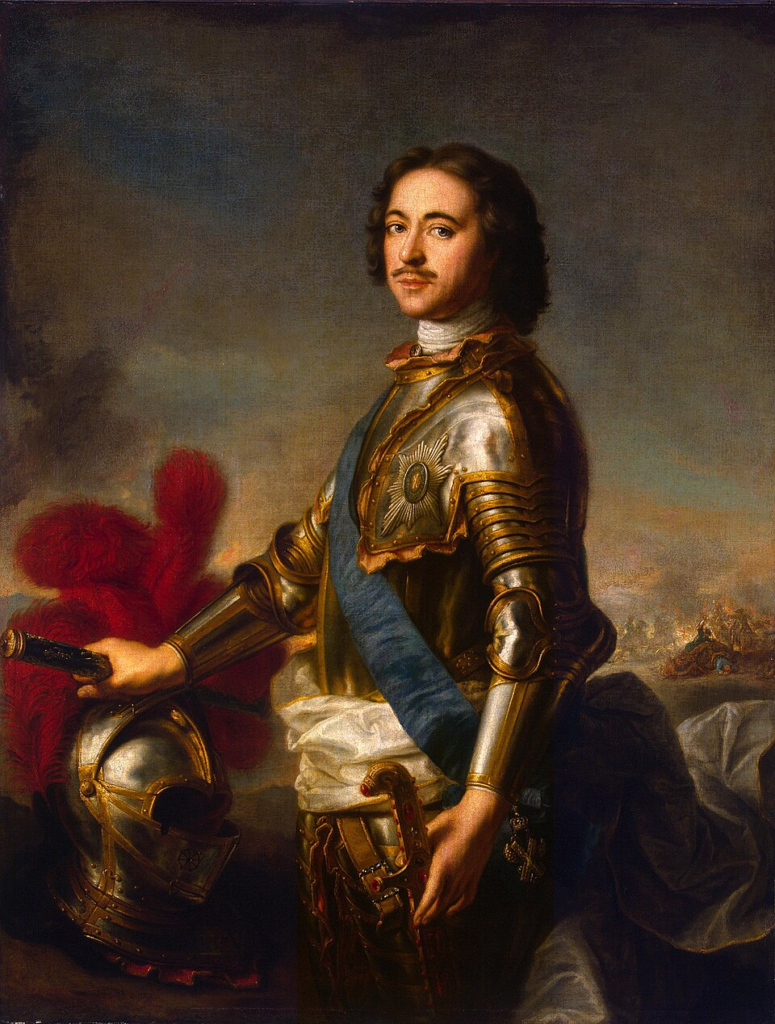
Peter the Great died on February 8, 1725, aged 52, without having named a successor. The council of nobles gathered to resolve the question should, by every legal convention, have chosen Peter Alexeyevich, the nine-year-old grandson from Peter’s first marriage. Menshikov and allies within the Supreme Privy Council ensured they did not. The Imperial Guards, among whom Catherine had cultivated genuine popularity during years of accompanying Peter on campaign, proclaimed her Russia’s ruler.
Testimony supporting the declaration was produced from Peter’s secretary and the Bishop of Pskov, both men whose futures depended on her elevation. The council ratified what the soldiers had already decided.Real executive authority rested with Menshikov and the council. On most questions of governance Catherine deferred or was overruled. But on the question that most directly affected ordinary Russian life, she held her position.
At the height of the Great Northern War, Russia had maintained approximately 130,000 regular soldiers alongside 100,000 Cossacks, a combined force consuming an estimated 65 percent of government revenue annually. The war with Sweden was concluded. The empire faced no credible military threat. The noble council resisted reduction, for a large standing army was itself a source of their authority. Catherine pressed the argument regardless and prevailed. Taxes on the Russian peasantry fell substantially. Among ordinary Russians, her reputation for fairness grew.
She also used her position for something more personal. After more than three decades of separation, following a plague that had killed her parents and scattered her siblings before she was old enough to remember them clearly, Catherine located all four surviving brothers and sisters: Krystyna, Anna, Karol, and Fryderyk. She brought them to Russia. In January 1727, she granted the brothers the title of Count, established all four as Russian nobles, and folded them back into a life that bore no resemblance to the one they had begun together in a dead village in Livonia.
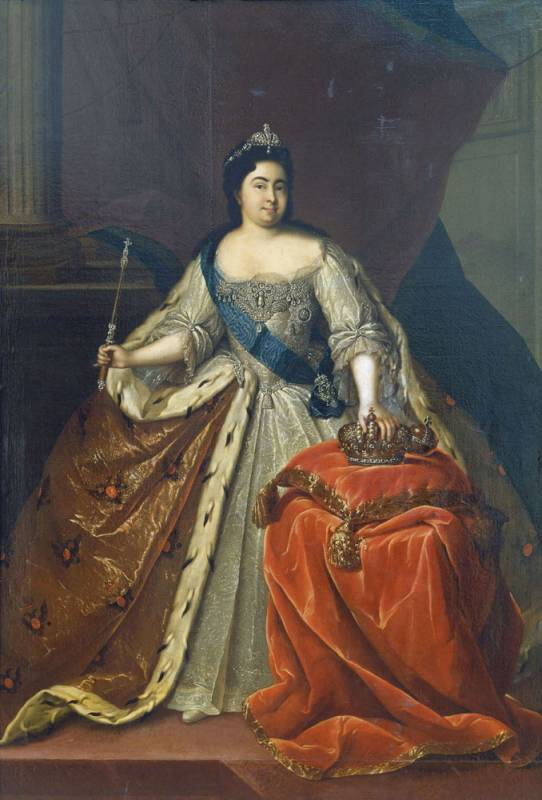
Russia Buried the Truth of Her Origins
In January 1727, Catherine attended the blessing of the ice ceremony on the Neva River and caught a severe chill. She never recovered. Physicians diagnosed an abscess of the lungs. The illness was almost certainly tuberculosis, a disease that would not be clinically identified for another century. She named Peter Alexeyevich as her successor, and died on May 17, 1727, at forty-three, in St. Petersburg. She was buried at the Peter and Paul Fortress, in the city Peter the Great had built on the Baltic borderlands where her own story had been made.
Peter II, her named successor, died at fourteen. The throne passed to Anna I, Peter’s niece. Then to Elizabeth, Catherine’s own surviving daughter. Then, after a six-month interlude, to a woman named Catherine who would rule for thirty-four years and reshape the empire across two continents, known to history as Catherine the Great. Between 1725 and 1796, Russia was governed by women for all but six months.
That century had a single origin point.
The tsars who followed Catherine I decided that the truth of where the imperial line had come from was too destabilising to be spoken aloud. The story of her origins was classified as a state secret and suppressed for generations. A plague orphan at three. A scullery maid at twelve. A soldier’s wife for eight days. An empress at forty.
The century she had opened unfolded regardless.
Leave a Reply