
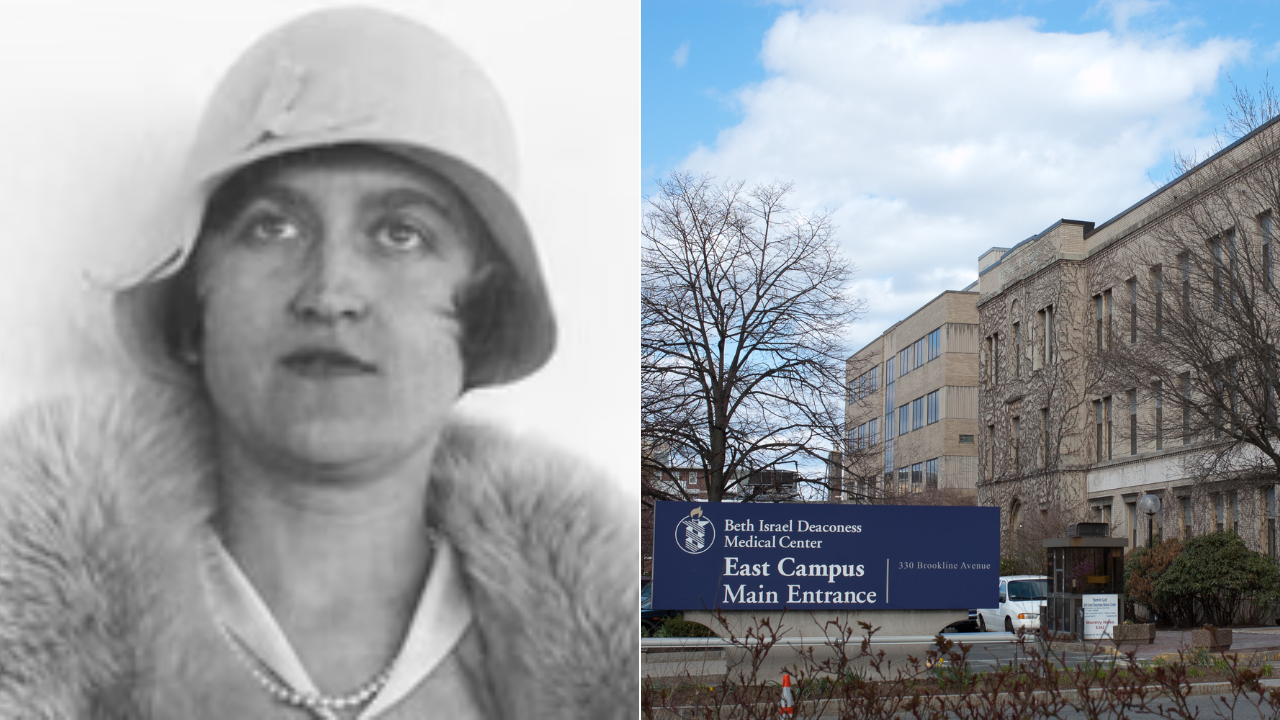
Worth more than $300 million at her death in 2011, Huguette Clark spent her final twenty years living under a false name in a New York hospital room while three fully staffed mansions stood empty across two states, their owner presumed by most of the world to be dead.
On a spring morning in 1991, ambulance staff carried a frail, disfigured woman through the entrance of Doctors Hospital on Manhattan’s Upper East Side. She had not seen a physician in twenty years. She had not eaten properly in longer than anyone could determine. A nurse who assessed her noted in the chart that the new patient behaved “like a homeless person no clothes, not in touch with the world.” The woman’s name was Huguette Clark. She was worth more than $300 million.
She would never go home.
A Fortune Built From Copper and Rails
Huguette Marcelle Clark was born on June 9, 1906, in Paris, France, the second daughter of William A. Clark and his second wife, Anna E. Clark. Her father was sixty-seven years old at the time of her birth, and by then already one of the most powerful men in America. He had built his initial fortune through copper mining operations in Butte, Montana, and Jerome, Arizona, during the westward expansion of the 1860s, before diversifying into railroads and emerging as one of the founders of Las Vegas as a commercial hub. He served as a United States Senator for Montana. By any measure, Huguette entered the world at the top of it.
She spent her earliest years in Paris, where the family kept an apartment on Avenue Victor-Hugo in the 16th arrondissement, before moving to New York City as a young child. There the family occupied a six-story, 121-room mansion at 962 Fifth Avenue, then the largest single-ownership residence in New York City. Huguette was enrolled at the Spence School, an all-girls private school in Manhattan, and grew up shaped in equal measure by Europe’s art world and America’s gilded summits.
Her family was large and complicated in the way of Gilded Age dynasties. William Clark had five children from his first marriage: Mary, Charles, Katherine, William Andrews Jr., and Francis Paul. The youngest of these, Francis Paul, died in 1896 at fifteen. Huguette had one full sibling, her older sister Andrée, born in 1902. In 1919, Andrée died of meningitis, aged seventeen. She would leave a shadow Huguette carried for the rest of her long life.
William A. Clark died on March 2, 1925. His estate was estimated at approximately $300 million in contemporary value. Huguette and her mother moved from the family mansion to a twelfth-floor apartment at 907 Fifth Avenue, and Huguette inherited what contemporary accounts suggest was a substantial share of the fortune.
She Traded Society for Silence
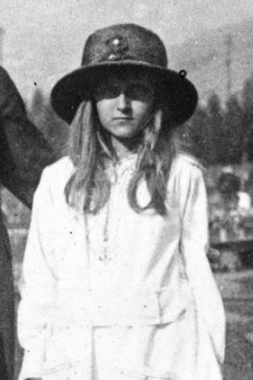
In December 1927, Huguette announced her engagement to William MacDonald Gower, a Princeton University graduate and law student whose father had been one of William A. Clark’s business associates. They married on August 18, 1928, at the family’s 23-acre estate in Santa Barbara, California, known as Bellosguardo. The marriage lasted two years. They separated in 1929, and the divorce was finalised on August 11, 1930, one week before what would have been their second anniversary.
Huguette returned to 907 Fifth Avenue and set about reconfiguring the space on a grand scale. The apartment eventually expanded to occupy the entire eighth floor of the building as well as half of the twelfth, growing to 42 rooms in total: a 30-foot library, a 40-foot drawing room, a 40-foot living room. An architectural historian noted that standing at the fireplace in the library, a visitor could look through the length of the apartment to a window 110 feet away, with Central Park beyond it.
She was a painter and musician. In 1929 she exhibited seven paintings at the Corcoran Gallery of Art in Washington, D.C. She collected visual art and antique toys and dolls with equal seriousness. She attended Christian Dior fashion shows in New York, though reportedly only to seek inspiration for dressing her dolls. Her social circle was deliberately narrow. She was, by multiple contemporary accounts, deeply shy around strangers.
After the death of her mother in 1963, the shyness hardened into something more purposeful. Clark became convinced that anyone who sought her company was angling for her fortune. She began conducting all conversations in French to prevent those around her from following the discussion. She maintained Bellosguardo at a cost of $40,000 per month, though she had stopped visiting after the 1950s. A 52-acre Connecticut estate she had purchased in 1952, known as Le Beau Chateau, in New Canaan, sat equally untouched.
The staffs of all three properties continued to receive their salaries. None of them knew where their employer was.
She Paid Eight Hundred and Twenty-Nine Dollars a Day to Stay
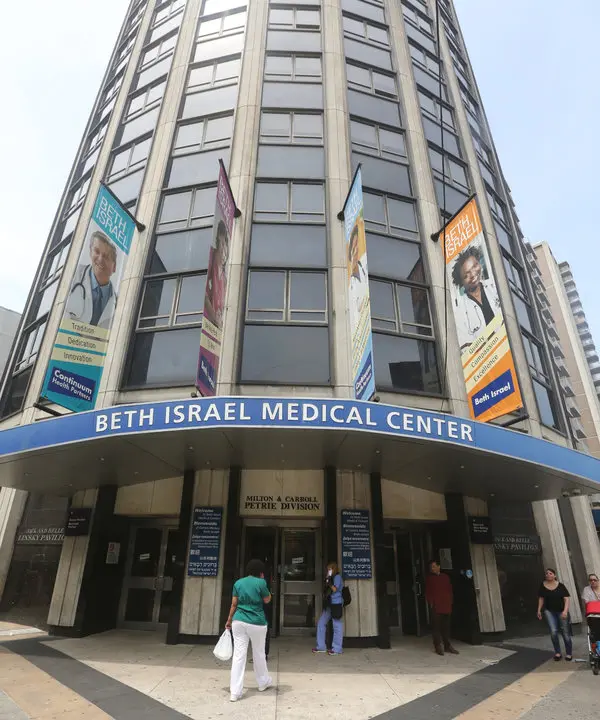
By the time she arrived at Doctors Hospital in the spring of 1991, the cancerous lesions that had disfigured her face had gone untreated for so long that physicians had to perform reconstructive surgery on her lips, right cheek, and right eyelid. Her doctors advised that once recovered, she was free to go home. Huguette declined. She arranged to remain in the hospital as a paying resident at $829 per day, later transferring to Beth Israel Medical Center, where she occupied an eleventh-floor room overlooking Central Park.
The surroundings appear to have suited her. A neurologist who assessed Clark in 2006 recorded that she was “alert and cheerful, neurologically normal in every way. she seemed cute as pie, perfectly content.” She changed conversational topics without warning to cartoons, particularly The Smurfs and The Flintstones. She gave lavish gifts to those around her without evident calculation: $10 million to a close friend, $25,000 to hospital workers who once repaired her television set.
Her closest companion during these years was her private nurse, Hadassah Peri. Over the course of Clark’s hospital residency, Peri and her family received more than $30 million in gifts: properties, vehicles, college tuitions, medical expenses, and cash. Clark’s attorney and accountant, Wallace Bock and Irving Kamsler, also received substantial gifts, including, according to a former paralegal at Bock’s firm, a $1.5 million payment from Clark to Bock after the September 11 attacks, intended to fund the construction of a bomb shelter in an Israeli settlement in the West Bank.
In August 2010, the office of the New York County District Attorney opened a probe into how Clark’s affairs were being managed.
Throughout this period, Clark lived at Beth Israel under pseudonyms. The last of these was Harriet Chase. Her room on the third floor was marked with a card reading “1B” and the name “Chase,” taped over the real room number. The criminal investigation into her finances was still ongoing when she die
A Second Will Appeared Six Weeks Too Late
Huguette Clark died on May 24, 2011, at Beth Israel Medical Center, two weeks short of her 105th birthday. Hadassah Peri was at her side.
The will filed in New York Surrogate’s Court on June 22, 2011 had been made in 2005. It directed the majority of her estate to charity, with roughly $30 million designated to Peri, $12 million to her goddaughter Wanda Styka, $8 million to the newly established Bellosguardo Foundation, and smaller sums to long-term household staff and Beth Israel Hospital itself. A Claude Monet painting from his Nymphéas series, which Clark had purchased from Galerie Durand-Ruel in 1930, was bequeathed to the Corcoran Museum of Art.
Then, in October 2011, NBC News reported that a different will existed. Six weeks before the 2005 will was finalised, Clark had signed an earlier version leaving her estate almost entirely to her extended family. Nineteen distant relatives, the last of whom had seen her in 1957, and many of whom had never met her, subsequently challenged the 2005 will.
Their argument was that Clark had been mentally diminished and that Peri, Bock, and Kamsler had coerced her into signing the later version to benefit themselves at the family’s expense. As evidence of her mental state, the relatives cited her isolation, her attachment to dolls and Smurf figurines, and her pattern of giving money freely to near-strangers.
No one was charged with a crime. The district attorney’s office mandated that the estate be settled before a jury trial could proceed. On September 24, 2013, more than two years after Clark’s death, a settlement was reached. The nineteen distant relatives received a combined total of $34.5 million. The bulk of what remained was directed to the arts, with the Bellosguardo estate transferred to the Bellosguardo Foundation.
Hadassah Peri received nothing from the estate, and agreed to return $5 million of the more than $31 million in gifts she had received from Clark during her lifetime.
No One Ever Agreed on What She Had Intended
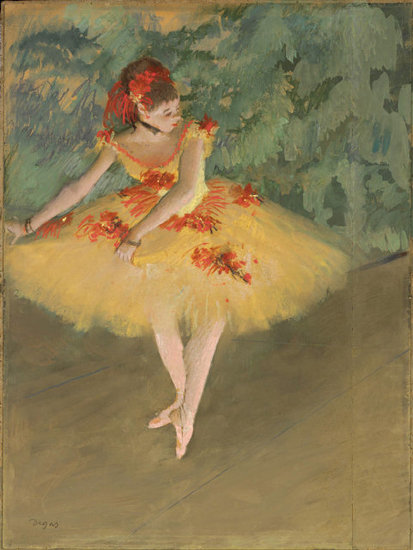
Several of the artworks that had hung in Clark’s Fifth Avenue apartment were found to have disappeared during her hospital years. Among them was Danseuse Faisant des Pointes, a pastel by Edgar Degas, sold to the Peter Findlay Gallery and later acquired by Kansas City art collector Henry W. Bloch. The FBI did not inform Bloch that it was investigating the painting until 2005, and did not confirm it had been reported stolen until 2007.
Clark agreed, under a 2008 deed of gift, to donate the pastel to the Nelson-Atkins Museum of Art. She never disclosed how it had left her apartment.
She was entombed on May 26, 2011, in the Clark family mausoleum at Woodlawn Cemetery in the Bronx, before the cemetery opened to the public that morning. Her attorney noted that she had specific instructions: no funeral service, no Mass. A Catholic priest gave her last rites anyway.
Across New York, California, and Connecticut, three mansions that had waited twenty years for their owner continued standing. Bellosguardo passed to its foundation. The three Fifth Avenue apartments sold at auction for a combined $54.8 million. Le Beau Chateau in New Canaan, empty for more than sixty years, sold in April 2014 for $14.3 million.
Whether Huguette Clark spent her last years in contented eccentricity or quiet captivity, whether she gave her money in genuine affection or under gradual pressure, whether the first will or the second reflected what she actually intended, no court ever determined. The woman who had lived under a false name in a guarded hospital room, whose caretakers across three states did not know she was alive, took those answers with her.
Leave a Reply