
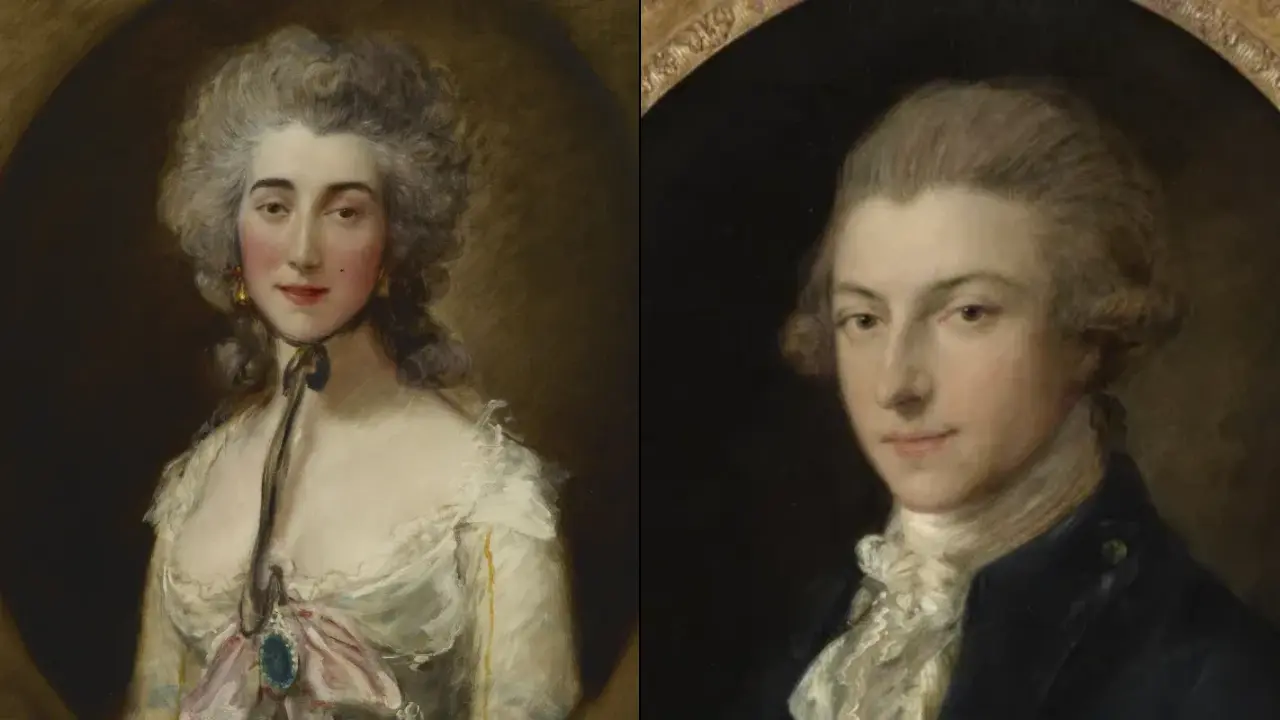
Divorced in scandal before she was 20 and barred permanently from respectable society, Grace Dalrymple Elliott spent the French Revolution hiding condemned aristocrats between her mattresses while Republican guards ransacked her Paris home.
On the night of August 10, 1792, Republican guards forced their way into Grace Dalrymple Elliott’s house on the Rue Miromesnil in Paris. They had seen a man enter. They were certain of it. According to Elliott’s own account, approximately forty of them moved through her home room by room.
The man they were hunting was hidden between the mattresses of her bed.
Elliott met them at the door. She spoke calmly. She complained of illness. She offered them refreshments and walked them through every room herself.
They found nothing. They left.
Born in Edinburgh around 1754, Grace Dalrymple was the daughter of Hew Dalrymple, an Edinburgh advocate involved in the celebrated Douglas inheritance case. Her parents separated near the time of her birth. She was raised, reportedly, at her grandparents’ house, her parents visiting rather than residing with her. Her father ensured she received a serious education, sending her to a convent school in France. When she returned to Scotland, she spoke English and French fluently and had grown, by contemporary accounts, into a tall and striking young woman. Her eventual nickname in London society would be “Dally the Tall.” Her father introduced her into Edinburgh society. The physician John Eliot noticed her immediately.
Eliot was approximately 18 years her senior, successful, and wealthy. He asked for her hand in 1771. She was 17. They married in London on October 19, 1771, and entered fashionable society together.
The marriage did not survive.
A Divorce Destroyed Elliott and Made Her Career
By 1774, Elliott had fallen in love with Arthur Annesley, Viscount Valentia, an Irish peer. The two began a secret liaison. John Eliot hired a private investigator to track his wife’s movements. When the evidence proved sufficient, he sued Lord Valentia for criminal conversation, the legal term for adultery, and was awarded £12,000 in damages before successfully obtaining a divorce.
The scandal finished Elliott’s standing in respectable society. She was now classified as a member of the demimonde, existing at the profitable but precarious edges of elite life. Her family moved quickly. Her brother had her confined in a French convent.
She was back in England within weeks. Lord Cholmondeley, whom she had met at the Pantheon in London in 1776, brought her back and became her lover. He would remain one of her most important protectors for the rest of her life.
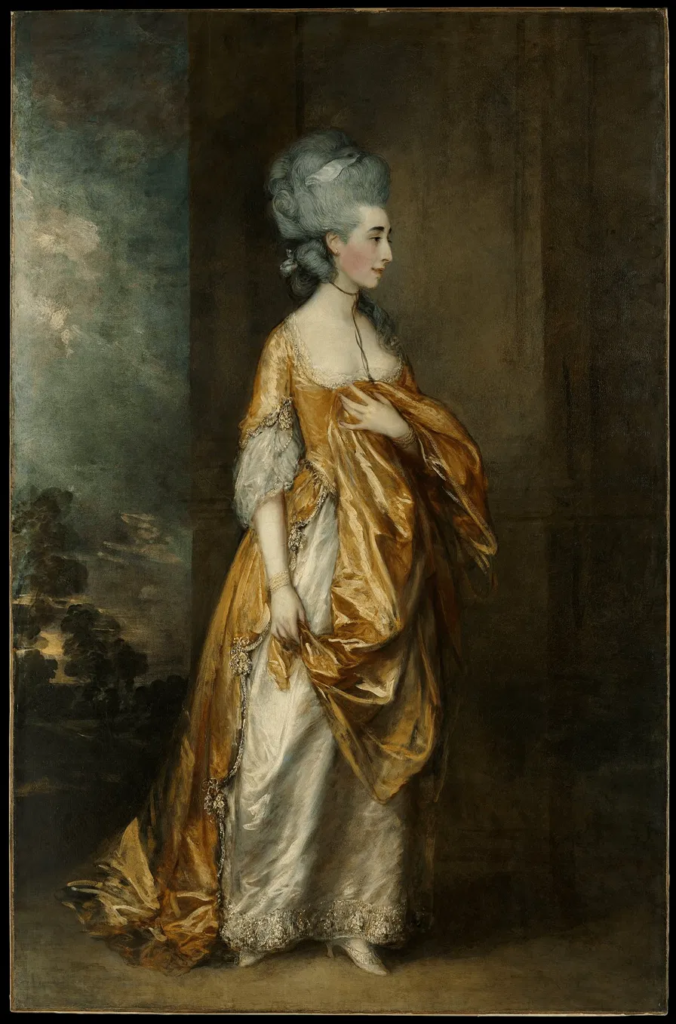
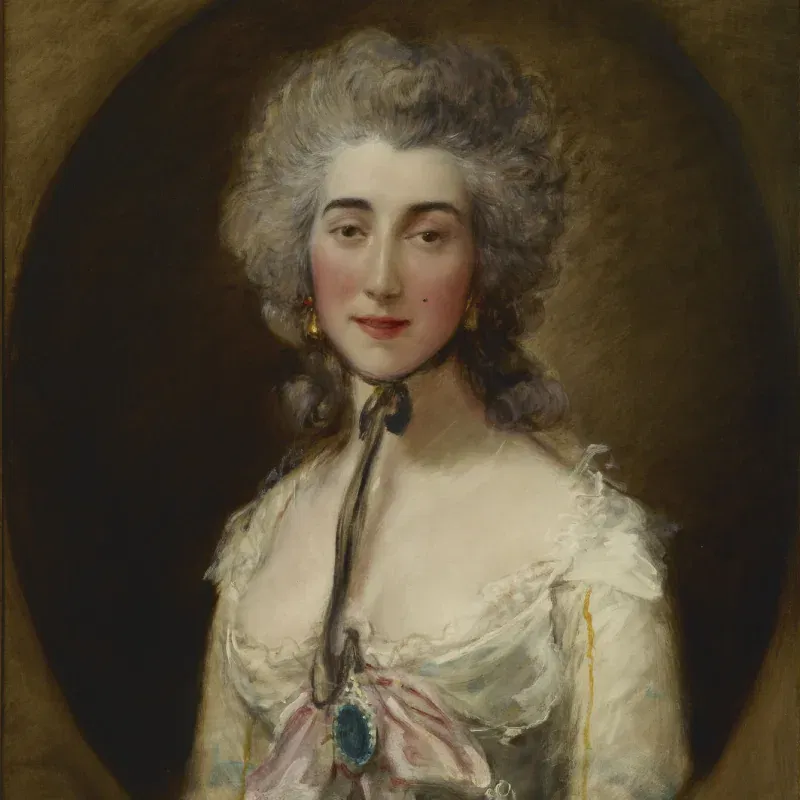
In 1778, Thomas Gainsborough painted her portrait. Then he painted it again. The two works now hang in the Frick Collection in New York and the Metropolitan Museum of Art. Being painted once by Gainsborough was a distinction. Being painted twice in a single year was something else.
Elliott had achieved a kind of permanent visibility that her divorce had not extinguished. She moved through the upper levels of London society, managing her survival through intelligence and the careful cultivation of powerful men.
In 1782, she began a brief liaison with the Prince of Wales, the future King George IV. On March 30, 1782, she gave birth to a daughter, baptized at St Marylebone as Georgiana Augusta Frederica Seymour. Elliott declared the Prince was the father. The Morning Post reported in January 1782 that he had accepted responsibility.
The child was dark in complexion.
When Georgiana was first presented to the Prince, he reportedly said: “To convince me that this is my girl, they must first prove that black is white.”
Three other men were proposed as possible fathers: Lord Cholmondeley, Charles William Wyndham, and George Selwyn. It was Cholmondeley who ultimately raised Georgiana. She died in 1813. Cholmondeley looked after her only child after her death. The question of Georgiana’s parentage was never definitively settled.
The Duke of Orléans Drew Elliott Into Revolution
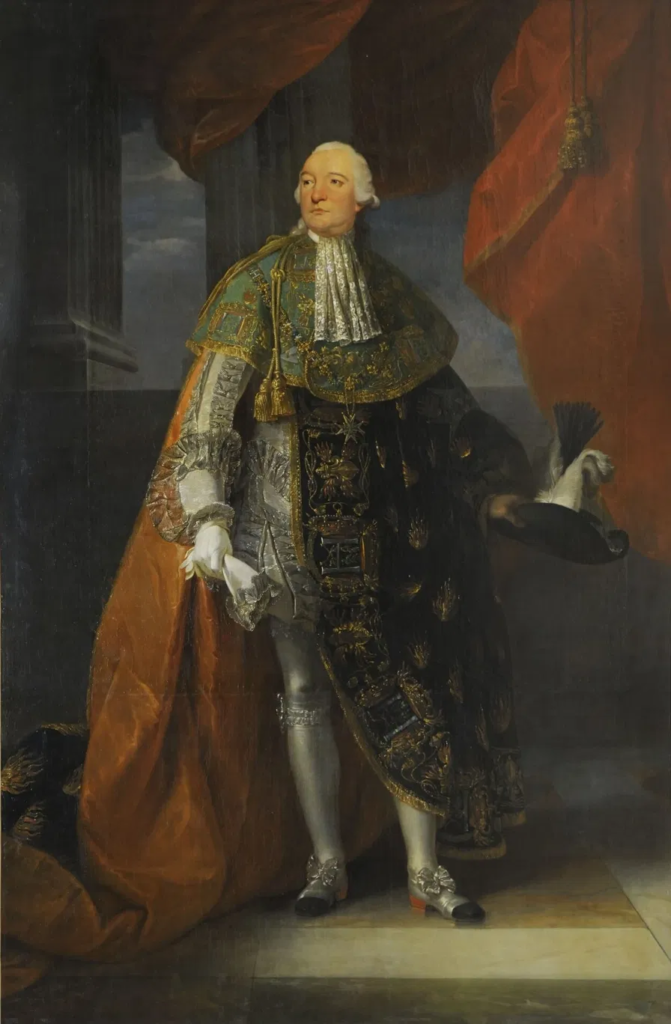
In 1784, the Prince of Wales introduced Elliott to Louis Philippe II, Duke of Orléans. By 1786, she had relocated permanently to Paris and was established as one of the Duke’s recognized mistresses. He installed her in a home on the Rue Miromesnil and provided a country property in Meudon, to the south of Paris. She also held pensions from her former husband John Eliot, from the Prince of Wales, and from her mother. She additionally pursued liaisons during this period with the Duke de Fitz-James and the Prince of Condé.
The arrangement was comfortable. It would not remain so.
The French Revolution broke in 1789 and Elliott’s world fractured with it. The Duke of Orléans, seeking to distance himself from his aristocratic identity, took the name Philippe Égalité. Elliott’s loyalties ran in the opposite direction. Her royalist sympathies were widely known throughout her district. Republican officials searched her home repeatedly.
It has since been established that during this period she was operating covertly for the British government, trafficking correspondence between Paris and members of the exiled French court in Coblenz and Belgium, and assisting in the transportation of persecuted aristocrats. She procured false travel documents. She concealed people in her properties. She moved them when they needed to move.
She was not a bystander to the Revolution. She was working inside it.
Elliott Hid the Governor of the Tuileries Between Her Mattresses
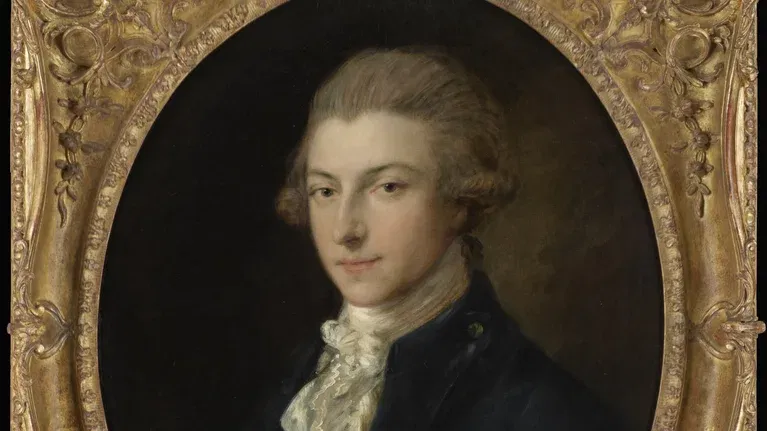
On August 10, 1792, Republican forces stormed the Tuileries Palace. Louis René Quentin de Richebourg, marquis de Champcenetz, its Governor, was believed to have died in the assault. He had survived, barely. He was in hiding, seriously injured, too ill to travel safely in daylight, and a personal enemy of the Duke of Orléans. Elliott went to him anyway.
Carriages were prohibited on the streets after 10 o’clock. House checks were underway at the same hour. Their carriage was stopped at the first barrier and denied passage. It was stopped at a second route and denied again. Their driver abandoned them in the road.
Elliott brought the Marquis on foot to her house on the Rue Miromesnil.
Republican guards arrived at the house shortly after. According to Elliott’s account, approximately forty of them searched the property room by room. She met them at the door. She offered refreshments. She walked them through every room herself.
The Marquis de Champcenetz was hidden between the mattresses of her bed.
They found nothing. They left.
Elliott subsequently appealed to Philippe Égalité to assist in securing the Marquis’s passage to England. That the man she was asking him to save was his own personal enemy made the request remarkable. The Duke agreed regardless. Elliott later ran similar operations for others. Madame de Périgord, attempting to flee France with her two children, was hidden in the attic of Elliott’s Meudon property. Elliott procured false travel documents and arranged her passage out of the country.
Four Prisons Failed to Kill Grace Dalrymple Elliott
In May 1793, Republican authorities arrested Elliott and sent her to prison. They searched her house. They searched her papers. They searched the papers of Lord Cholmondeley. They found nothing. She was eventually released.
The danger had not passed. When news arrived that a death warrant had been issued against her, she fled to her house in Meudon. She was caught there. They transferred her to the Récollets prison. Then to the Carmes prison. In the Carmes, she reportedly encountered Joséphine de Beauharnais, though historians have questioned this account. Across the duration of the Terror, she was confined in four different prisons in total.
At some point during her imprisonment, Elliott’s hair was cut.
This was not a punishment. It was preparation. Her hair was cut because they were planning to send her to the guillotine.
On November 6, 1793, Philippe Égalité was executed. He had supported the Revolution, renamed himself for it, and voted for the death of Louis XVI. It had not been enough. Madame du Barry, Elliott’s friend, followed him to the scaffold not long after.
The Reign of Terror collapsed with the execution of Robespierre in July 1794. Elliott was freed. She had survived four prisons, multiple arrests, a carriage abandoned at midnight, and at least one haircut she had not arranged.
In later years she returned to France, to Ville d’Avray to the west of Paris, where she lived as a lodger with the town’s mayor. She died a wealthy woman on May 16, 1823, aged approximately 68 or 69. She was buried at Père Lachaise Cemetery.
Journal of My Life During the French Revolution was published in 1859, thirty-six years after Grace Dalrymple Elliott died. For three and a half decades, everything that had happened in that house on the Rue Miromesnil existed only in a manuscript no one had read. The guards who had searched it room by room never learned what she had done. They had been certain. They had found nothing.
Leave a Reply