
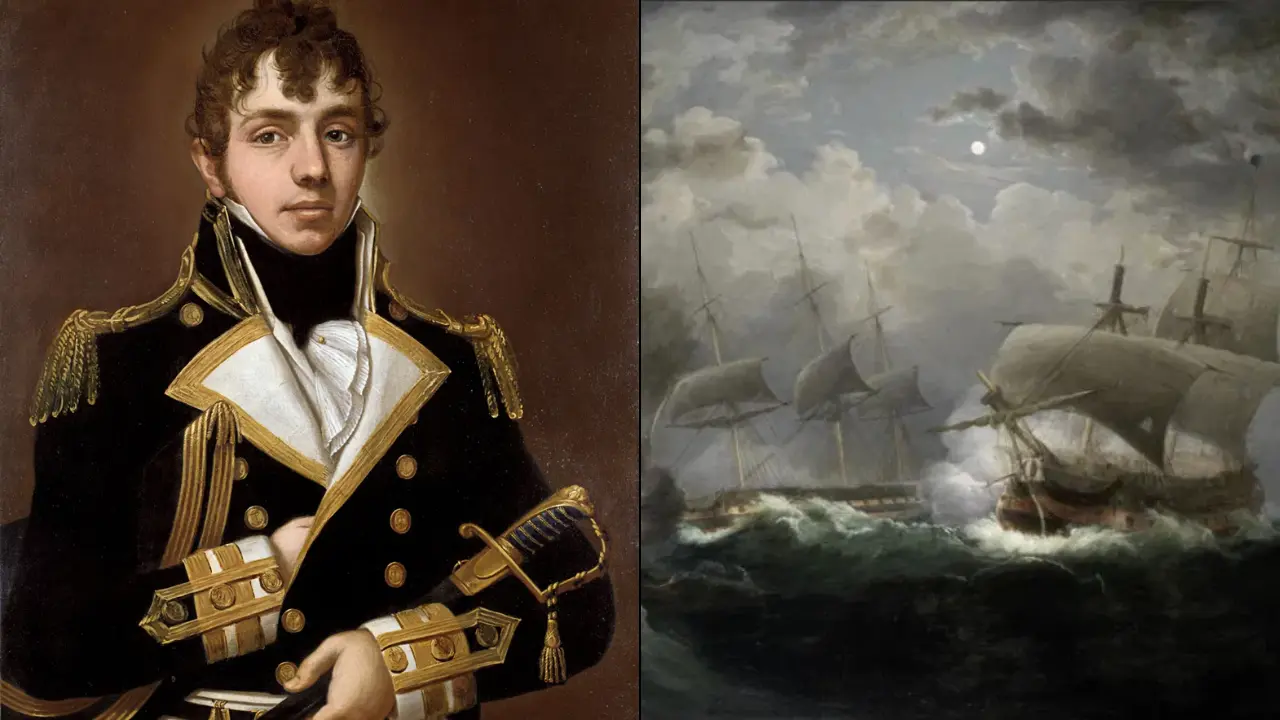
In the summer of 1800, acting Lieutenant Jeremiah Coghlan rowed into a fortified French harbor with 20 men to board a gunship defended by 87, was beaten back twice, and went in a third time.
On the night of 29 July 1800, the harbor at Port Louis on the south coast of Brittany was dark and quiet. Acting Lieutenant Jeremiah Coghlan pulled toward it in a 10-oared cutter with 19 men beside him. Ahead lay the French gun-brig Cerbère, moored under three shore batteries and within gunshot of a 74-gun ship of the line. The Cerbère carried 87 men and mounted three long 24-pounders. The other two support boats had fallen behind in the darkness. Coghlan rowed on.
His fleet would know he had arrived by the sound of the guns.
Jeremiah Coghlan Was Born to Defy the Odds
He was born around 1779 in Crookhaven, County Cork, a fishing village on the southwestern tip of Ireland. His exact birth date is unknown. Some accounts described him as an orphan. Coghlan himself later claimed he ran away to sea to escape a brutal mother. By his early teens he was working as a cabin boy on merchant vessels, living on salt water and whatever fortune the Atlantic offered.
The Atlantic nearly took him early. While his ship was driven onto the rocks in a storm near Mevagissey in Cornwall, the ship’s captain managed to evacuate the crew to safety, then realized the cabin boy was still missing. He went back. He found the boy clinging with terror to the fore-topmast. That boy was Jerry Coghlan.
He was not the type to stay rescued.
A Storm at Plymouth Changed His Destiny
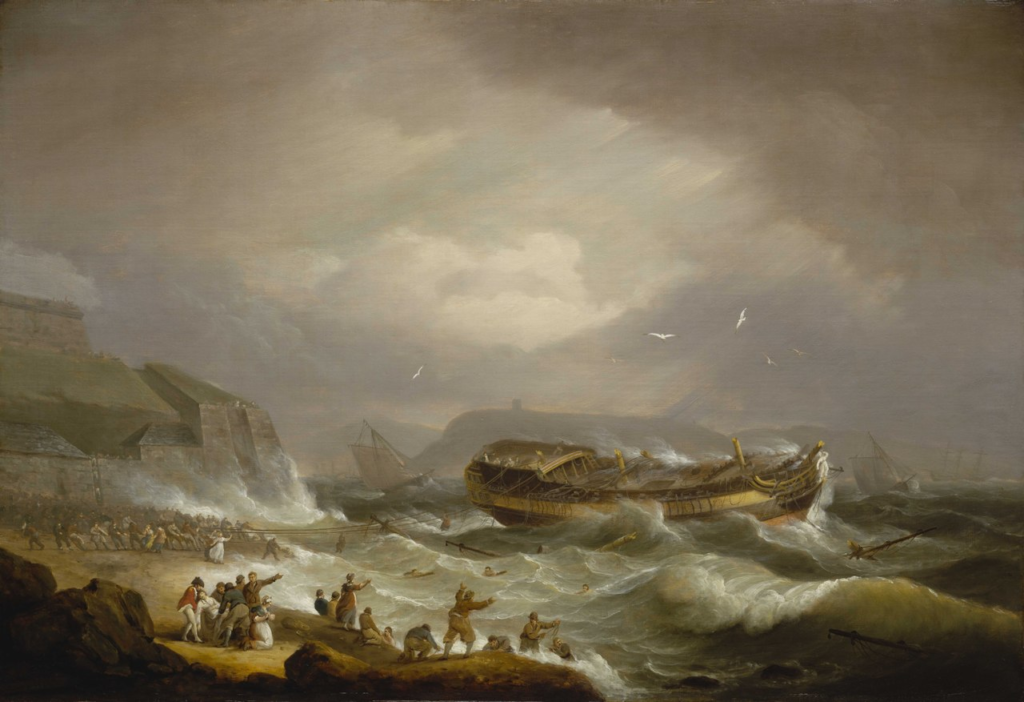
On the morning of 26 January 1796, the East Indiaman Dutton dragged her anchors in a furious gale and grounded under the citadel at Plymouth Sound. She had been bound for the West Indies carrying soldiers from four regiments, along with their families, with a total complement of somewhere near 500 men, women, and children. A crowd gathered on shore and watched the ship break apart in the surf. No boats dared go out in the storm.
Coghlan was 16. He was serving as a mate on a merchant vessel anchored in the harbor.
He tied a rope around his body and jumped into the sea.
He fought the waves to the wreck, hauled survivors free, dragged himself back to shore, and went out again. When exhaustion finally pulled him from the water, he commandeered a boat and found volunteers to man it, pressing back toward the Dutton until the gale began to ease. By the end of the day, approximately 50 lives had been saved by his efforts alone. Approximately 15 lives were lost in total, though accounts vary on the exact figure.
Captain Sir Edward Pellew had also boarded the Dutton to restore order during the chaos and was watching. He was sufficiently impressed that he offered the young Irishman a place on his own quarterdeck. Coghlan joined HMS Indefatigable as midshipman that same year. Pellew was knighted for his own part in the rescue.
The two men would remain bound to each other for the rest of their lives.
Coghlan Rowed Into a Guarded Harbor at Night
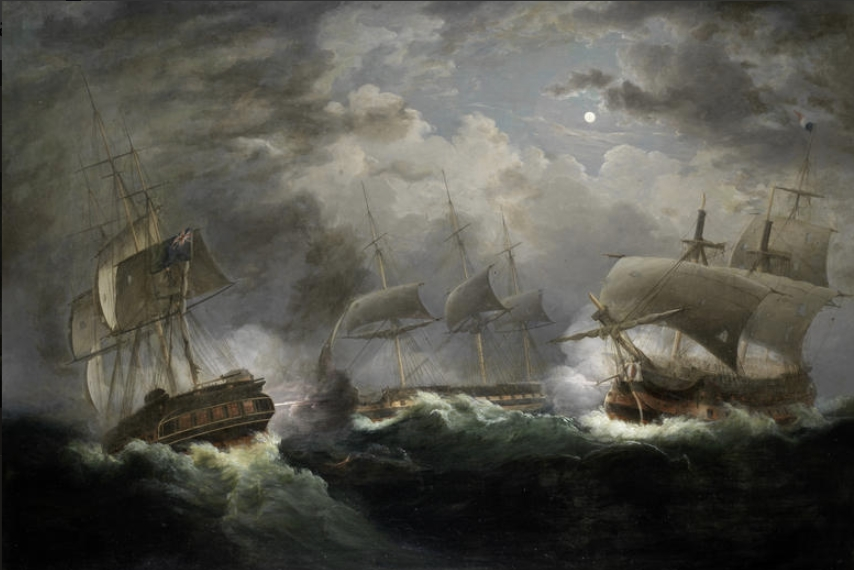
By 1800, Coghlan had transferred with Pellew to HMS Impetueux and been given command of the 14-gun cutter HMS Viper. His squadron was blockading Port Louis, and Coghlan had been studying the harbor entrance carefully. Inside, the French gun-brig Cerbère sat moored under three shore batteries and within gunshot of a 74-gun ship of the line. She mounted three long 24-pounders and four 6-pounders. Her crew numbered 87 men, 16 of them soldiers.
Coghlan went to Pellew and asked for a cutter and volunteers. Pellew lent him a 10-oared boat and 12 men from Impetueux. With an additional boat from HMS Amethyst and one from Viper, Coghlan assembled a total force of 20 men, added Midshipman Silas Paddon from Viper, and pulled for the harbor entrance on the night of 29 July 1800.
The plan required surprise and speed. The other boats fell behind. Coghlan’s cutter reached Cerbère alone.
The French were at quarters with battle lanterns lit. They beat the British back. Coghlan ordered a second attempt. They beat them back again. On the third assault, the British finally carried the Cerbère‘s deck, killing or wounding every French officer on board. Coghlan had been caught in a trawl-net during the fighting and took a pike through the thigh. Midshipman Paddon sustained six wounds. One British seaman was killed. Eight were wounded.
With the other boats finally alongside, they towed Cerbère out under sustained fire from the shore batteries and brought her back to the fleet.
Earl St. Vincent, First Lord of the Admiralty, wrote that the action had filled him “with pride and admiration.” He personally presented Coghlan with a sword valued at 100 guineas, reportedly to prevent any city merchants from doing so first. The squadron waived their own claim to prize money entirely, awarding it in full to the 20 men who had carried the ship. Coghlan was promoted to lieutenant by special order of the King in Council, despite having served fewer than five years in the Royal Navy.
A statutory minimum applied to everyone else.
A Privateer Captain Ordered Him to Surrender
On 20 March 1805, Coghlan was in command of HMS Renard with 90 men, off the north coast of San Domingo, when he gave chase to the French privateer General Ernouf out of Guadeloupe. The privateer’s commander, Paul Gerard Pointe, carried 160 men, including 31 soldiers. Renard was the smaller ship.
After a three-hour chase, Renard closed within range. Pointe called on Coghlan to strike his colors and surrender.
Coghlan picked up his speaking trumpet. “Aye,” he replied. “I’ll strike, and damned hard too, my lad, directly.”
Thirty-five minutes later the General Ernouf caught fire. Ten minutes after that, she blew up. Coghlan immediately launched his one undamaged boat and pulled survivors from the wreckage.
In May 1806, still commanding Renard, Coghlan pursued the French navy brig Diligent, fourteen 6-pounders and two 32-pounders, for three consecutive days before the French commander surrendered without a shot fired by either side. When brought aboard Renard, the Frenchman was surprised by the smallness of the ship and asked to return to his vessel and continue the fight. Coghlan refused. The Frenchman then asked, very seriously, for a certificate confirming he had not acted cowardly. Coghlan told him he could not issue that, but would certify he had acted “prudently.”
Coghlan Stormed the Fortified Walls of Cassis
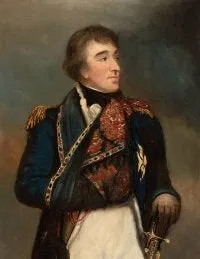
By 1812, Coghlan had made post captain and was serving as flag captain on Admiral Pellew’s 120-gun flagship HMS Caledonia, blockading the French fleet at Toulon. In August 1813, Captain Thomas Ussher of HMS Undaunted discovered a number of vessels sheltering in the harbor at Cassis on the south coast of France. Five heavy gun batteries protected the town. One battery was shielded by a wall 25 feet high.
Coghlan led 200 marines ashore.
Under sustained fire, they scaled the highest battery by escalade. A Lieutenant Hunt was the first over the wall. The marines drove the French at bayonet point through successive defensive positions until the town lay entirely at the mercy of the British fleet. HMS Redwing, under Captain Sir John Sinclair, entered the harbor and captured three gunboats and 24 merchant vessels.
Ussher’s dispatch credited the success entirely to Coghlan’s leadership.
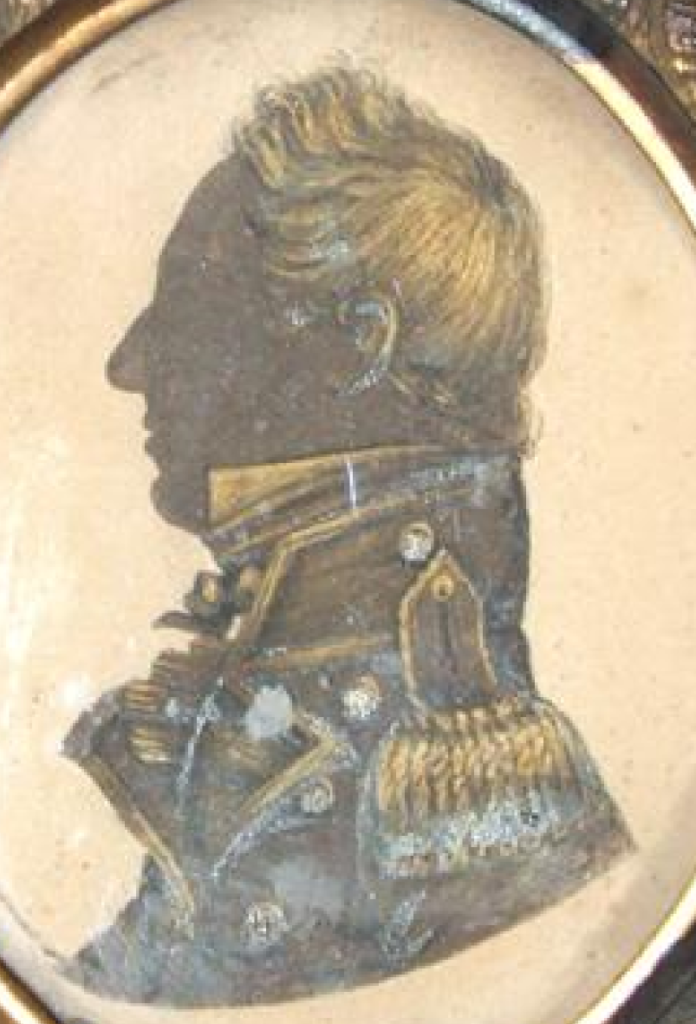
Coghlan Seized Naples Before Breakfast
In early May 1815, Coghlan was captain of HMS Alcmene, serving as second in command to Captain Robert Campbell of HMS Tremendous as their squadron made for the Bay of Naples. Joachim Murat, King of Naples, was being deposed by the Austrians following his defeat at Tolentino. Two Neapolitan ships of the line, Joachim and Capri, were preparing to escape to France. On board were Napoleon’s mother, his brother Jérôme, his sister Pauline, Murat’s children, the crown jewels, much of the palace treasury, and the royal art collection.
The squadron arrived on 11 May 1815 and blockaded the port. Under threat of bombardment, Coghlan helped negotiate a treaty, signed on 13 May, that secured possession of the ships, the naval arsenal, and everything on board. Parliament would eventually award £150,000 in prize money, shared among the officers and crew.
Murat fled the city in disguise on 19 May. Pellew arrived the following morning. With the Austrians not due to take formal control until 23 May, Pellew dispatched Coghlan and 500 marines to maintain order in the gap. They went fort to fort, quelling rioters at bayonet point. Coghlan installed himself in the Castle of St Elmo and held it until Prince Leopold arrived to restore government.
On 4 June 1815, Coghlan was appointed a Companion of the Bath.
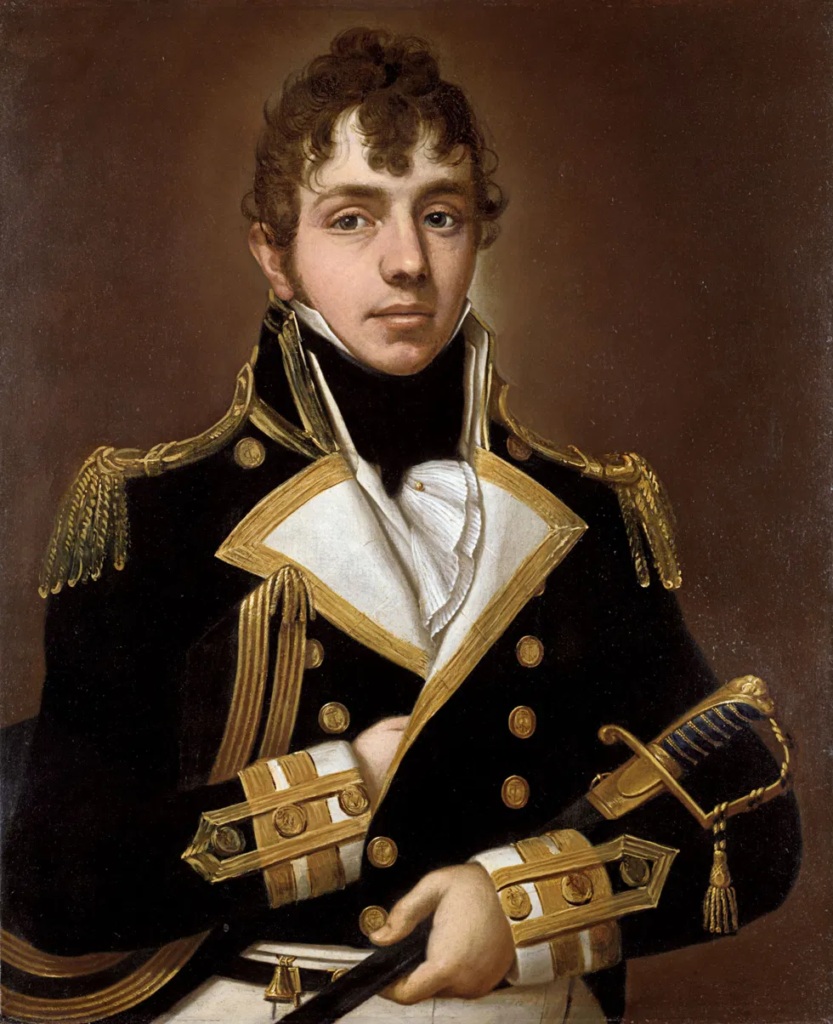
“Intrepid Jerry” Outlived His Own Legend
After the war Coghlan spent years on reduced pay before receiving one final command in 1826, HMS Forte on the South America Station. He served at Rio de Janeiro until 1830, became embroiled in a diplomatic dispute over the treatment of British seamen by Brazilian authorities, and retired from active naval service that summer. In 1840, the Admiralty awarded him a pension of £150 per annum.
His marriage had not survived. When Coghlan died at his home on the Isle of Wight on 4 March 1844, aged 69, his will set aside £1,000 for his wife, Isabella, while describing her as “the wretched woman I am obliged to call my wife” and charging her with “abandoned and profligate conduct.” The rest of his considerable estate passed to his son, General Sir William Marcus Coghlan, and his daughter, Susan Pellew Coghlan, named in tribute to the admiral’s wife.
At his funeral, six seamen carried the oak coffin to the church. A battle flag covered it instead of a pall. On top, alongside his naval hat, was the 100-guinea sword Earl St. Vincent had pressed into his hands 44 years earlier.
When Admiral Lord Exmouth had died in 1833, the man who had spotted a teenage sailor in a Plymouth storm and handed him a career, Coghlan wrote to Pellew’s son Fleetwood: “I will mourn in solemn silence the man who has ever been most dear to my heart. He will find his reward in heaven whither his great spirit is flown. I never saw his equal, nor can I expect ever to look on his like again.”
What the press called him in the end, as they had called him from his earliest days in uniform, was simply “Intrepid Jerry.” No other name came close.
Leave a Reply