
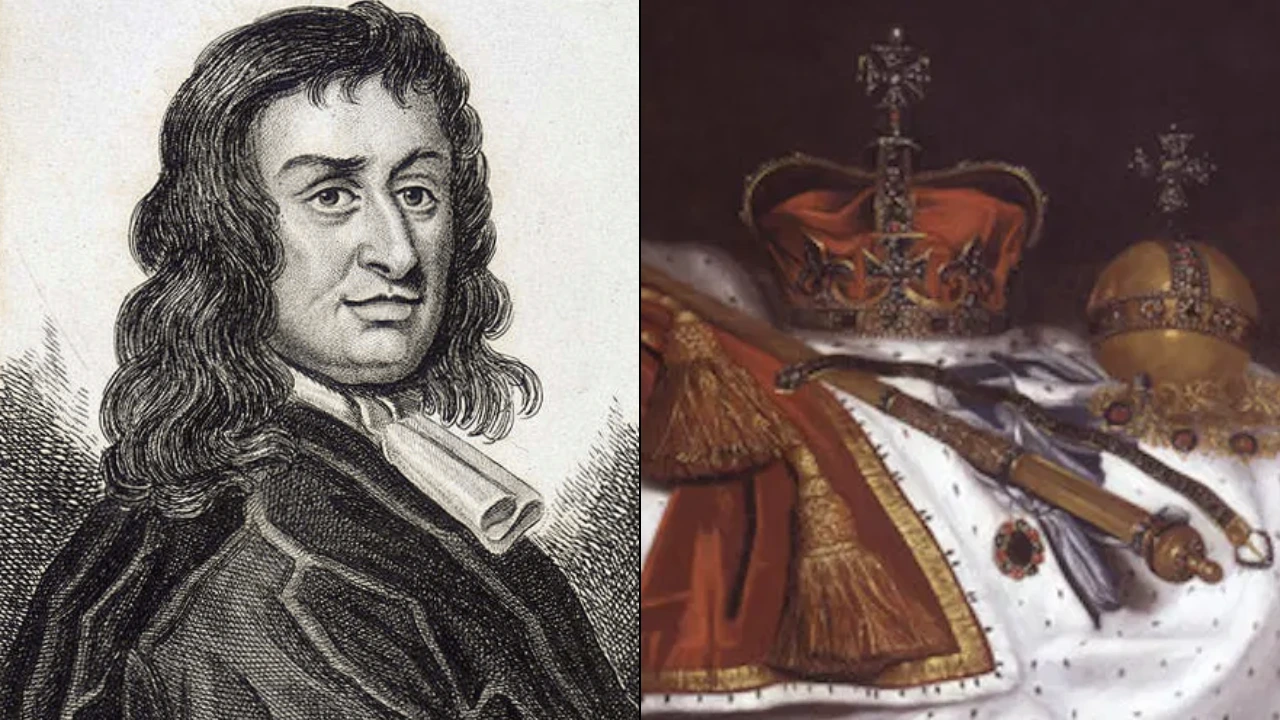
On 9 May 1671, Thomas Blood walked into the Tower of London in a parson’s coat, beat a 77-year-old guard senseless with a mallet, and attempted to conceal the Imperial State Crown beneath his clothing then received not a death sentence but a royal salary.
A Parson Walks Into the Tower
On the morning of 9 May 1671, a clergyman and three companions arrived at the Tower of London. The jewel keeper, 77-year-old Talbot Edwards, recognized the reverend immediately. He had visited weeks earlier with his wife, who had taken ill near the vault. Mrs Edwards had invited them upstairs to recover. On a return visit, the generous clergyman had brought four pairs of white gloves as a token of thanks. He had even arranged an introduction between his nephew and the Edwards’s daughter, dangling the prospect of a favorable marriage. Edwards had no reason for alarm as he unlocked the door to the jewel room and led the group inside.
The parson’s name was Thomas Blood. He was not a parson.
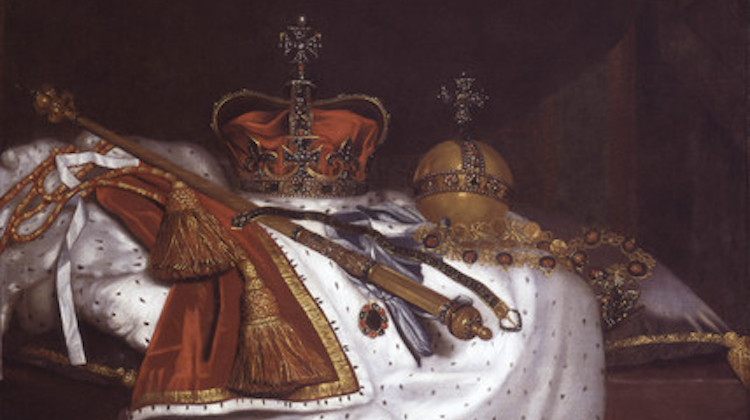
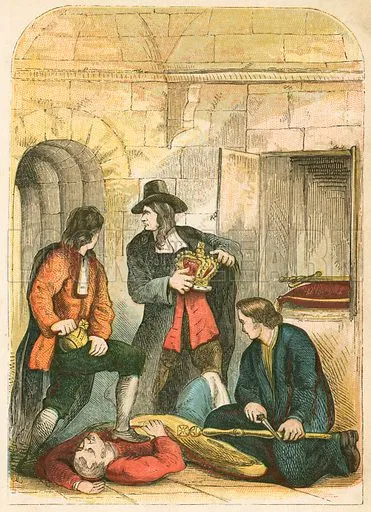
A cloak went over Edwards’s head. A mallet came down. A blade went in. While the old man lay bound and bleeding on the floor, Blood produced his mallet a second time, pressed the Imperial State Crown of Charles II flat against stone, folded it small enough to hide beneath his coat, and straightened up. Behind him, his brother-in-law Hunt set a metal file to the Sceptre with the Cross and sawed it in two. A third man, Perrot, stuffed the Sovereign’s Orb down his breeches.
They very nearly walked out of the Tower of London with the Crown Jewels of England.
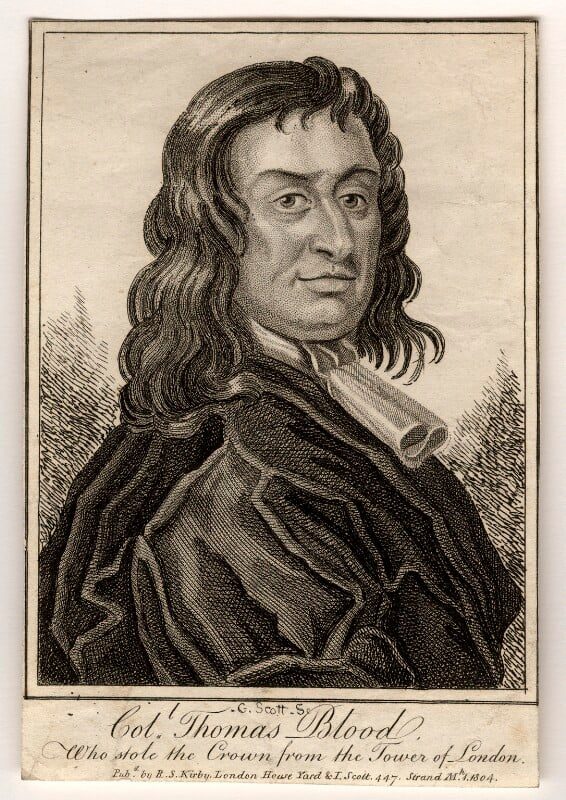
Blood’s Loyalties Shifted With the Wind
Thomas Blood was born on 19 March 1618 in Ballyvaughan, County Clare, in the Kingdom of Ireland. His family was respectable by the standards of the era: his father was a land-owning blacksmith with properties across Counties Clare, Meath, and Wicklow, and his grandfather had sat in the Irish Parliament. Blood spent his early years near Dunboyne in County Meath before being sent to Lancashire for his education. At 20, he married Maria Holcroft, the daughter of John Holcroft of Holcroft Hall in Cheshire, and returned to Ireland with his wife and a reasonable claim to a settled life.
The English Civil War ended that.
When fighting broke out in 1642, Blood joined the Royalist forces loyal to Charles I. When it became clear Charles was losing, he switched allegiance to Oliver Cromwell’s Roundheads and served as a lieutenant in the Parliamentary forces. His instinct for self-preservation proved profitable. When hostilities ceased in 1653, Cromwell rewarded Blood with land grants and appointed him a justice of the peace. Blood proclaimed himself Colonel a title he had not earned in rank but wore for the rest of his life.
The restoration of King Charles II in 1660 reversed everything. Blood, marked by his Parliamentary service, fled with his family to Ireland. The Act of Settlement of 1662 then confiscated the land Cromwell had given him, reducing him to near bankruptcy. The man who had served both sides of a civil war and profited from neither had found his grievance.
The Dublin Castle Plot Collapsed Overnight
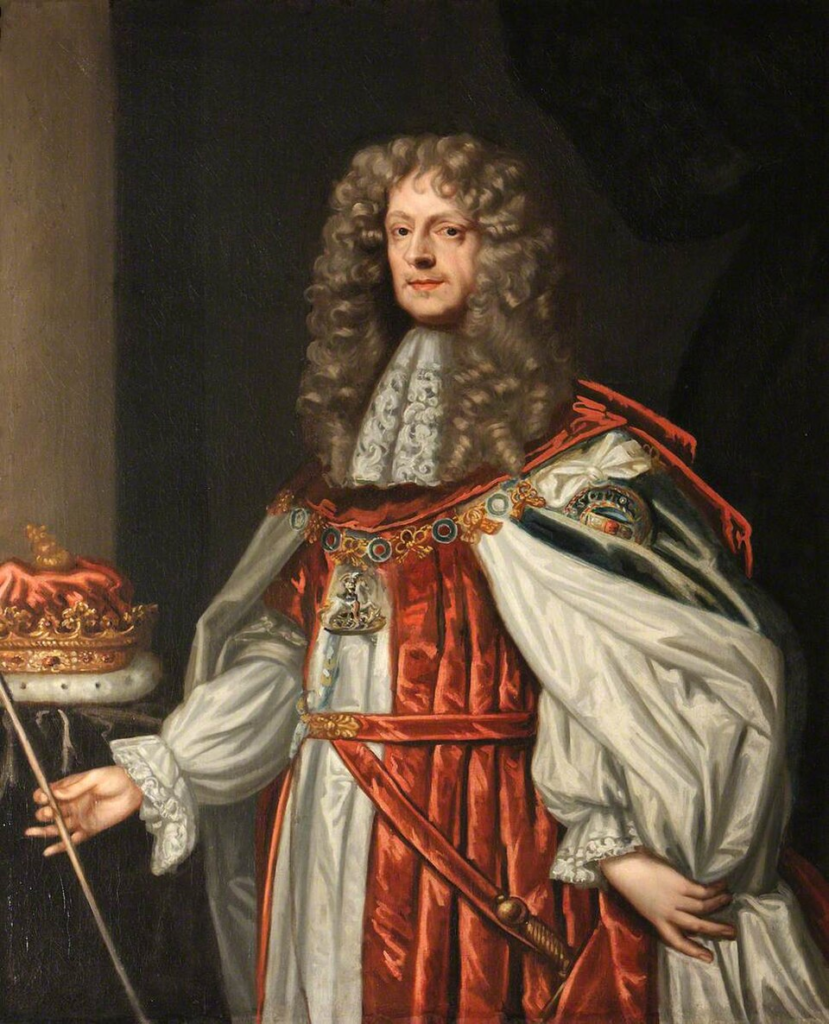
Blood’s response to his ruin was to conspire to seize Dublin Castle by force. His plan involved storming the castle and kidnapping James Butler, the 1st Duke of Ormond, who served as Lord Lieutenant of Ireland. A successful seizure would, Blood calculated, restore his lands and paralyze the royalist administration.
The night before the raid, the plot was betrayed. Most of Blood’s accomplices were captured and executed. Blood himself escaped into the mountains, reportedly disguised as a clergyman, then fled to the Dutch Republic. While there, he gained the favor of Admiral de Ruyter, an opponent of the English in the Anglo-Dutch Wars, and formed a working arrangement with George Villiers, the 2nd Duke of Buckingham. Historians have speculated that Buckingham used Blood as an instrument to punish political rivals without dirtying his own name, since his class ranking did not allow him to confront them directly.
Blood Tried to Have the Duke Hanged in the Street
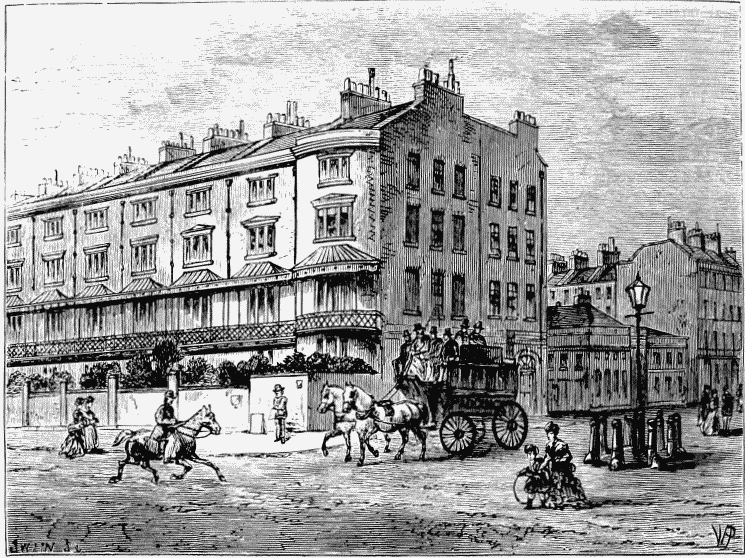
In 1670, Blood returned to England under the alias Ayloffe, posing as a doctor or apothecary in Romford Market, east of London. He had not forgotten the Duke of Ormond. Ormond was then living at Clarendon House. Blood tracked his movements and established that the Duke returned home late most evenings with a small escort.
On the night of 6 December 1670, Blood and a group of accomplices dragged Ormond from his coach on St James’s Street, bound him to one of their horses, and rode toward Tyburn with the stated intent of hanging him there. They pinned a document to Ormond’s chest explaining their reasons for his capture and murder. Ormond managed to free himself with the help of a servant who had given chase on horseback and escaped before reaching the gallows.
Blood vanished. The secrecy of the plot meant he went unsuspected, despite a reward being offered. When Ormond’s son Thomas Butler accused the Duke of Buckingham of orchestrating the attack in the presence of King Charles, he threatened to shoot Buckingham dead if his father were killed. Nothing came of it.
Blood had now failed twice. He decided to attempt something no one had ever attempted before.
The Crown Was Hidden Under His Coat
The approach to the Crown Jewels began in April 1671, when Blood arrived at the Tower with a female companion posing as his wife. While viewing the jewels, the companion feigned a stomach complaint. Edwards’s wife invited them upstairs to recover. When they departed, Blood and his companion thanked the Edwardses warmly and returned days later with four pairs of white gloves.
Over the following weeks, Blood became a fixture with the family. He arranged an introduction between a fictional nephew and the Edwards’s daughter, holding out the prospect of a marriage that would bring the young woman several hundred pounds. Edwards trusted him completely.
On 9 May 1671, Blood arrived with the nephew and two friends, requesting a private viewing while Mrs Edwards prepared dinner. The group entered the jewel room. The door closed.
Edwards was struck with the mallet, knocked to the floor, bound, gagged, and stabbed. Blood flattened the crown. Hunt filed the sceptre. Perrot concealed the orb. Then, at the worst possible moment, Edwards’s son Wythe returned unexpectedly from military service in Flanders and stumbled upon the scene. The watch posted at the door raised the alarm. Edwards tore his gag free.
“Treason! Murder! The Crown is stolen!”
Blood and his gang ran for their horses waiting at St Catherine’s Gate, firing on guards as they fled. They were chased down and overtaken before reaching the Iron Gate. Blood, struggling against his captors, reportedly declared: “It was a gallant attempt, however unsuccessful. It was for a crown.”
The King Pardoned Him and Paid His Salary
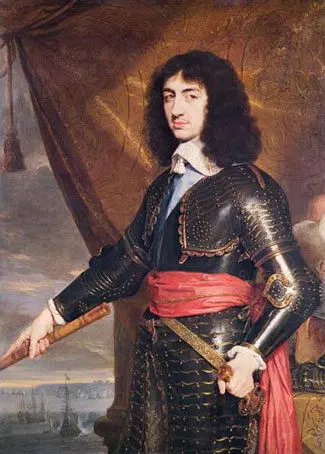
Blood was brought before King Charles II in chains. He refused to answer questions from anyone of lower rank. The crime was punishable by death. Few who knew the case expected any other outcome.
Charles not only pardoned Blood. He granted him land in Ireland worth £500 a year.
The reasons have never been definitively established. Some historians have speculated that Charles feared retaliation from Blood’s associates, who were thought to have sworn oaths of vengeance to their leader. Others believe the King was simply charmed. Blood informed Charles that the Crown Jewels were worth no more than £6,000, when the Crown’s own valuation stood at £100,000. He also told the King that he had once stood near him while he bathed in the Thames, pistol in hand, but had been overcome with awe and could not fire.
Whether Charles believed this or not, he appears to have found it diverting.
The reward for Blood’s capture was never paid. Talbot Edwards, the 77-year-old keeper who had been beaten and stabbed, received from the Crown less than £300, which was never paid in full. He returned to his post at the Tower and spent his remaining years recounting the story to visitors. He died in 1674, his tomb now in the chapel of St Peter Ad Vincula within the Tower itself.
Blood’s Death Still Required Confirmation
Blood spent his remaining years as a familiar figure around London, making frequent appearances at court and working as an intermediary in petitions to the Crown. In 1679, the Duke of Buckingham, his former associate, sued him for £10,000 over insulting remarks Blood had made about his character. Blood was convicted by the King’s Bench in 1680, granted bail, and never paid.
Released from prison in July 1680, he fell into a coma within weeks. Thomas Blood died on 24 August 1680 at his home in Bowling Alley, Westminster. He was buried in the churchyard of St Margaret’s Church near St James’s Park.
His body was subsequently exhumed.
The authorities, well acquainted with Blood’s reputation for improvisation, could not rule out that he had staged his own funeral to escape his debt to Buckingham. The corpse was examined and confirmed to be his. Even in death, Thomas Blood required official verification.
The question King Charles II never answered publicly why he pardoned, rewarded, and employed the man who had tried to steal his crown remains open. It is the one thing Blood never explained either.
Leave a Reply