
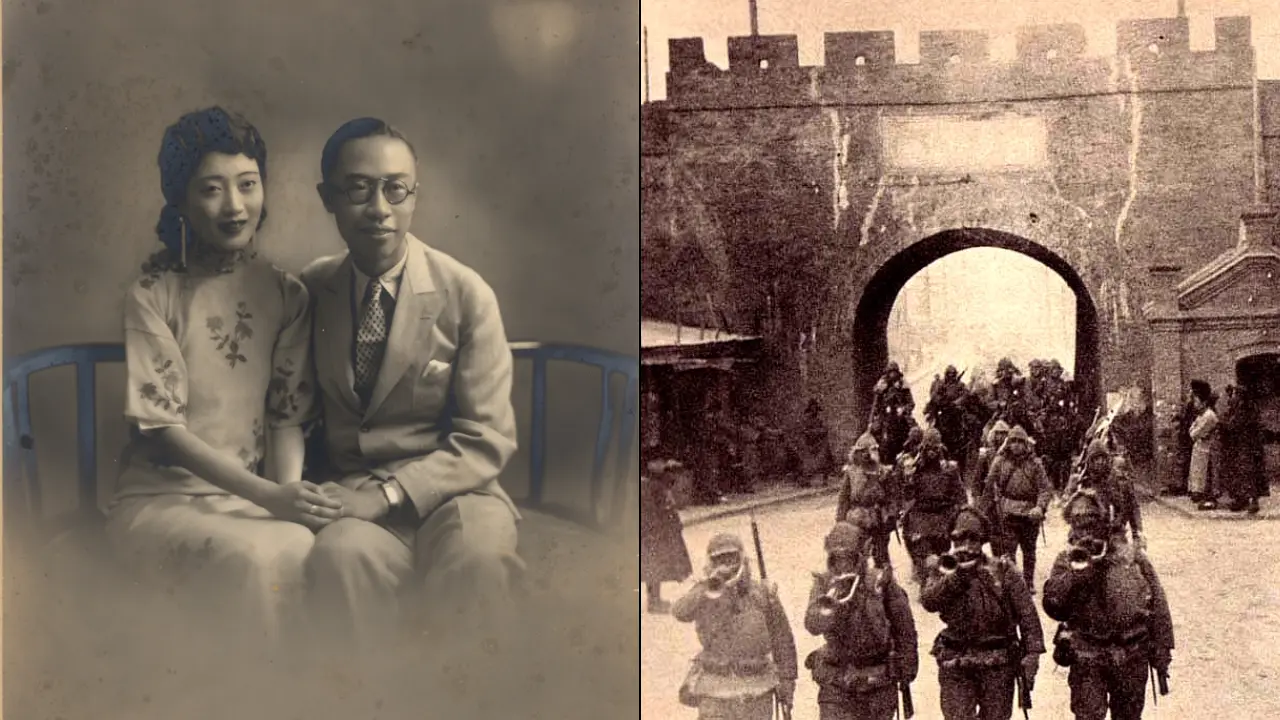
Born into one of Manchuria’s most powerful families in 1906, Wanrong married China’s deposed last emperor at sixteen, became the puppet empress of Japanese-occupied Manchukuo at twenty-seven, and died of opium withdrawal and malnutrition in a Jilin prison cell at thirty-nine.
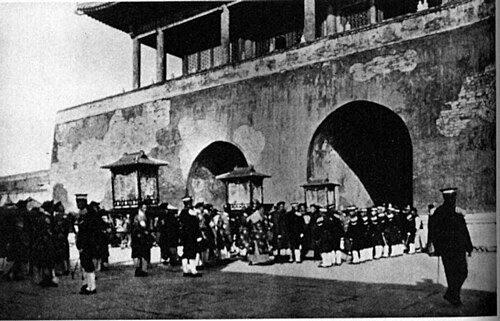
On December 1, 1922, a sedan chair draped in yellow brocade and roofed with a golden dragon moved through the moonlit streets of Beijing on the shoulders of sixteen noblemen. Behind its embroidered curtains sat a sixteen-year-old girl. American travel writer Richard Halliburton followed the procession through the city and watched as it wound toward the Forbidden City, the ancient seat of Chinese imperial power. “Headed straight for prison,” he wrote. “She was on the point of surrendering forever the freedom she had hitherto enjoyed.”
The great gates swung open. The sedan chair passed through. Then the gates boomed shut.
She would not know freedom again.
Wanrong Grows Up as the Qing Dynasty Crumbles
Gobulo Wanrong was born on November 13, 1906, into one of the most distinguished families in Manchurian society. Her clan, the Gobulo, belonged to the Plain White Banner of the Eight Banners, a hereditary military and social order that placed the family among Manchuria’s upper class. Her name, Wanrong, meant “Beautiful Countenance.” Her father, Rongyuan, held office under the Qing dynasty and was among the era’s wealthiest men.
Wanrong’s mother, Hengxin, died when Wanrong was approximately two years old. Her stepmother, Hengxiang, raised her alongside two brothers: her full brother, Runliang, and her half-brother, Runqi. Rongyuan held progressive views for his time. He believed his daughter deserved the same education as his sons and arranged for her to attend an American missionary school in Tianjin, where a teacher named Isabel Ingram taught her English, piano, and painting.
The world Wanrong had been born into was coming apart. The Qing dynasty, which had ruled China since 1644, had faced mounting pressure from European powers and a newly militarized Japan throughout the nineteenth century. In 1908, two years after Wanrong’s birth, the Guangxu Emperor died and was succeeded by his two-year-old nephew, Puyi. China was governed by an infant at the moment it needed decisive leadership most. By October 1911, revolution had swept across the country. The dynasty abdicated. A republic was declared. The last emperor retained his titles and remained inside the Forbidden City as a gilded remnant of the world that had just ended.
Puyi Selects a Bride from Photographs
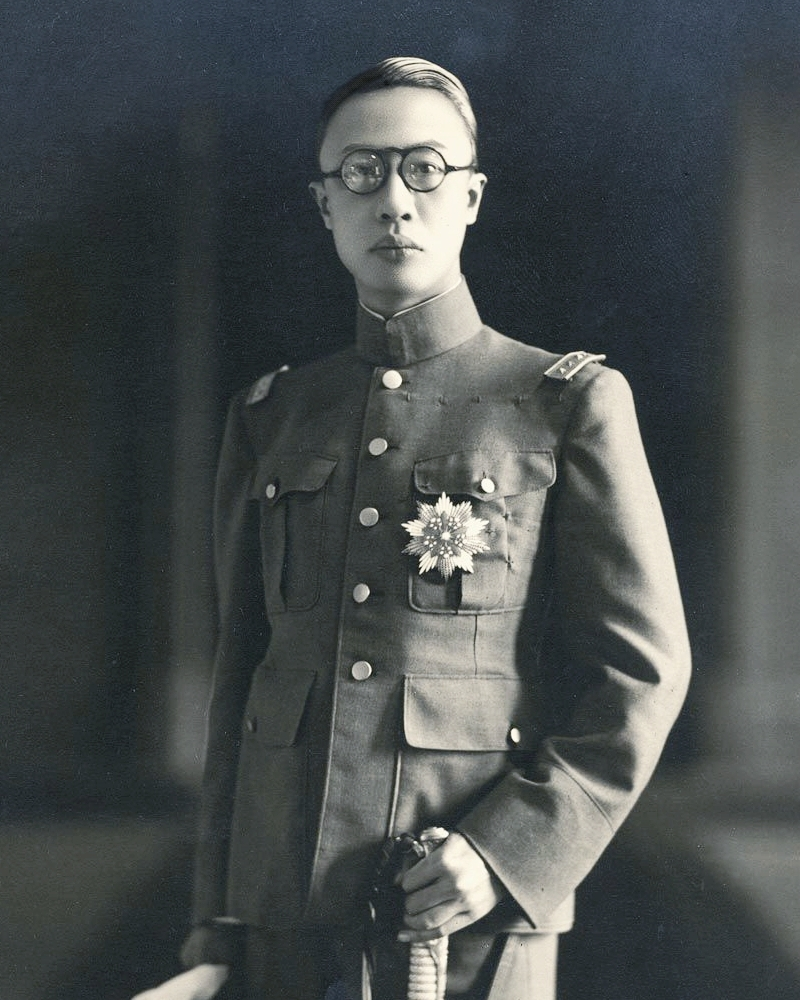
In 1922, Puyi turned sixteen and sought permission to marry. The selection process was conducted by photograph. A collection of portraits was presented to the former emperor, who was nearsighted and struggled to distinguish the faces. He initially chose Wenxiu, a twelve-year-old girl, but the dowager consorts overruled him. Wanrong, they advised, was a more suitable choice, given her family’s standing and her appearance. In accordance with Manchu tradition, Puyi would marry both women: Wanrong as his primary consort and empress, Wenxiu as his secondary consort.
Wanrong was not willing. Her half-brother Runqi recalled that palace eunuchs arrived at the family home to instruct her in imperial etiquette and court behavior. “She rebelled,” Runqi said. “She was fed up with the lessons and unhappy about marrying someone she had never met before.” Eventually, she conceded.
On December 1, 1922, the sedan chair passed through the Gate of Propitious Destiny. Wanrong became Empress of China.
She was sixteen. Her husband, she would soon understand, had no interest in her.
Life Inside the Forbidden City Begins to Decay
Wanrong’s quarters in the Palace of Gathering Elegance and Puyi’s in the Hall of Mental Cultivation were separated by hundreds of meters and a distance in every other sense. Her personal eunuch, Sun Yaoting, recalled that Puyi rarely came to her at night and left before morning whenever he did. She never closed her door, Sun noted, but only drew the curtain, as though waiting.
The Forbidden City gave Wanrong almost everything except company. She had her own kitchen, her own tailor who made new dresses almost every day, and a retinue of servants available at any hour. She played piano, composed poetry, painted, and wrote letters in English. A classical literature tutor who taught her in Tianjin later recorded his admiration in writing: “She was wise and eager to learn. If she kept on teaching herself, I believed she would be able to refer to the past for the present.” She had almost no one to speak with.
She perceived Wenxiu as a rival. She composed sarcastic poems about her and wrote letters mocking her mannerisms. The jealousy was not irrational. Puyi later described both women as “furniture” and “tools.” He showed little preference for either. In diary entries written in those first years inside the Forbidden City, Wanrong recorded the loneliness in formal language that barely contained what lay beneath it.
In December 1923, she donated 600 yuan to a charity during a period of widespread famine. International newspapers praised her generosity.
She had begun smoking opium.
Feng Yuxiang Expels the Imperial Household from Beijing
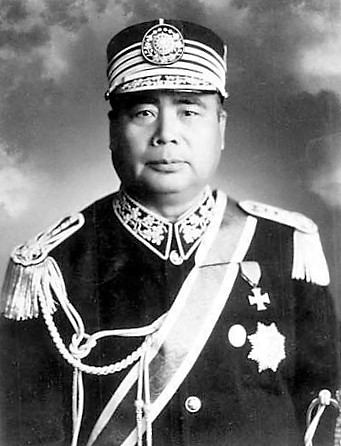
In October 1924, the warlord Feng Yuxiang seized control of Beijing. On November 5, he issued a decree expelling the former imperial household from the Forbidden City that same night. After weeks in temporary accommodation, Puyi, Wanrong, and Wenxiu settled in the Japanese concession in Tianjin.
In Tianjin, Puyi and Wanrong adopted Western names, calling themselves Henry and Elizabeth. They attended the opera, visited the racetrack, and socialized in ways the Forbidden City had never permitted. Wanrong shopped, went skating, and rode horses. Those who observed them in this period noted that Puyi spent more time with her in Tianjin than he had inside the palace. It was the closest she came to a life she might have chosen.
The opium habit she had developed inside the Forbidden City continued. It deepened.
Wenxiu divorced Puyi in 1931, citing his neglect. Wanrong did not follow her. She placed too much significance on her title as empress to relinquish it. Puyi wrote later: “If she had divorced me in Tianjin as Wenxiu had done, she might have escaped her fate.”
He was right.
Japan Installs Puyi and Wanrong as Puppet Rulers
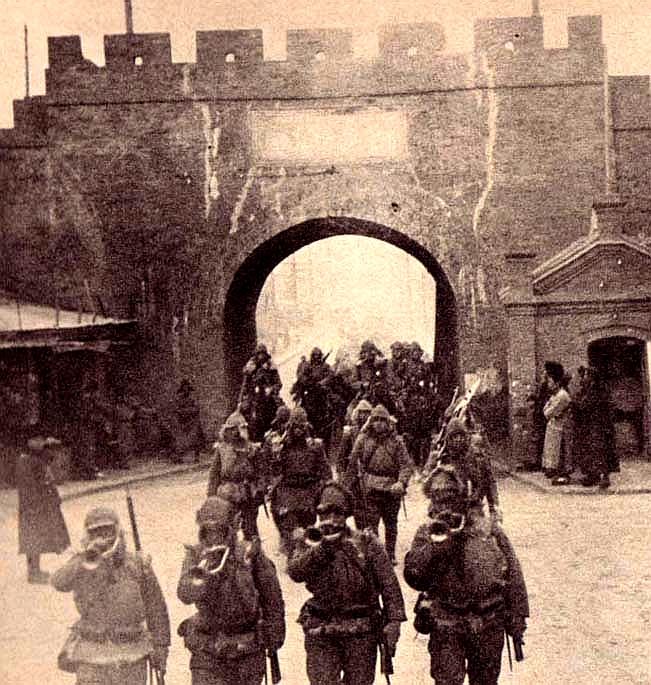
In September 1931, the Japanese Imperial Army invaded Manchuria, Wanrong’s ancestral homeland in northeastern China. By March 1, 1932, Japan had established the puppet state of Manchukuo across the conquered territory and approached Puyi with an offer: accept the position of head of state, and the imperial titles would be restored.
Wanrong opposed it. She distrusted the Japanese and understood what acceptance would mean. Puyi hesitated. The Japanese sent trusted intermediaries to persuade him. He accepted.
On March 1, 1934, Japan proclaimed Puyi emperor of Manchukuo and Wanrong his empress. The couple took up residence in Xinjing in a converted tax office that served as a temporary imperial palace.
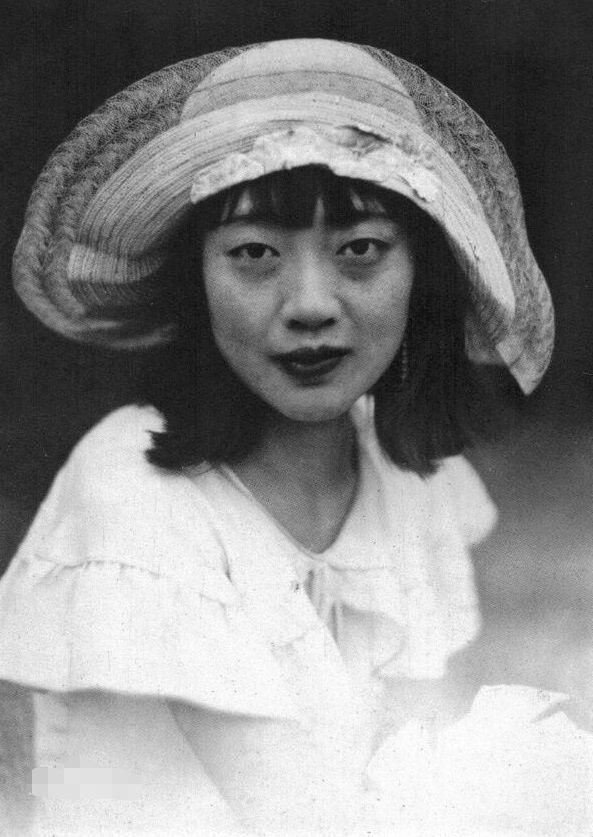
Every movement Wanrong made was monitored by Japanese handlers. Her attempts to communicate with the outside world were intercepted. On at least two occasions she made secret plans to escape. A diplomat named Wellington Koo recorded in his memoirs being approached by a man disguised as an antique dealer, sent on Wanrong’s behalf to seek help leaving the capital. The man told Koo that Wanrong “felt miserable about her life” and that “her every move was watched and denounced.” Koo could not help her. The plan collapsed.
“Why can everyone else be free, but I can’t be free?” Wanrong was heard asking.
Isolation and Opium Destroy the Empress’s Mind
The opium habit that had begun inside the Forbidden City and deepened in Tianjin became consuming in Manchukuo. Between July 1938 and July 1939 alone, Wanrong reportedly purchased more than 740 ounces of opium, an estimated two ounces per day if all consumed. Her monthly expenditure doubled, most of it going toward opium and fashion magazines.
Out of loneliness, Wanrong entered into secret affairs with two of Puyi’s palace aides inside the imperial residence in Xinjing. One of these affairs produced an illegitimate daughter. Puyi’s Japanese handlers killed the baby at delivery, reportedly throwing the newborn into a boiler. Wanrong’s pleadings made no difference. There are two accounts of what followed: one holds that Puyi subsequently told her the baby had been adopted and raised elsewhere, and that she died still believing this; the other, supported by accounts from palace staff, holds that she knew the truth, and that her remaining years in Manchukuo were lived in the continuous opium-induced state that knowledge required.
Her physical deterioration accelerated. She refused to wash or groom herself. Her toenails grew until they curled into the flesh of her feet. She became skeletal. After 1937, she no longer appeared at New Year celebrations or birthday gatherings. Hiro Saga, wife of Puyi’s brother Pujie, observed Wanrong at a shared dinner that year and watched her pile serving after serving onto her plate, unaware of how much she was taking. Her brother Runqi ate with theatrical excess beside her to draw the table’s attention away from the empress.
Wanrong’s father eventually stopped visiting.
In August 1945, with the Soviet Union having entered the Pacific War and its forces pouring into Manchukuo, Puyi gathered his household and moved by train from Xinjing to Dalizi. From Dalizi, he boarded a plane alone to Mukden.
He did not take Wanrong with him.
She was left in Dalizi with Puyi’s concubine Li Yuqin, Hiro Saga, and a small group of attendants. In January 1946, Wanrong and Saga attempted to cross into Korea. Communist guerrillas captured them near present-day Linjiang, in Jilin province.
The Empress Dies in a Communist Prison Cell
What followed has been recorded by those who were there.
Wanrong was transferred between Communist-held prisons in Jilin province, cut off from any supply of opium. The withdrawal was catastrophic. Saga, who cared for her through this final period, wrote of the Jilin prison: “All day long, the Empress rolled around on the wooden floor, screaming and moaning like a mad woman, her eyes were wide with agony.” Because she was a former imperial figure, Wanrong was put on display inside the jail for local people to observe. People came from miles around to watch. A guard told Saga it was a waste of time feeding her.
In her final days, confined to a cell in Yanji, Wanrong could no longer walk. She spoke to prison guards in the commanding tone she had used inside the imperial palace. The guards laughed at her. Saga looked through the small window of her cell and found Wanrong on the concrete floor, having fallen from her bunk, her food left untouched by the far wall for days.
Gobulo Wanrong died on June 20, 1946, in Yanji, Jilin province, from malnutrition and opium withdrawal. She was thirty-nine years old. Her body was reportedly wrapped in cloth and discarded in the hills outside the city. Her remains were never recovered.
Three years later, Puyi learned from a letter that she had died. He was, by all accounts, emotionless.
In 1951, while imprisoned himself by the Chinese Communist government, Puyi posthumously honored Wanrong with the title Empress Xiaokemin, a name combining the characters for “filial,” “dutiful,” and “misfortune.” Near Beijing today, a ceremonial tomb stands in her memory.
Her body is not there.
Leave a Reply