
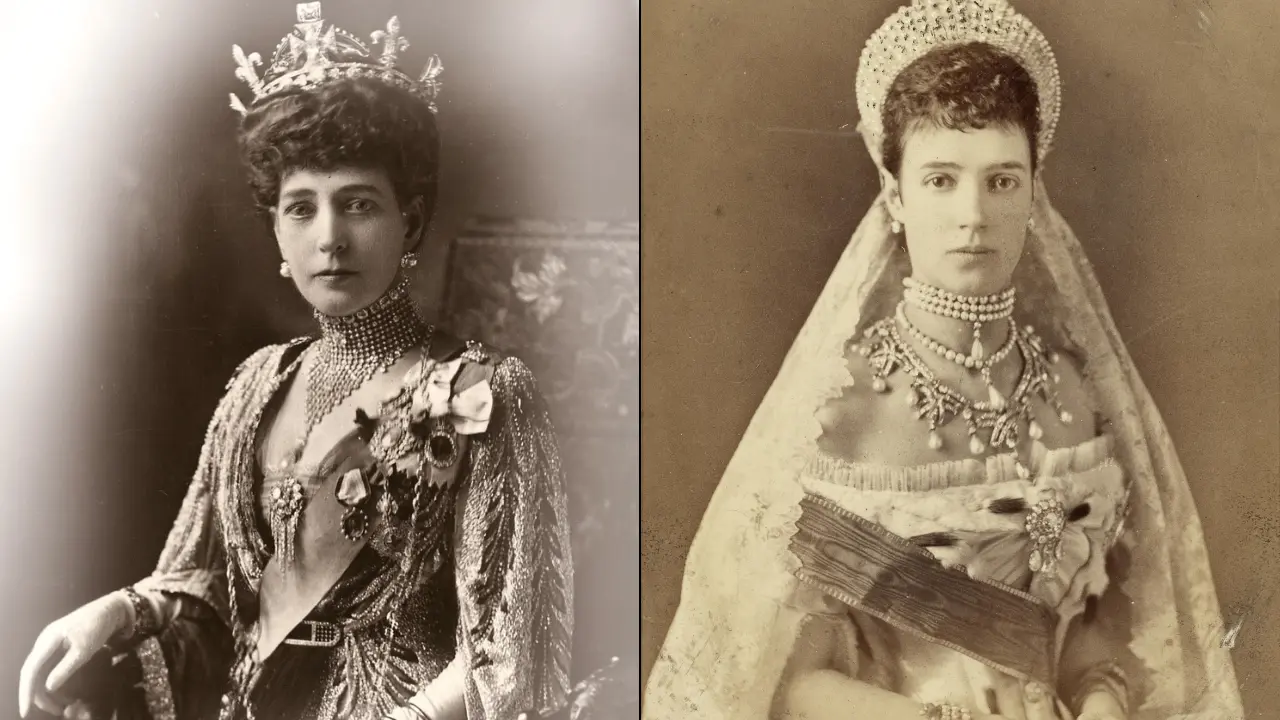
For 47 years as Princess of Wales, Alexandra of Denmark endured a faithless husband, the death of her eldest son, and progressive deafness, while remaining the most adored royal in the British Empire.
On 7 March 1863, Alexandra of Denmark stepped off the royal yacht Victoria and Albert at Gravesend, Kent. She was 18 years old. Alfred, Lord Tennyson, the Poet Laureate, had already written her an ode. The crowd at the dock cheered so loudly the sound carried across the water. Fashion-conscious women across Britain had already begun copying her style of dress and bearing.
She had known her fiancé for eighteen months.
Copenhagen Raised Her on Almost Nothing
Born on 1 December 1844 at the Yellow Palace, an 18th-century town house in Copenhagen, Alexandra entered the world bearing a name built for formal occasions: Princess Alexandra Caroline Marie Charlotte Louise Julia. Her family called her Alix. Her father was Prince Christian of Schleswig-Holstein-Sonderburg-Glücksburg, a member of a distant cadet branch of the Danish royal family. Her mother was Princess Louise of Hesse-Kassel. She had five siblings: Frederick, William, Dagmar, Thyra, and Valdemar.
The family’s royal blood was not matched by royal income. Her father earned approximately £800 a year from his army commission. Alexandra shared a draughty attic bedroom with her sister Dagmar, made her own clothes, and waited at table. On occasion, Hans Christian Andersen was invited to the house to tell the children stories before bedtime.
In 1852, a Danish succession crisis altered the family’s formal position without much changing its daily circumstances. King Frederick VII of Denmark was childless. The major European powers brokered an agreement naming Prince Christian as Frederick’s heir in all his dominions. Alexandra’s father became Prince of Denmark, and the family moved to Bernstorff Palace. The income stayed roughly the same.
Alexandra received an education in several European languages and was confirmed at Christiansborg Palace. She was devout throughout her life. She learned English from the English chaplain in Copenhagen. She waited to be told who she would marry.
Victoria Selected Her as the Only Candidate
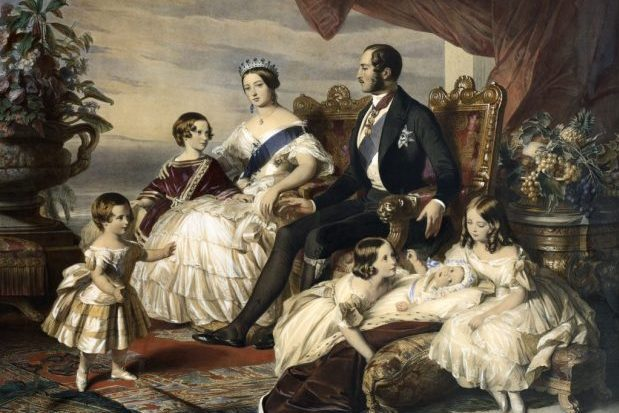
By 1860, Queen Victoria and her consort Prince Albert had begun the search for a bride for their eldest son, Albert Edward, Prince of Wales, who was approaching twenty. They enlisted their eldest daughter, Crown Princess Victoria of Prussia, to identify candidates. Alexandra was not the first choice. Most of the British royal family’s relations were German, and the Danes were in active territorial dispute with Prussia over Schleswig-Holstein. Eventually, after dismissing other possibilities, they settled on Alexandra as, in their own words, “the only one to be chosen.”
On 24 September 1861, Crown Princess Victoria introduced her brother to Alexandra at Speyer. Albert Edward was 19. Alexandra was 16. The courtship continued despite the fact that Albert Edward was then conducting an affair with an actress named Nellie Clifden. On 9 September 1862, at the Royal Castle of Laeken in Belgium, the Prince proposed. Alexandra was 17.
They married on 10 March 1863 at St George’s Chapel, Windsor Castle. The British press complained that the venue was too far from London for crowds to gather. The Danes were dismayed that only Alexandra’s closest relations had received invitations. The court was still in mourning for Prince Albert, and ladies attending were restricted to wearing grey, lilac, or mauve. The bride arrived. The crowd cheered. The ode was read.
The marriage would last forty-seven years.
Illness and Betrayal Defined Her Marriage
The early years of the marriage produced six children. Albert Victor was born two months premature in early 1864. George followed in the summer of 1865. Three daughters, Louise, Victoria, and Maud, arrived in 1867, 1868, and 1869. All were born before term. The final pregnancy ended in April 1871, when Alexandra gave birth to Prince Alexander John. The infant died the following day.
During the birth of her third child in 1867, rheumatic fever set in and threatened her life. She survived, but was left with a permanent limp. Society women across Britain admired her so thoroughly that they began imitating her gait. The imitation acquired its own name: the Alexandra limp.
Around the same time, Alexandra began to lose her hearing. She had inherited otosclerosis, a condition of progressive deafness. By her thirties, the social life that had been the foundation of her happiness was increasingly inaccessible. She withdrew to her children, her horses, and Sandringham House.
Her husband did not withdraw with her. Albert Edward maintained a succession of mistresses throughout the marriage: the actress Lillie Langtry, Daisy Greville Countess of Warwick, Agnes Keyser, and Alice Keppel, among others. Alexandra knew about most of these relationships. When Alice Keppel asked to visit Edward in his final hours, Alexandra permitted it.
Alexandra herself, by all surviving correspondence, remained faithful throughout forty-seven years of marriage.
She Buried Her Eldest Son at Sandringham
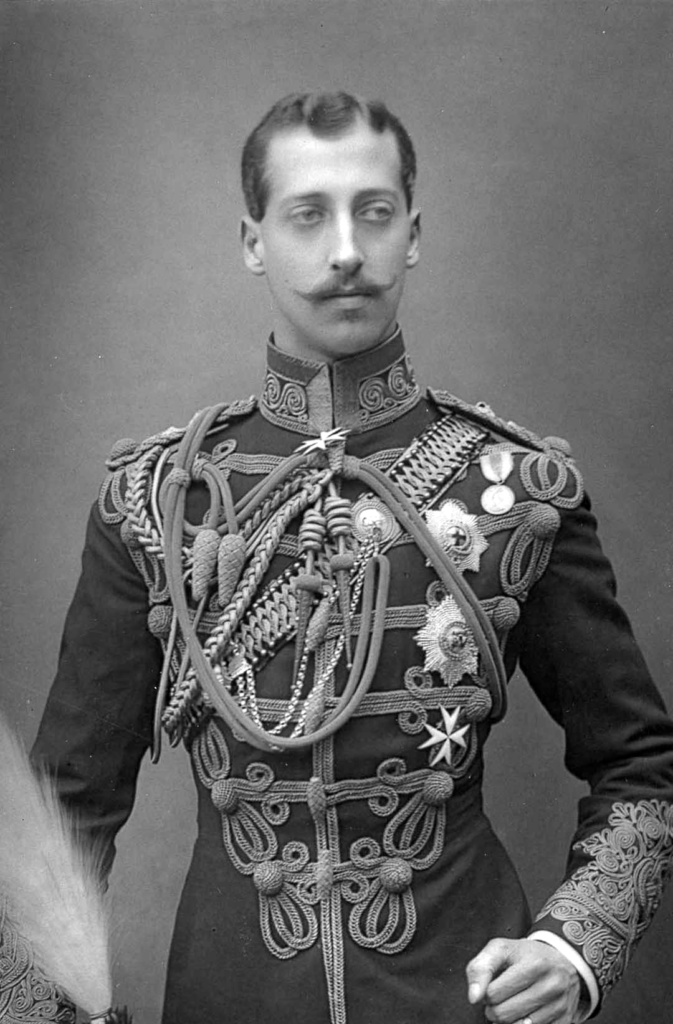
On 14 January 1892, Prince Albert Victor died at Sandringham House. He was 28 years old, the eldest son of the Prince and Princess of Wales. Influenza had taken him in a week.
Alexandra had his room preserved exactly as he had left it. She had watched her mother-in-law do the same with Prince Albert’s possessions thirty years before. She said: “I have buried my angel and with him my happiness.”
She was 47 years old. Thirty-three years remained.
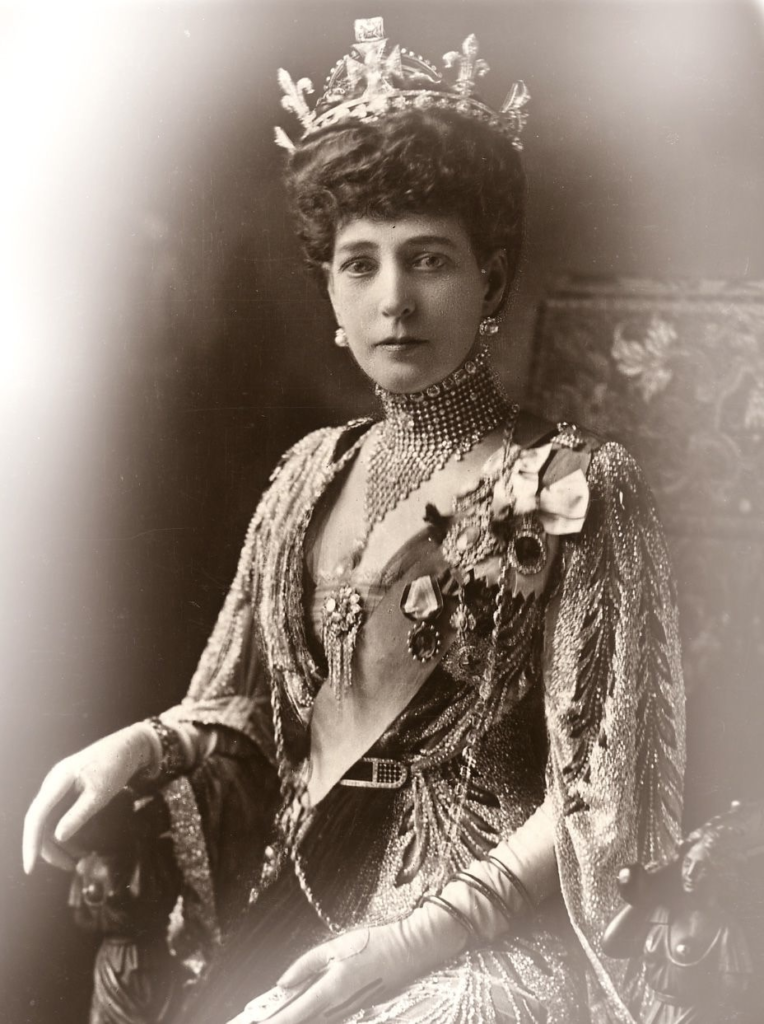
She Waited 38 Years to Become Queen
On 22 January 1901, Queen Victoria died at the age of 81. Albert Edward became King Edward VII. Alexandra, after 38 years as Princess of Wales, the longest anyone has ever held that title, became Queen Consort and Empress of India.
She was 56 years old.
The coronation had to wait. Just days before the planned ceremony in June 1902, the King was struck by appendicitis and required surgery, performed by Frederick Treves of the London Hospital. The coronation was postponed and finally held on 9 August 1902 at Westminster Abbey, more than eighteen months after Victoria’s death. The Archbishop of Canterbury, Frederick Temple, aged and visibly struggling on the day, refused to delegate any part of the ceremony and had to be supported throughout the service.
Alexandra’s political instincts had long been sharper than her position allowed. In 1890, she had written a memorandum to senior British ministers and military personnel warning against the proposed exchange of the British North Sea island of Heligoland for the German colony of Zanzibar. She argued that Heligoland held strategic value Britain could not afford to surrender. The exchange proceeded. Germany fortified the island. It became, in the assessment of historian Robert Ensor and precisely as Alexandra had predicted, “the keystone of Germany’s maritime position for offence as well as for defence.”
No one had listened.
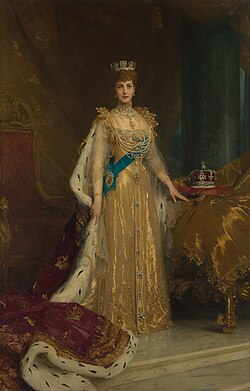
Alexandra Broke Precedent and Entered the Commons
In 1910, Alexandra became the first queen consort in British history to enter the House of Commons during a debate. For two hours she sat in the Ladies’ Gallery and watched the Parliament Bill argued below, the legislation that would strip the House of Lords of its power of veto. She privately opposed the bill.
She was there regardless.
Shortly after, she traveled to Corfu to visit her brother George. Word reached her there that Edward was gravely ill. She returned at once and arrived one day before he died. In his final hours, she administered oxygen to him from a gas cylinder. Edward VII died on 6 May 1910. She told a courtier afterward: “I feel as if I had been turned into stone, unable to cry, unable to grasp the meaning of it all.”
Her son became George V. Alexandra moved from Buckingham Palace to Marlborough House.
Alexandra Outlasted the World That Defined Her
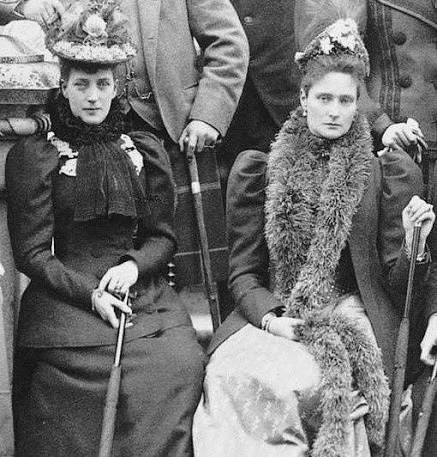
During the First World War, while the German heritage of the British royal family drew public scrutiny, Alexandra was unequivocal about where she stood. She had never forgiven Prussia for invading Denmark in the 1860s. The Frankfurter Zeitung identified her and her sister, the Dowager Empress Maria of Russia, as “the centre of the international anti-German conspiracy.” When the revolution came to Russia and Maria was evacuated aboard HMS Marlborough in 1919, she was brought to England and lived for a time with Alexandra.
By the early 1920s, Alexandra’s memory and speech were failing. In 1920, a blood vessel in her eye had burst, leaving her temporarily partially blind. She withdrew from public life.
She died at Sandringham House on 20 November 1925, aged 80, from a heart attack. Her funeral was held at Westminster Abbey on 27 November. The following day she was interred beside Edward at St George’s Chapel, Windsor Castle. A memorial by the sculptor Alfred Gilbert was unveiled at Marlborough Gate on 8 June 1932, opposite St James’s Palace, where it stands still.
For decades, society women across Britain copied the slight unevenness in her walk. They called it elegance. It was the mark left on her body by a bout of rheumatic fever in 1867, in the year she nearly died in childbirth while her husband’s affair circulated through London society.
They copied her limp without knowing what had made it.
Leave a Reply