
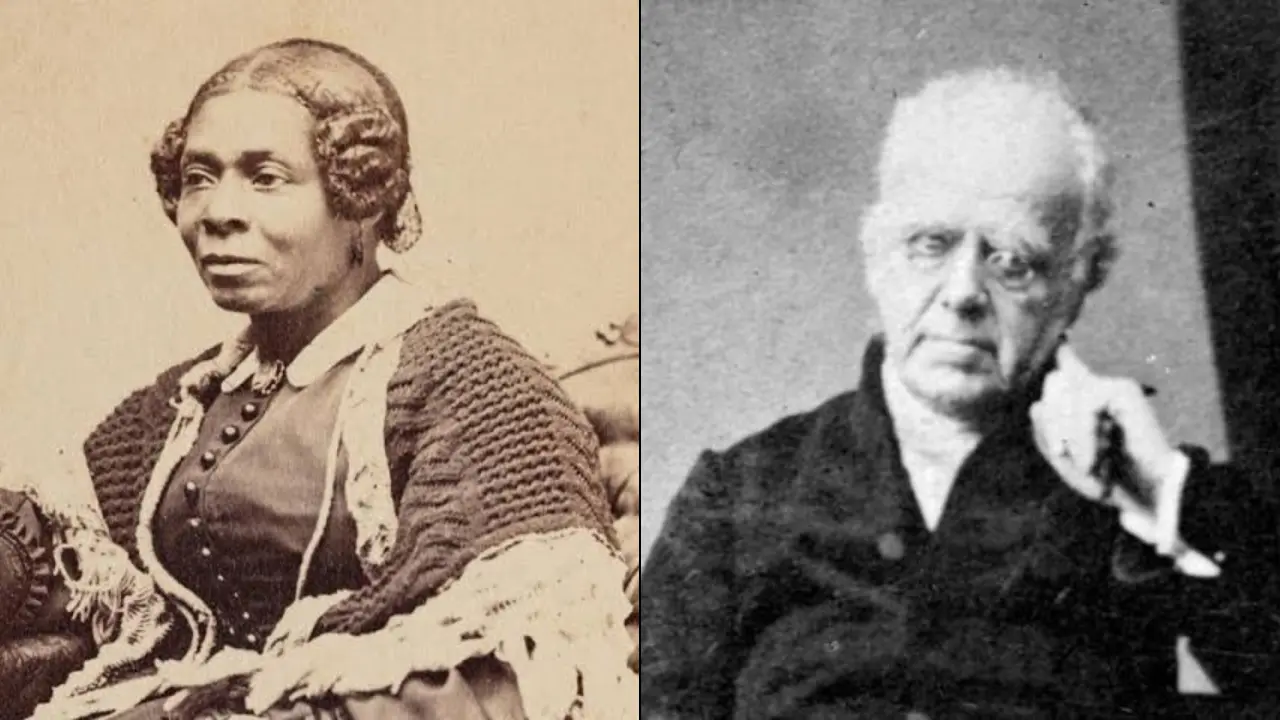
In 1855, a seven-year-old girl who appeared entirely white was freed from slavery in Virginia and photographed at a Washington gallery, then deployed by a United States senator as the most powerful abolitionist argument a Northern audience had ever been asked to absorb.
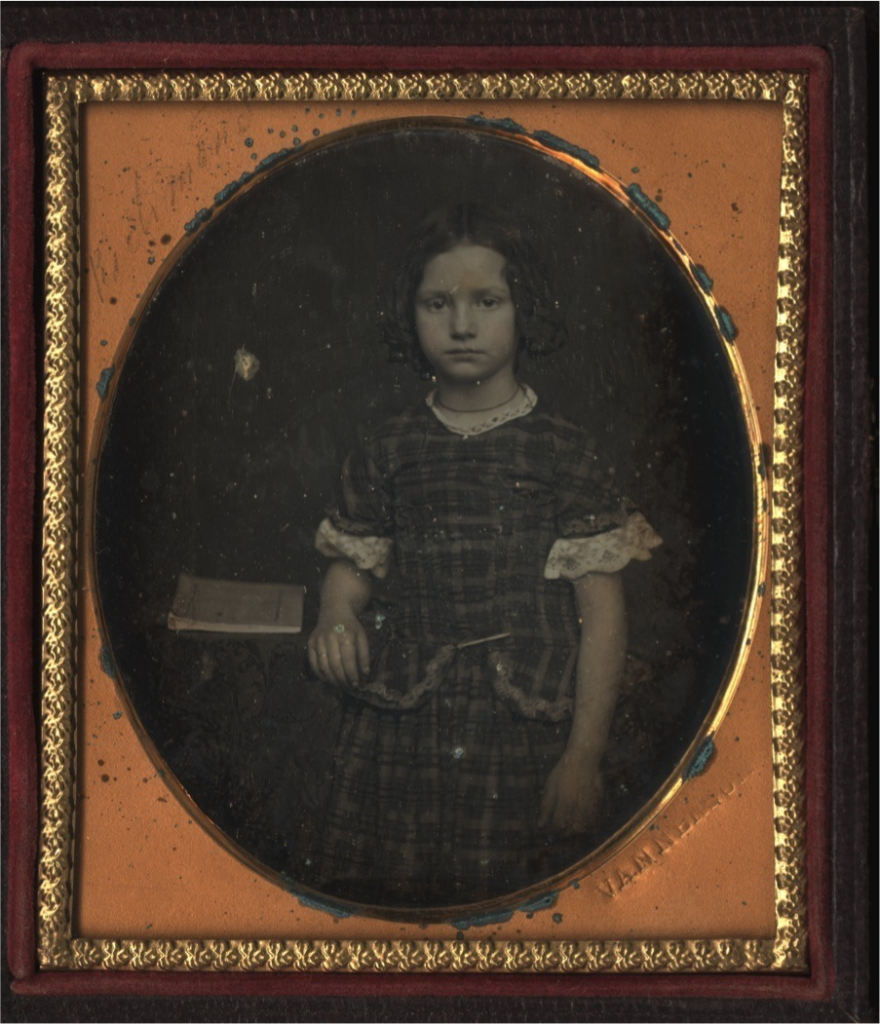
On March 1, 1855, a letter from Senator Charles Sumner of Massachusetts appeared in the pages of the New York Daily Times. Enclosed with it was a daguerreotype. In the image, a small girl stood beside a table, her expression composed, her hair straight, her features unmistakably European. She wore a lace-trimmed dress. Gold jewelry framed her face. She had been a slave in Virginia three weeks earlier.
Sumner described her in the letter as “a most beautiful white girl, with high forehead, straight hair, intellectual appearance, and decidedly attractive features.” He then called her “another Ida May” the fictional white girl sold into slavery in Mary Hayden Pike’s bestselling 1854 abolitionist novel of the same name. Her name was Mary Mildred Botts. Sumner’s letter did not introduce her to the country. It aimed her at it.
Mary Botts Was Born Into Slavery Despite Looking Entirely White
Mary Mildred Botts was born in 1847 in Prince William County, Virginia, near the village of Washington. She was the second child of Seth Botts and his wife Elizabeth, née Nelson. Both parents were enslaved.
Her family history was a diagram of what slavery produced over generations.
Elizabeth’s father was Thomas Nelson, a white man who had enslaved Elizabeth’s mother, Prudence, and who by law enslaved his own daughter as well. When Nelson died in late 1845, Elizabeth passed into the ownership of his brother-in-law, J.C. Weedon, along with her mother and sisters. Mary’s father, Seth Botts, was enslaved separately in neighboring Stafford County, the probable illegitimate son of a white freeman. In the racial arithmetic of the era, Elizabeth would have been classified as a quadroon or octoroon, terms indicating a person with predominantly white ancestry.
Mary and her younger sister Adelaide appeared entirely white. Given that Elizabeth had been transferred to the Weedon household in early 1846, a year before Mary was born, contemporaries then and historians since have suspected that Weedon was the biological father of both girls. The historical record leaves the question open. Seth continued to visit Elizabeth after her transfer, and the timing of those visits may have aligned with the conceptions of both daughters. The uncertainty was never resolved.
Under Virginia law, none of it mattered. Whatever her biology, her mother was enslaved. She was enslaved.
Seth Botts Escaped to Boston and Spent Five Years Buying His Family’s Freedom
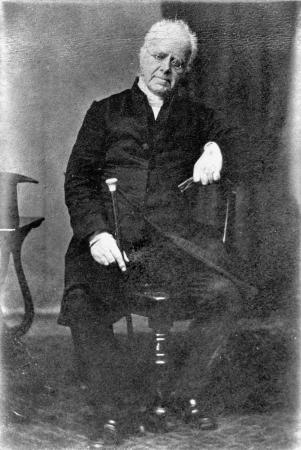
In 1850, Seth Botts made his escape. He traveled north along the Underground Railroad, reached Boston, and assumed the name Henry Williams. For five years, working within the city’s abolitionist network, he built the connections and raised the money that his family’s freedom required.
One of the people he reached was Senator Charles Sumner, then a founding member of the Massachusetts Republican Party and one of the most combative antislavery voices in the Senate. With financial support from Sumner and other abolitionist allies, Seth raised enough by early 1855 to purchase the freedom of Elizabeth, Mary, Adelaide, and the rest of the family. They joined him in Boston. The family adopted the Williams surname.
Mary Mildred Botts was seven years old and newly free.
Sumner had already arranged to have her photographed. In February 1855, at Vannerson’s Gallery in Washington, D.C., photographer Julian Vannerson known for his portraits of the Washington elite captured Mary’s image. The styling was precise and calculated: the lace dress, the gold jewelry, the posture at the table, every element designed to make a Northern viewer see a prosperous white child. Sumner was in possession of the daguerreotype and he knew exactly what he intended to do with it.
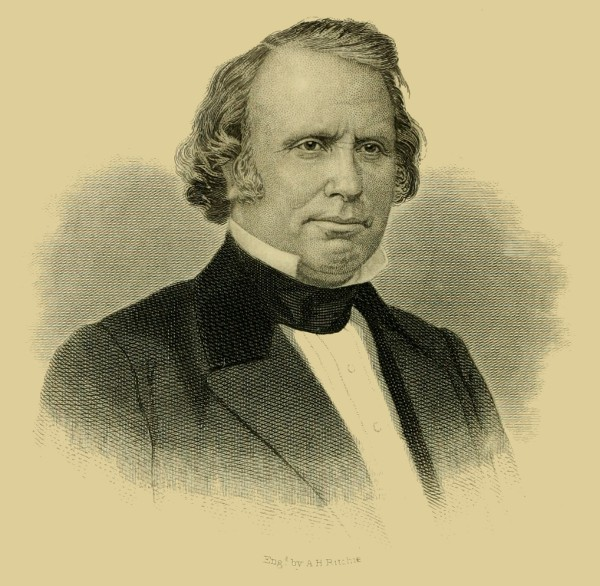
Sumner Turned the Photograph Into a National Political Instrument
Sumner’s letter ran first in the Boston Telegraph on February 27, 1855, then in the New York Daily Times on March 1. The New York Daily Times followed up on March 9 with a report that Mary had visited their offices, and expressed their “astonishment” that the girl had “ever been held a slave.”
A columnist in Frederick Douglass’s newspaper described her as “perfectly white, and on that account produces intense excitement.” Copies of the daguerreotype circulated through Northern cities. Mary was compared everywhere to Ida May, the fictional white slave of Pike’s novel. The comparison was not incidental. It was the argument.
That spring, Mary sat onstage at abolitionist lectures alongside Sumner and other speakers. She did not give speeches. She did not need to. Her presence was the argument.
Historian Mary Niall Mitchell has argued that those who promoted Mary to public attention in 1855 “made slavery white in order to make its hardships legible to other white men, who could vote but who did not always recognize the full humanity of those who could not.” A Northern white family looking at that daguerreotype could not say slavery was someone else’s concern. She looked like their daughter. The comfort of distance collapsed.
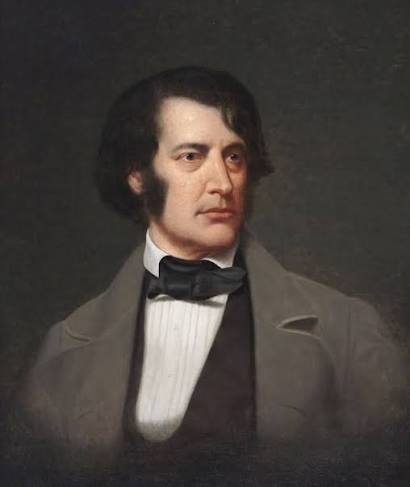
The Caning of Sumner Turned Political Dispute Into National Rupture
On May 19 and 20, 1856, Sumner delivered a five-hour address in the Senate titled “The Crime Against Kansas.” He condemned the pro-slavery forces attempting to extend slavery into new territories, and he was explicit about the sexual exploitation embedded in the institution the same exploitation that had produced children like Mary Mildred Williams across the antebellum South.
Two days later, on May 22, 1856, Representative Preston Brooks of South Carolina entered the Senate chamber and waited for it to clear. He approached Sumner at his desk. He raised a gold-headed cane and struck Sumner more than thirty times. Sumner lost consciousness and was carried from the chamber with severe head and neck wounds.
In 1857, Sumner sought advanced care in Paris, where neurologist Charles-Édouard Brown-Séquard diagnosed spinal cord damage and prescribed cauterization along the spine to alleviate persistent neuralgia and mobility impairments. Sumner did not return full-time to his Senate seat until December 1859. He never fully recovered.
Massachusetts left his Senate seat conspicuously empty throughout his absence. South Carolina held events in Brooks’s honor and reelected him to his House seat. Replacement canes were sent to Brooks from across the South. That response outraged Northern moderates more than the attack itself had.
The empty desk was more eloquent than most speeches. The Civil War began five years later.
Mary Williams Lived Out the Rest of Her Life in Quiet Obscurity
While the politics cracked apart and the country went to war, Mary Mildred Williams lived in Boston. She was old enough by 1861 to understand something of what had happened. She was fourteen.
After emancipation, the Williams household became an informal refuge for freed people arriving from the South. Census records from the 1870s and 1880s show the family sheltering multiple former enslaved individuals from Louisiana, North Carolina, and other Southern states. In time, the family members dispersed.
Mary took a position in 1882 as a clerk in the registry of deeds office, earning an annual salary of $780. She moved to an apartment on Tremont Street in 1888 to be closer to work. She stayed until she retired in the early years of the twentieth century. She never married. She had no children.
In the census records of her adult life, she identified as white. The 1900 federal census places her in the Beacon Hill neighborhood of Boston known at the turn of the century for its tolerance of unconventional domestic arrangements living with a female companion named Mary Maynard, then 45 years of age.
Mary Mildred Williams died in Boston in 1921. She was approximately 73 years old.
In 1855, her face had appeared on the pages of newspapers from Boston to New York. Sumner had called her “another Ida May” and sent her image across the North. She had not asked to be a symbol. She was seven years old.
By the time she died, no obituary marked her passing. The country she had helped push toward its most consequential rupture had entirely forgotten her name.
Leave a Reply