
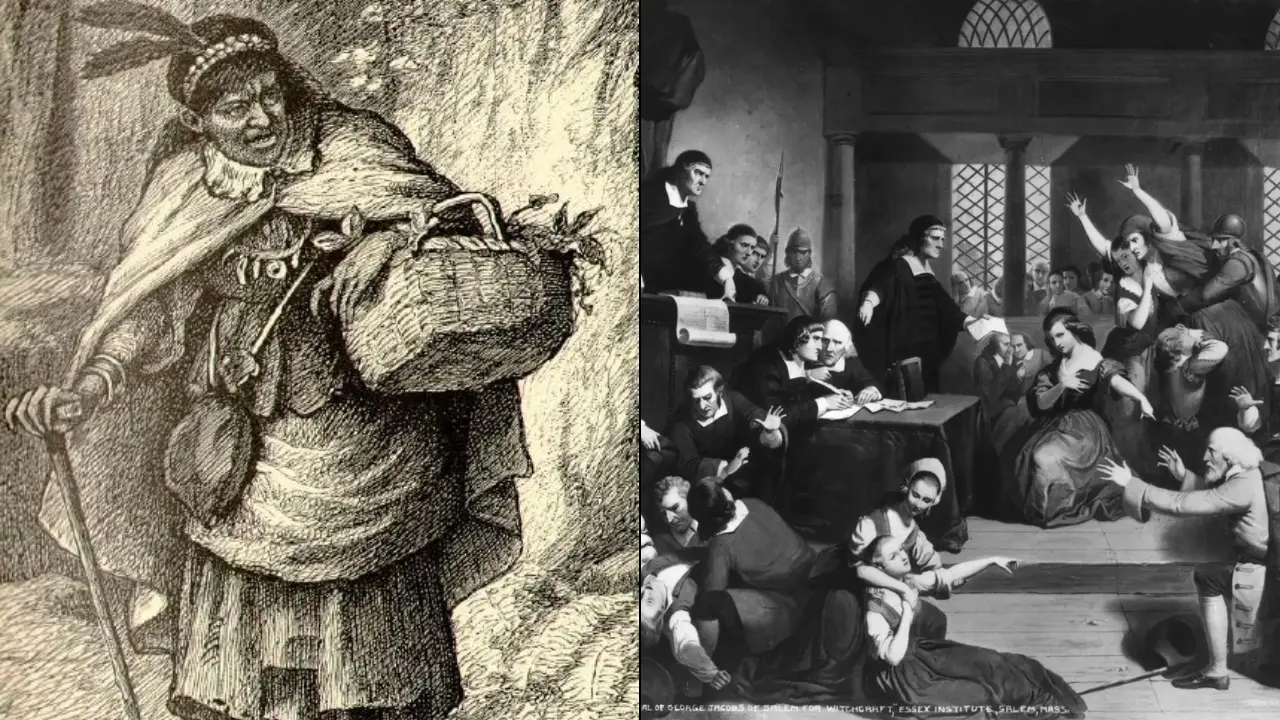
An Indigenous woman beaten into confessing witchcraft, Tituba gave testimony in March 1692 that sent more than 200 people to trial and 19 to the gallows. After 1693, she vanishes from the historical record entirely.
A Woman Stood Before Salem and Decided to Talk
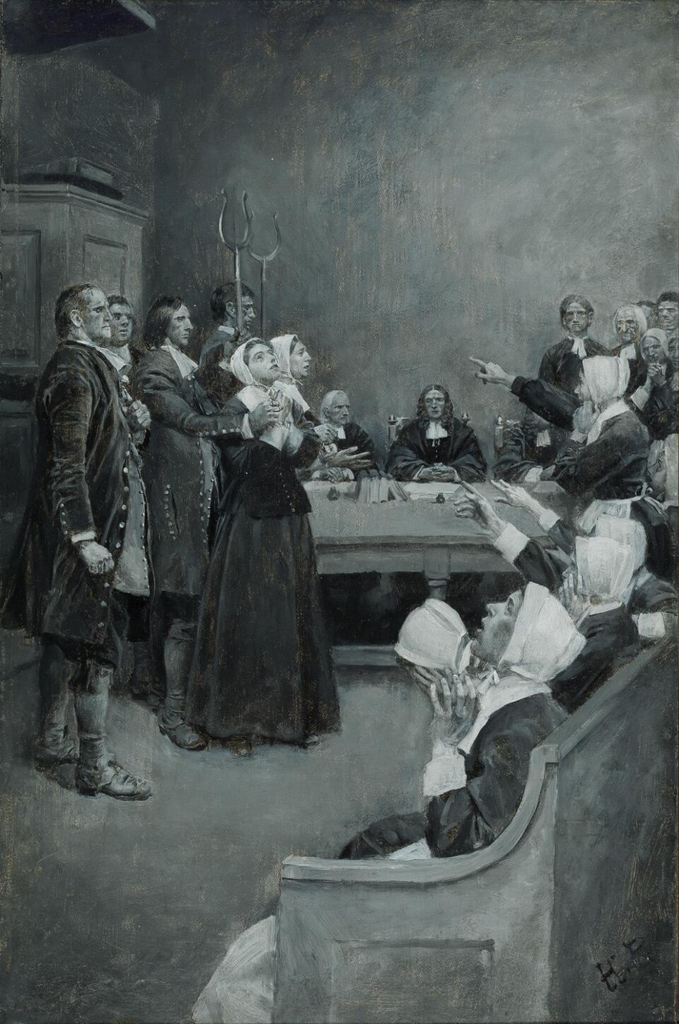
On March 1, 1692, a woman known only as Tituba was brought before magistrates John Hathorne and Jonathan Corwin in a packed meetinghouse in Salem Village, Massachusetts. The room held the collective dread of a community that had convinced itself the Devil had arrived. Two young girls had named her. The other two accused women, Sarah Good and Sarah Osborne, had stood in the same room minutes earlier and denied everything. Now it was Tituba’s turn.
She looked at Hathorne.
Then she confessed.
What she said in the hours that followed would ignite the most infamous witch hunt in American history. More than 200 people would be accused of practicing witchcraft. Nineteen would hang. Five more would die in custody. And Tituba, the enslaved woman who set the whole machinery in motion, would disappear from the historical record as completely as if she had never existed at all.
Who she was before that courtroom is a mystery. Who she was after it is a deeper one.
Her Origins Were Stolen Before Anyone Thought to Write Them Down
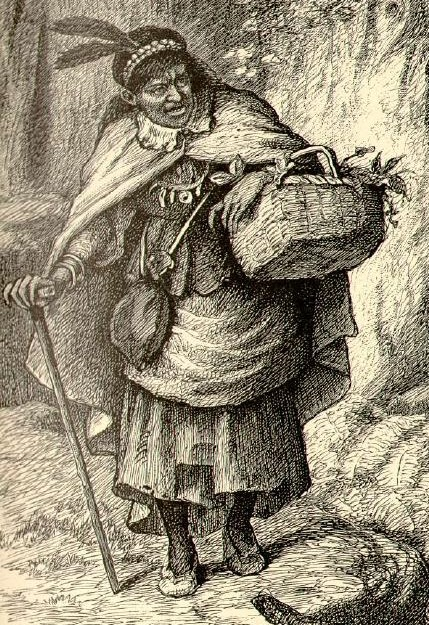
The only certainty about Tituba’s origins is that almost nothing about them can be confirmed. She appears in Puritan records consistently described as “Indian,” a term her contemporaries applied imprecisely and historians have argued over ever since. The sole early source for her birthplace is Thomas Hutchinson, writing in 1764, who stated she had been brought to the colony “from New Spain.” Scholars have taken this to mean the Caribbean, though that too is speculation.
Historian Elaine G. Breslaw, conducting archival research in the 1990s, proposed a more specific origin. She identified Tituba with a woman documented as enslaved in Barbados in 1674, and traced her likely ancestry to the Lokono people, an Arawak-related tribe living in the Orinoco delta of present-day Venezuela and Guyana. The theory begins with a British sea captain.
In July 1674, Captain Peter Wroth, lately of Kent, England, set sail from Barbados on his sloop the Sanoy, bound for the northeast coast of South America. His mission was to locate and kidnap American Indians to sell as slaves in Barbados and, as an incidental part of the trip, to trade with friendly Indians. England was at war with Holland, which gave Wroth a legal pretext: any tribe allied with the Dutch was fair game. He had previously overstepped by capturing Caribs who were under English protection, and had been ordered to return them. This time, he was more careful about his targets.
Satisfied with their successes and still on the alert, the crew waited for the tide to turn. As it ebbed, the Sanoy sailed down the Amacura River northward into the Orinoco and out to the Atlantic. Within a month they arrived back in Barbados with ten captive Indians to sell into slavery. William Price, the vessel’s master, entered a deposition on September 2, 1674, arguing the captives were Arawak allies of the Dutch, and therefore legally vulnerable to English seizure. The captives were eight women and two children.
Whether Tituba was among them cannot be confirmed. Although the evidence is circumstantial, Tituba, transported to Boston six years after that 1674 kidnapping event, may well have been one of the children in Wroth’s cargo that September day. Other historians, including Peter Charles Hoffer and Samuel Drake, have argued she was African. Bernard Rosenthal rejected both arguments as compounded speculation, while noting that every Puritan source consistently described her as Indian. Her origins remain exactly as uncertain as the day she first appeared in the record.
Samuel Parris Carried Her Into a Town Already at War With Itself
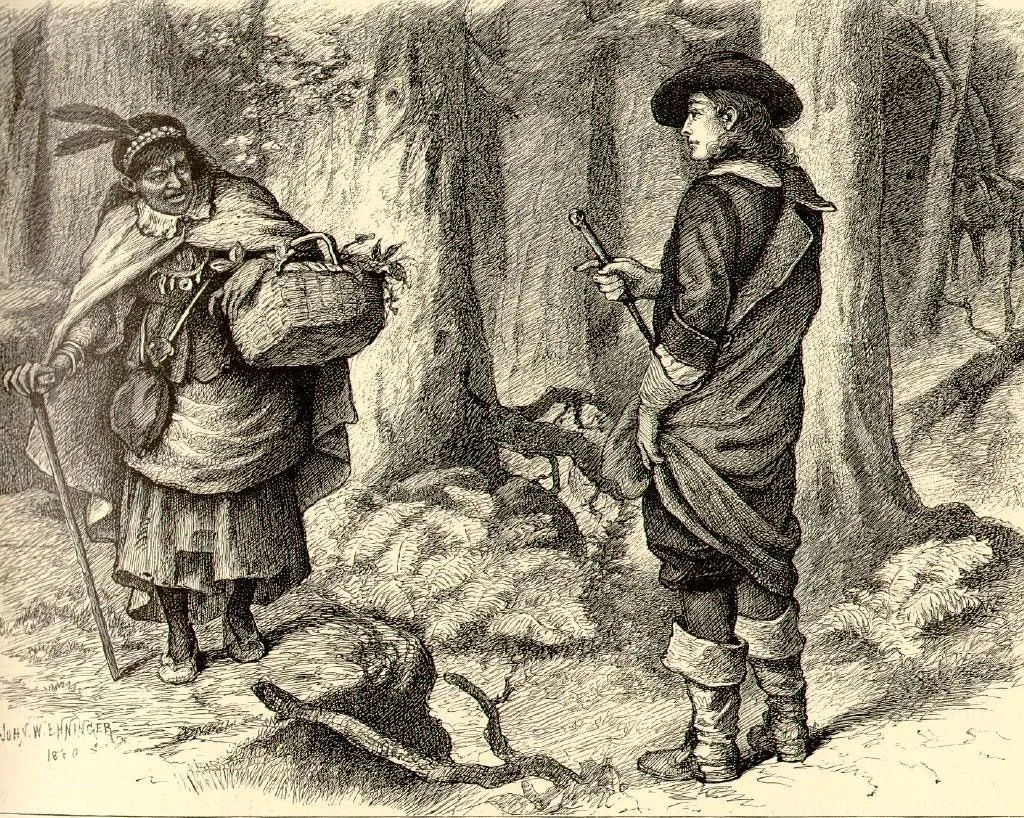
Whatever the path that brought Tituba to Barbados, she was eventually purchased by Samuel Parris, a London-born merchant who had attended Harvard in the early 1670s. When Parris’s father died in 1673, he left the college before graduating and returned to Barbados to manage the family’s sugar interests. The plantation struggled: sugar prices dropped, a hurricane wrecked the warehouses, and Parris’s prospects contracted steadily. In 1680, he cut his losses and returned to Massachusetts, bringing Tituba and another enslaved individual, John Indian, with him. He married Elizabeth Eldridge that same year.
Parris eventually abandoned commerce for the ministry. After negotiations that stretched across several years, he became the minister of Salem Village in July 1689, with Tituba and John Indian installed as domestic servants in his household.
Salem Village was not peaceful. It had already been through three ministers, who had all departed after having issues with the congregation. Land disputes, unpaid salaries, and bitter factional loyalties had made the village ungovernable through most of the preceding decade. Parris arrived into a community that had already destroyed two of his predecessors, including George Burroughs, who would later be arrested, convicted, and hanged in the very trials that began inside Parris’s home. The children spent much of their time with Tituba. She told them stories. The Parris children, sheltered in a Puritan household in a village primed for catastrophe, found her tales of folk practices and spiritual forces from Barbados genuinely captivating.
In January 1692, Betty Parris, age 9, and her cousin Abigail Williams, age 11, began having fits.
Two Girls Collapsed and Salem Chose Someone to Blame
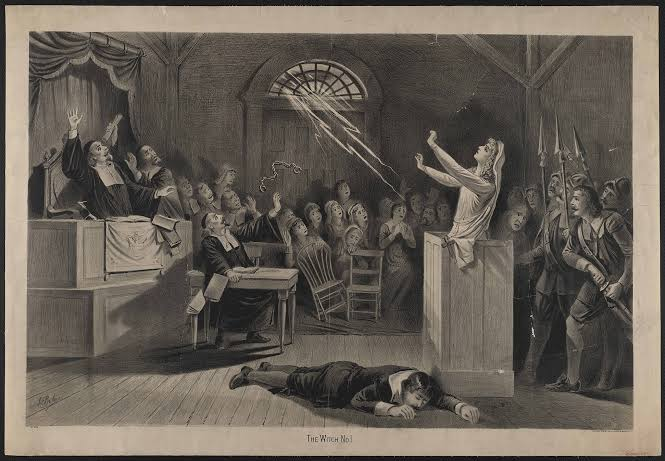
The girls screamed. They threw objects. They contorted and gasped and claimed to be pinched by forces invisible to everyone else. A local doctor blamed the supernatural. The doctor was William Griggs, who examined the girls and concluded that no medical condition he knew could explain their behavior. Another girl, 12-year-old Ann Putnam Jr., began exhibiting similar episodes. Panic spread through the village with extraordinary speed.
Parris pressed the girls to name whoever was tormenting them. They named Tituba.
On February 29, 1692, warrants were issued for Tituba, Sarah Good, and Sarah Osborne. All three were accused of practicing witchcraft on the afflicted girls. All three were arrested. They were brought before Hathorne and Corwin at the Salem Village meetinghouse on March 1, with the full community crowding in to witness the examinations.
Good denied everything. Osborne denied everything. The room was watching Tituba when she began to speak.
Tituba’s Confession Built a World of Devils That Salem Believed Entirely
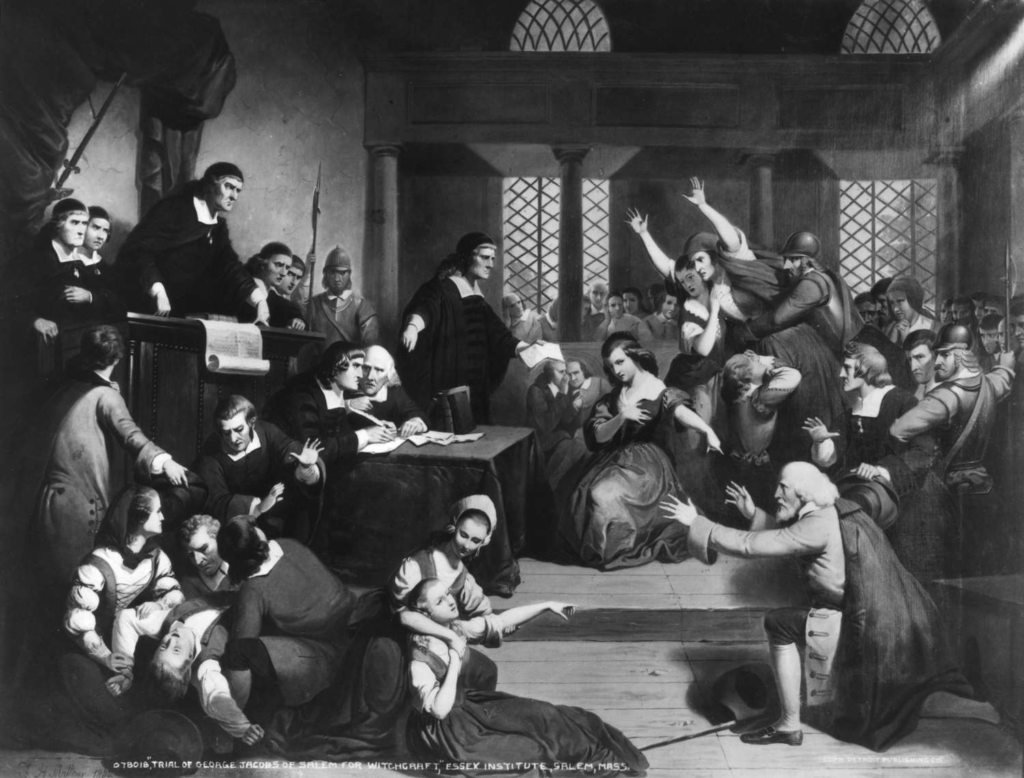
Her initial denial lasted only as long as Hathorne’s first questions. Tituba confessed. Later, in an interview with the writer Robert Calef for his collection More Wonders of the Invisible World, she confirmed that Samuel Parris had beaten her before the examination and had coached her on what to say. As an enslaved woman with no legal protection and no illusions about what awaited her if she appeared to be lying, she made a calculation.
The confession she delivered was extraordinary.
She described a tall man with white hair, dressed in black, who had visited her and demanded she serve him. She described an elaborate menagerie of animal familiars, including black dogs, red cats, and a yellow bird. She accused Sarah Osborne of possessing a creature with the head of a woman, two legs, and wings. She described flying through the night on sticks. She told the packed meetinghouse that the Devil had instructed her to hurt the children, and that if she refused, she would die.
The gathered Puritans were utterly convinced.
What Tituba understood that her co-accused did not was that Salem was not looking for an innocent defendant. It was looking for a confessor. Tituba held two cards in her hand as she faced magistrate John Hathorne across the interrogation table. The first was that she was alone in confessing. Sarah Osborne and Sarah Good, accused alongside her, kept their silence. By confessing, Tituba gave the magistrates exactly what they needed: not just an admission, but a cosmology. Her testimony did not simply confirm that witchcraft had occurred in Salem. It populated the invisible world with specific figures, accomplices, and evidence of organized diabolic conspiracy. That cosmology became the engine of everything that followed.
The Trials Consumed Salem and Then Discarded Her
The confession worked. Tituba survived. The trials she detonated did not spare others so neatly.
Over the months that followed, the accusations multiplied. More than 200 people were named. The court convened, heard spectral evidence, and condemned. On July 19, 1692, Sarah Good was carted to Gallows Hill and hanged alongside four other convicted witches. Her last words to the Reverend Nicholas Noyes, who urged her to confess at the foot of the gallows, were that she was no more a witch than he was a wizard, and that if they took her life, God would give him blood to drink. Sarah Osborne never made it to trial. She died in Boston Gaol before the court could convict her. George Burroughs, the former minister of Salem Village who had preceded Parris, was convicted and hanged in August. By the time the crisis ended in 1693, 19 people had been executed and at least 5 more had died in custody.
Tituba remained in Boston Gaol for thirteen months. Samuel Parris, furious that she had recanted her confession, refused to pay her jail fees. The prison’s conditions were deplorable, the space overcrowded, and Tituba had no legal recourse.
In April 1693, she was sold to an unknown buyer for the price of her accumulated jail fees. In May 1693, a grand jury dismissed the case against her entirely, citing insufficient evidence. Neither the buyer’s name nor the terms of the sale were recorded.
After that, nothing.
She Had Named the Devil for a Town That Needed One
Tituba’s name appears nowhere in the historical record after 1693. No document confirms where she went, what name she was given by her new owner, whether she survived the decade, or whether anyone ever asked her what she actually believed. In 1694, Samuel Parris formally apologized to the people of Salem for his role in the trials. In 1711, the Massachusetts government offered compensation to victims of the crisis. Tituba’s name was not on the list.
She has since been reimagined in fiction dozens of times, most famously as the instigator of the girls’ mischief in Arthur Miller’s The Crucible, where the accusation against her carries, as scholars have noted, barely disguised racial undertones. The fictional Tituba is usually the one who taught the children to dance in the woods. The historical Tituba was the one who was beaten into a confession, coached on what to say, imprisoned for over a year, and sold.
The question of what she thought when she stood before Hathorne on March 1, 1692, and decided to speak, has never been answered. It may be the only question about the Salem witch trials that cannot be resolved by the surviving record.
What she said is documented. Why she chose to say it remains exactly as mysterious as the woman herself.
Leave a Reply