
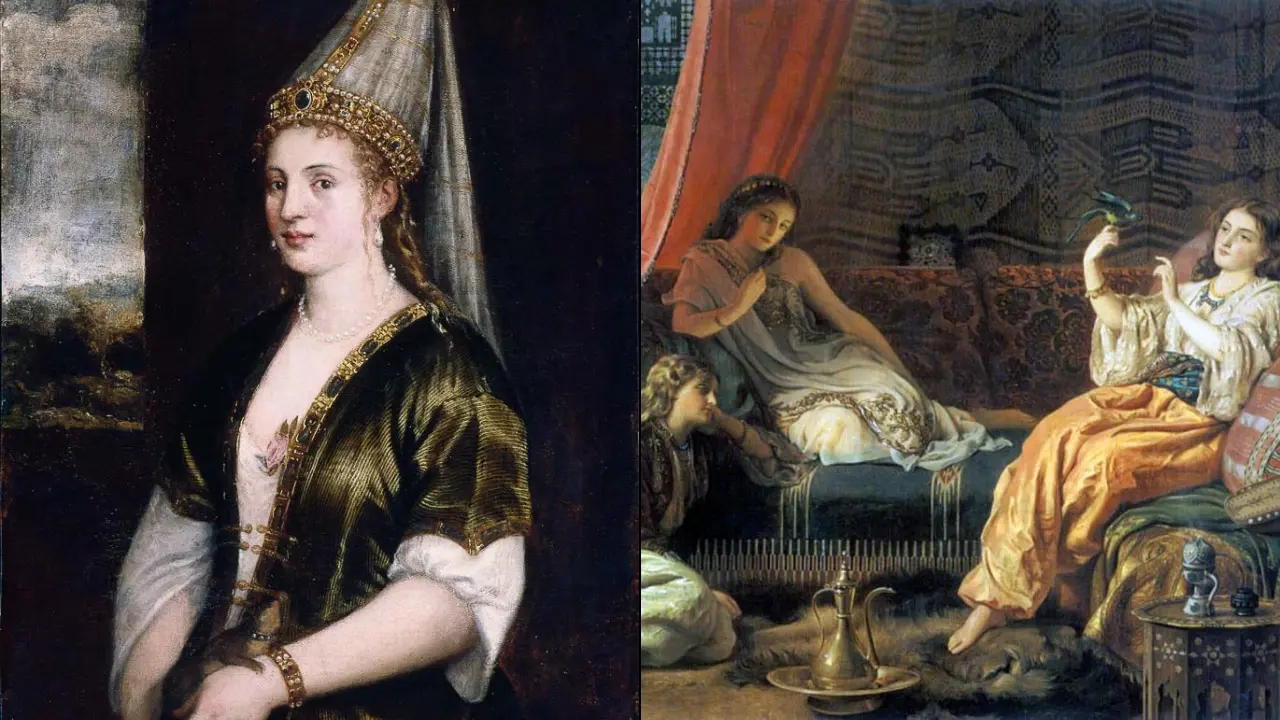
Seized in a borderland slave raid as a teenager and sold into the Ottoman imperial harem, Hürrem Sultan became the first enslaved woman in Ottoman history to legally marry a reigning sultan, and spent three decades reshaping an empire from within palace walls no outsider was ever permitted to enter.
In the autumn of 1553, Şehzade Mustafa entered his father’s military tent in Anatolia and did not come out.
The eldest son of Suleiman the Magnificent was 38 years old, a seasoned commander, and by most accounts the most popular candidate to inherit the Ottoman throne. He had governed provinces, led armies, and commanded the loyalty of the imperial military in a way that made him, to most observers, the obvious heir. Inside the tent, Suleiman’s personal guards fell on him. The sultan watched from behind a curtain as his son was strangled.
The woman widely suspected of engineering his death was a former slave from Poland. Her name was Hürrem Sultan. She was Suleiman’s wife.
A Child Seized from the Polish Border
The woman who would one day be called the most powerful in the Ottoman Empire was born around 1505 in the town of Rohatyn, a settlement in the region known as Ruthenia, then a province of the Kingdom of Poland and today part of western Ukraine. Her birth name has not survived. The scholar Leslie P. Peirce has suggested it may have been Aleksandra or Anastazja Lisowska, though neither appears in any primary source from her lifetime.
Rohatyn sat at the edge of a world under sustained pressure from the east. The Ottoman Empire had consumed the Balkans through the fifteenth century, seized Constantinople from its Byzantine rulers in 1453, and by the 1470s extended a protectorate over the Crimea. The ports of the Crimean peninsula became central hubs of the slave trade. Tatar raiders swept regularly through Poland, Ukraine, and Russia, and captives were transported through Kaffa, a major Ottoman slave market on the Crimean coast, and funneled south to Istanbul.
Sometime between 1512 and 1520, during the reign of Sultan Selim I, such a raid reached Rohatyn. The girl from Ruthenia was taken.
She was carried to Kaffa and from there to Istanbul. She was probably still in her early teens.
How a Slave Girl Became a Sultan’s Obsession
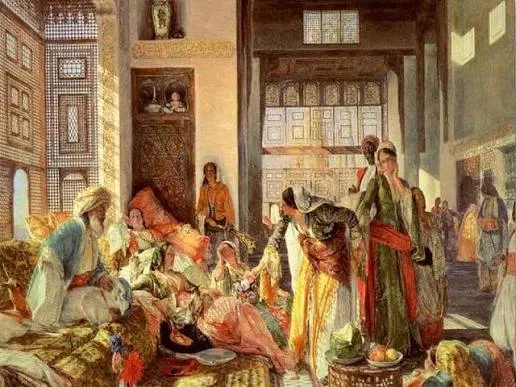
She arrived in the Ottoman Imperial Harem at Topkapı Palace, the vast household encompassing the sultan’s concubines, wives, female relatives, and servants. She likely entered sometime around 1520, as Suleiman I assumed the throne at the age of 25. Within the harem she was given the name Hürrem, a Persian word meaning “the joyful and endearing one.” The naming of slave women was a privilege their masters reserved for themselves. She was given no choice in it.
What followed violated nearly every convention the Ottoman court had maintained for generations.
By the early 1520s, Hürrem had not merely become Suleiman’s favorite concubine. She had become his only one. Ottoman custom held that each concubine bore the sultan one son, maintaining a careful balance of influence among the women of the harem. Hürrem destroyed that balance outright. Her first son, Şehzade Mehmed, was born in 1521. A daughter, Mihrimah Sultan, followed in 1522. Then Şehzade Selim in 1524, Şehzade Abdullah around 1525, Şehzade Bayezid around 1527, and finally Şehzade Cihangir around 1531. Six children in a decade. Five of them sons.
Suleiman renounced every other woman. Venetian diplomatic reports noted by 1524 that the sultan “remained constant to one woman.” The Venetian envoy Luigi Bassano recorded that Suleiman married off the remaining eligible concubines in his harem to other men in order to preserve his fidelity to Hürrem.
None of this had ever happened before.
A Marriage That Broke Every Rule
Suleiman’s mother, Hafsa Sultan, had long served as a moderating force in the rivalry between Hürrem and Suleiman’s other senior consort, Mahidevran, mother of his eldest son Şehzade Mustafa. Hafsa died on March 19, 1534. The last institutional restraint on Suleiman’s intentions died with her.
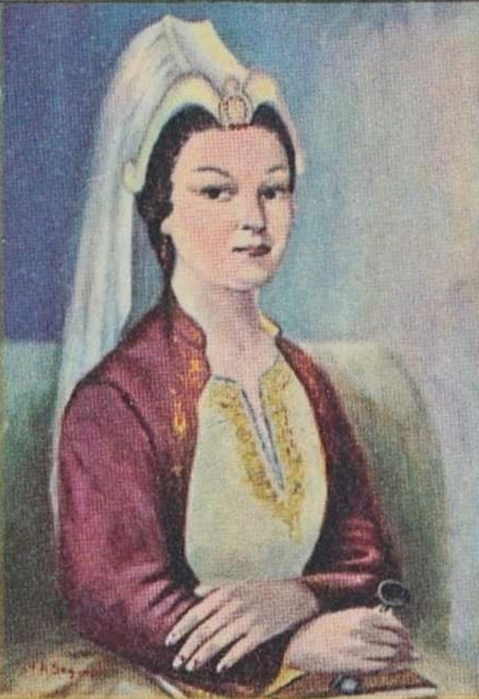
Sometime that spring, Suleiman married Hürrem in a ceremony of unprecedented ceremony. Scholars including Leslie P. Peirce place the wedding in early May 1534. No Ottoman sultan had ever formally married a former slave. No concubine had ever been elevated to legal wife. A European observer working in Istanbul at the time dispatched a letter to his employers that barely contained its own astonishment, reporting that “a most extraordinary event, one absolutely unprecedented in the history of the Sultans” had just occurred in the city. There was great talk, the correspondent noted. None could say what it meant.
Hürrem was granted the title of Haseki Sultan, the first woman in Ottoman history to hold it. Her official salary was recorded at 2,000 akçe per day. For comparison, Hafsa Sultan, as the sultan’s own mother, had received 150 akçe a day at a comparable point forty years earlier.
The gap between those two numbers contains Suleiman’s entire devotion.
Rumors spread through the court and the city that Hürrem had bewitched the sultan with charms. The correspondence between them, which survived into the nineteenth century, suggests a simpler explanation. He composed poetry to her under the pen name Muhibbi, meaning “Lover” in Arabic, writing: “Throne of my lonely niche, my wealth, my love, my moonlight. My most sincere friend, my confidant, my very existence, my Sultan, my one and only love.” She wrote back in letters describing anguish at his absence: “I am like the one whose liver has been broiled; whose chest has been ruined; whose eyes are filled with tears.”
How Hürrem Reshaped the Ottoman World
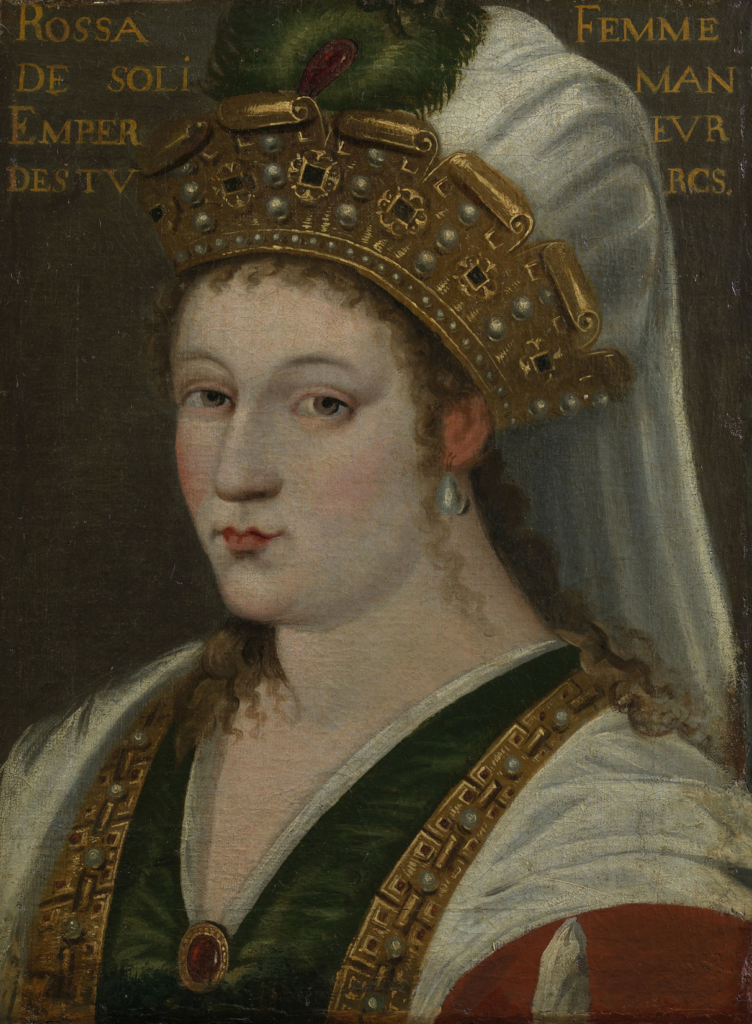
Marriage accelerated Hürrem’s political role rather than concluding it. Suleiman spent nearly a decade of his 46-year reign on military campaigns away from Istanbul. She became his primary intelligence source within the capital, writing to him about plague outbreaks, political unrest, and the mood of the city. She attended Imperial council meetings. She corresponded directly with ambassadors from Venice, Poland, and Persia. Contemporary accounts indicate she wielded influence over the appointment of ministers and grand viziers, including the elevation of her son-in-law Rüstem Pasha to the grand vizierate.
Two of her letters to Sigismund II Augustus, King of Poland and Grand Duke of Lithuania, survive from after 1548. They are the only known instance of an Ottoman imperial woman corresponding directly with a European monarch. Historians credit her sustained contact with Sigismund with maintaining peaceful Ottoman-Polish relations and with influencing the formation of a Polish-Ottoman alliance in 1551. Suleiman referred to her in a letter to the Polish king as “Your sister and my wife,” a phrase weighted with diplomatic as well as personal meaning.
She also built. The Haseki Sultan Complex in Istanbul, designed by the architect Mimar Sinan, comprised a mosque, two Quranic schools, a public fountain, and a women’s hospital, the earliest known institution of its kind in history, staffed with female attendants. In Jerusalem, she established the Haseki Sultan Imaret in 1552, a public kitchen reported to have fed at least 500 people twice a day. She commissioned the Hürrem Sultan Bathhouse adjacent to the Hagia Sophia in 1553. She repaired the ancient waterways supplying water to Mecca.
The woman who had arrived in Istanbul with nothing was now writing letters that shaped foreign policy.
A Prince Dies and the Succession Shifts
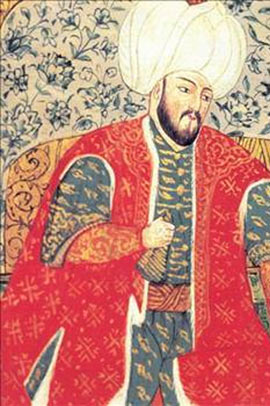
By the early 1550s, Suleiman had four surviving sons. Şehzade Mustafa, born to Mahidevran in 1515, was the eldest and the most broadly popular. He was not Hürrem’s son.
Whether Hürrem moved against Mustafa directly is a question historians have argued across Ottoman, Venetian, Habsburg, French, and Persian sources without resolution. The dominant narrative, both in contemporary Ottoman chronicles and modern scholarship, holds that Hürrem and Rüstem Pasha coordinated to frame Mustafa as a rebel in the eyes of his father. Contemporary sources allege that forged correspondence was used to portray Mustafa as conspiring with the Shah of Persia against Suleiman. What is documented is that during the Safavid campaign of 1553, Suleiman ordered his guards to execute his son inside a military tent. Whether the treason charge had any basis has never been established.
The janissaries mourned publicly. Suleiman dismissed Rüstem Pasha from the grand vizierate in the immediate aftermath. He later reinstated him.
Mustafa was dead. Hürrem’s sons were what remained.
She did not live to see the succession fully settled. Hürrem Sultan died on April 15, 1558. Her illness is described in a letter from the French ambassador Jean de la Vigne as severe, but its precise nature was not recorded and remains unknown. She was probably in her early to mid-fifties. The ambassador reported that Suleiman’s grief aged him visibly in the days that followed, and that the sultan had sworn an oath to Hürrem in her final days never to approach another woman.
The viziers carried her coffin through the streets of Istanbul to the Süleymaniye Mosque, where she was interred in a domed mausoleum lined with Iznik tiles patterned in the image of a garden in paradise. Eight years later, Suleiman was buried in an adjacent tomb.
Her son Selim II became sultan in September 1566. Every sultan who followed descended from Hürrem Sultan, the slave from Rohatyn who had rewritten the rules of an empire to place her name beside the most powerful man on earth.
Leave a Reply