
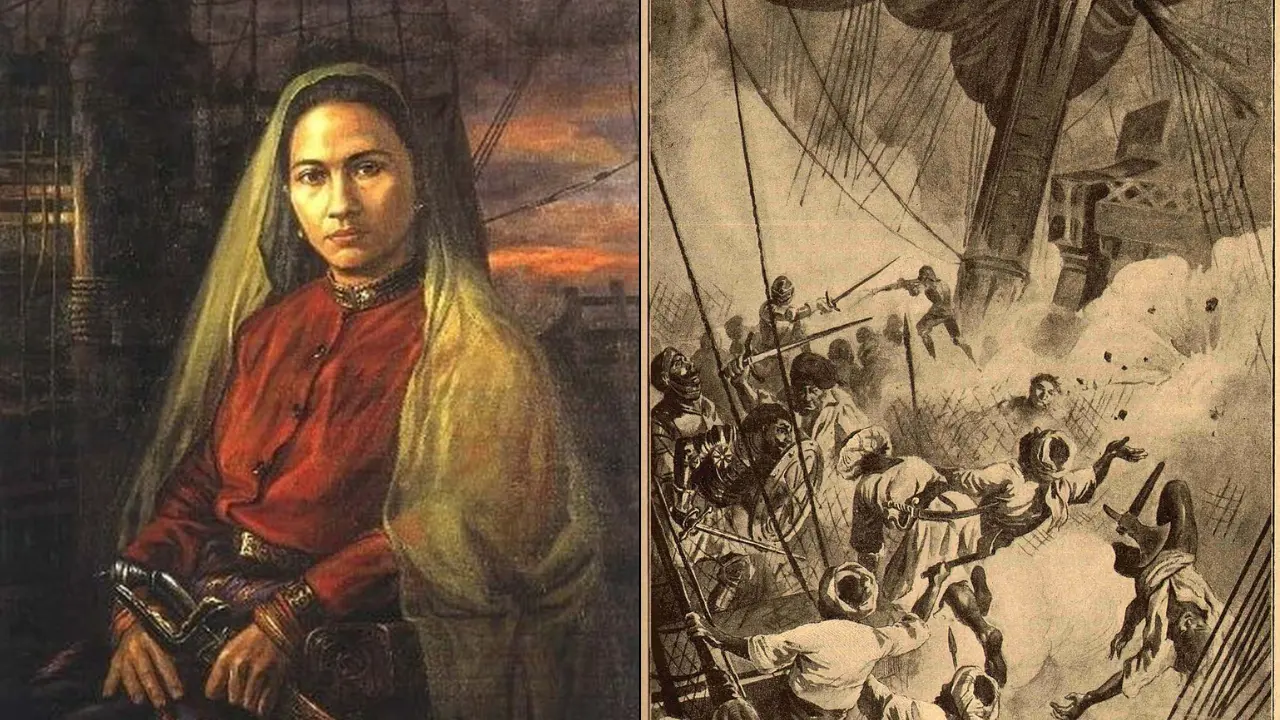
In September 1599, a woman history barely remembers killed a Dutch colonial commander in personal combat, forced two European empires into diplomatic retreat, and commanded the world’s first all-female naval force.
On September 11, 1599, Cornelis de Houtman died in the waters off the northern coast of Sumatra. He had arrived at the port of Aceh weeks earlier, had been received peacefully by the sultan, and had then made the kind of mistake that only the very arrogant make. He insulted the man who had let him in. The conflict that followed lasted days. De Houtman died in personal combat at sea. His brother Frederik was taken prisoner. The Dutch Republic, which had dispatched these men east to crack open the spice trade, had nothing to show for them.
The person responsible was an admiral. Her name was Keumalahayati.
She was, by the time she killed Cornelis de Houtman, already the most feared military commander in the eastern Indian Ocean. She was also, outside the Sultanate of Aceh, entirely unknown. She would remain that way for centuries. The sole contemporaneous European record of her existence is a single line from the English explorer John Davis, who noted in passing that in Aceh, “a woman is Admiral, for the sultan will trust no men.” The name Keumalahayati does not appear in any European document from her lifetime. Indonesia formally declared her a National Hero in November 2017.
That gap between what she did and what the world remembered is the story.
The Portuguese Arrive and a Sultanate Prepares
The Sultanate of Aceh occupied the northern tip of Sumatra, the westernmost island of what is now Indonesia. Established in the early sixteenth century, it had expanded steadily along the northern half of the island, its power built almost entirely on its navy and its command of the western approaches to the Straits of Malacca, one of the most strategically consequential waterways in the known world.
The Portuguese arrived first. In 1511, the governor of Portugal’s Indian territories, Afonso de Albuquerque, seized Malacca, the great trading city on the Malay Peninsula directly across the Straits from Aceh. Portuguese ships then spread east through the East Indies, establishing trading stations as far as southern China and Japan, displacing Asian merchants who had worked those routes for generations. For Aceh, the Portuguese were not an abstraction. They were a neighbor with standing ambitions.
Keumalahayati was born into this world, most likely in the 1550s, into a noble family with deep institutional roots in the Aceh military. Her father, Machmud Syah, was an admiral in the sultan’s fleet. She studied at the Pesantren, an Islamic boarding school, before being accepted at the Aceh Royal Military Academy, known as Ma’had Baitul Maqdis. It was a rare path for a woman in the Sultanate. She married a naval officer, continued her military education, and advanced through the ranks of Aceh’s armed forces.
Then her husband was killed.
Keumalahayati Raises an Army from the Dead
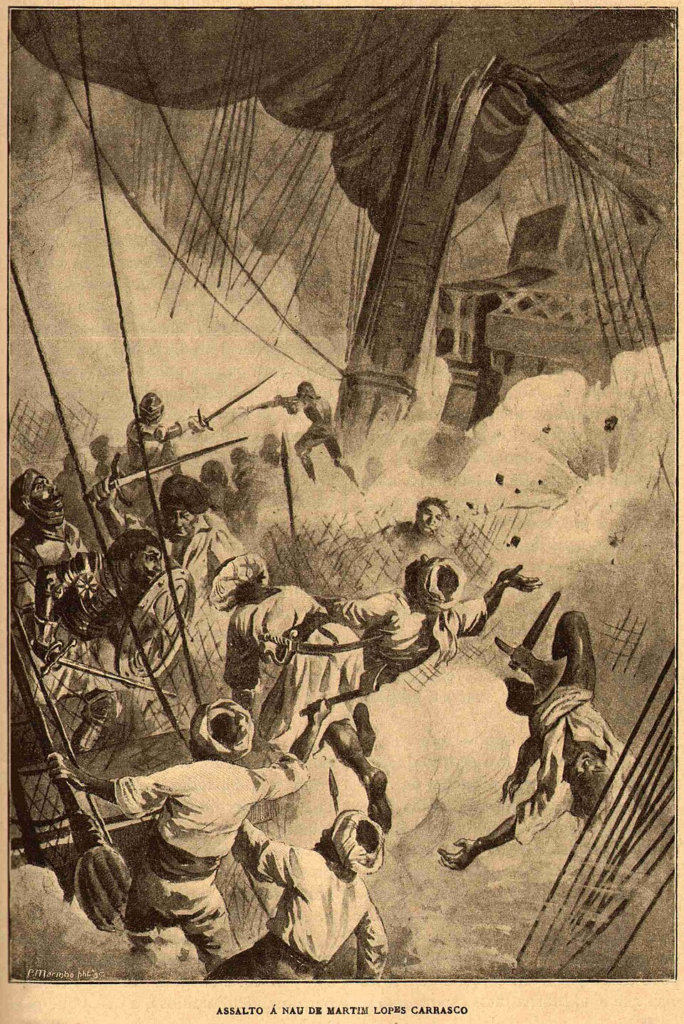
His death came at the Battle of Haru Bay, a naval engagement against Portuguese forces in which the Aceh fleet suffered severe losses and much of its senior command was killed. Keumalahayati’s husband was among the dead. So were the husbands of hundreds of other women across the Sultanate.
She petitioned Sultan Alauddin Ri’ayat Syah Sayyid al-Mukammal, the tenth ruler of Aceh, to allow her to form a military unit from the war widows. She argued that grief had made them the most dangerous soldiers in the Sultanate. The sultan, then in his nineties and facing threats on multiple fronts, agreed. The Inong Balee, meaning “widowed women” in Acehnese, was assembled and trained, eventually growing to an estimated two thousand fighters. Keumalahayati was appointed Laksamana, the chief admiral of the sultan’s fleet, and given command of the unit.
A fort, also called Inong Balee, was built on a hillside overlooking Krueng Raya Bay, positioned to watch the approaches from the Indian Ocean. Parts of it are still standing.
She did not have to wait long.
The Dutch Come and Are Destroyed
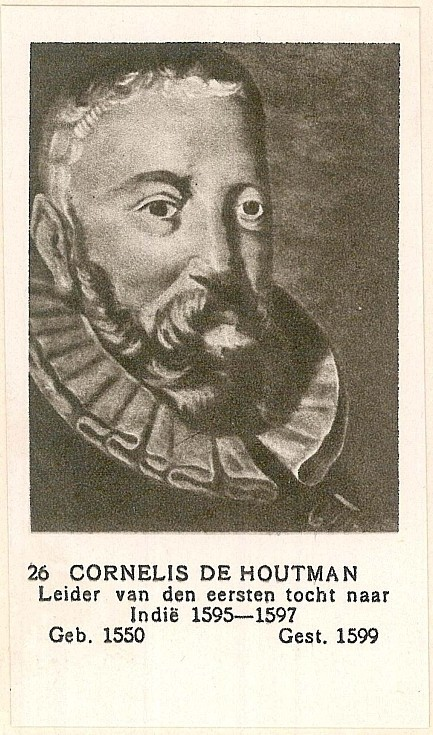
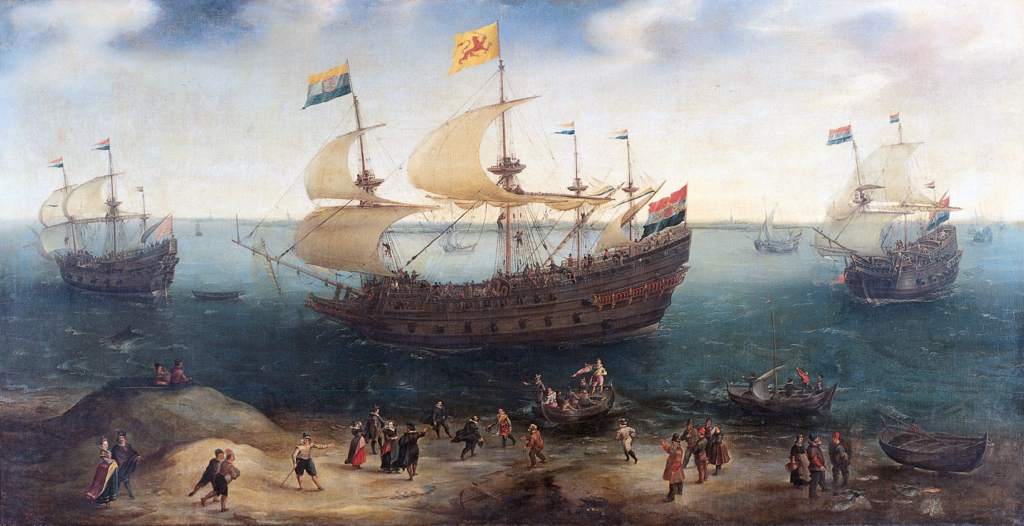
Cornelis de Houtman had commanded the first Dutch expedition to the East Indies, departing in April 1595 and reaching the islands in 1596, before returning in 1597. The voyage had lost most of its men and barely paid for itself. It had also proved the route was possible. In 1598 de Houtman set out again, this time for a different merchant company, arriving in Aceh in June 1599.
Sultan Alauddin received him peacefully. De Houtman repaid this with provocation, insulting the sultan and pressing toward conflict. He had already antagonized the Banten Sultanate in northwest Java on the same voyage and appeared to treat each encounter with a Southeast Asian ruler as an obstacle to dominate rather than a relationship to cultivate.
Keumalahayati and the Inong Balee moved against his fleet. The fighting lasted through summer and into early autumn. On September 11, 1599, de Houtman was killed in personal combat. His brother Frederik was captured and imprisoned. He would spend the next two years in Acehnese captivity, during which he learned Malay and later produced the first Malay-Dutch dictionary upon his return to Amsterdam in 1601.
The Dutch, for the moment, had nothing.
Europe Comes to the Table
Keumalahayati pressed her advantage. In 1600, the Dutch naval officer Paulus van Caerden robbed an Acehnese merchant vessel of its pepper off the Aceh coast. In June 1601, Keumalahayati ordered the arrest of Dutch Admiral Jacob van Neck. The Dutch Republic, facing a commander who kept winning and a series of incidents that were becoming diplomatically catastrophic, abandoned the confrontational approach entirely.
Maurice of Nassau, Prince of Orange, the stadtholder effectively governing the Dutch Republic, dispatched emissaries to Aceh with a formal letter of apology, compensation of fifty thousand guilders for the stolen pepper, and a request for peace. In August 1601, Keumalahayati met those emissaries. A ceasefire was agreed. Dutch prisoners were released. The Sultanate of Aceh had forced the Dutch Republic to apologize in writing and pay damages, all within two years of killing its chief explorer.
The English observed this and drew the obvious conclusion.
In June 1602, James Lancaster arrived at Aceh as captain of the Red Dragon, commanding the first voyage of the newly established English East India Company. He carried a personal letter from Queen Elizabeth I. He did not attempt coercion. He engaged Keumalahayati directly in negotiation. She led the talks. An alliance was formed. The English were granted safe passage through the Straits and trading rights that eventually led to the establishment of the first English trading post at Banten on Java. Lancaster returned to England the following year and was knighted in October 1603 by the newly crowned King James I for his diplomatic success.
The terms he had agreed to were hers.
A Death Without a Certain Date
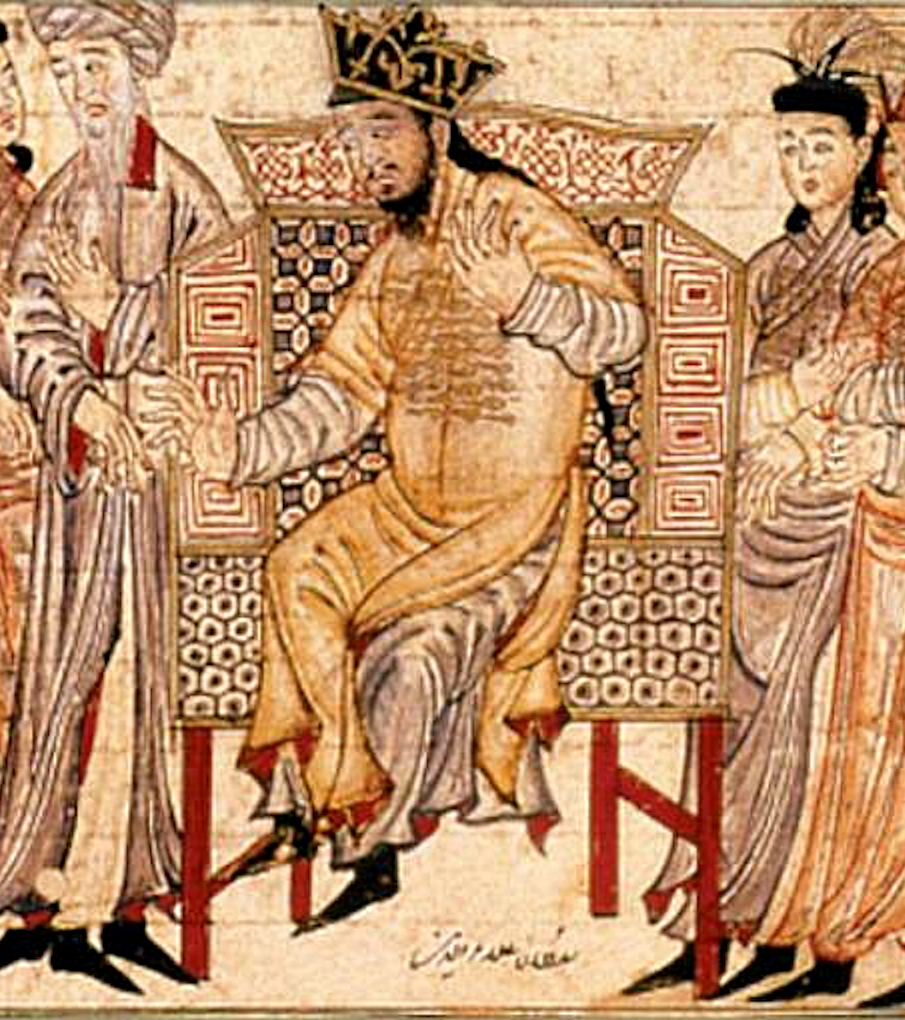
Sultan Alauddin was deposed in April 1604, at an advanced age, and died sometime the following year. His son Ali Ri’ayat Syah III ruled briefly in his place, a turbulent reign marked by famine and court intrigue that ended with Ali’s death in April 1607. He was succeeded by his nephew Iskandar Muda, the most powerful sultan the Sultanate would ever produce, whose reign would last until December 1636 and whose territorial campaigns, including a bold assault on Portuguese Malacca in 1629, would define Aceh’s golden age as the dominant Islamic power of the region. Keumalahayati reportedly played a role in securing the transition to his rule.
What happened to her after that is not clearly recorded.
Some sources place her death before Iskandar’s accession, killed during Portuguese hostilities in the early 1600s. The Indonesian government, when it formally recognized her as a National Hero in 2017, recorded her death as June 30, 1615. UNESCO, which designated her birth date as an International Day of Celebration in November 2023, worked from the same approximate record. Scholars note that the details of her biography rely substantially on oral tradition and later manuscript sources, since no contemporaneous European or Acehnese document records her name during her own lifetime.
Her tomb stands on a hill in the village of Lamreh, thirty-four kilometers from the modern city of Banda Aceh. It overlooks Krueng Raya Bay. From the hillside, on a clear day, you can see the approaches to the Indian Ocean that she spent her career defending.
A European empire that came to dominate much of the world in the century that followed sent her an apology first.
Leave a Reply