
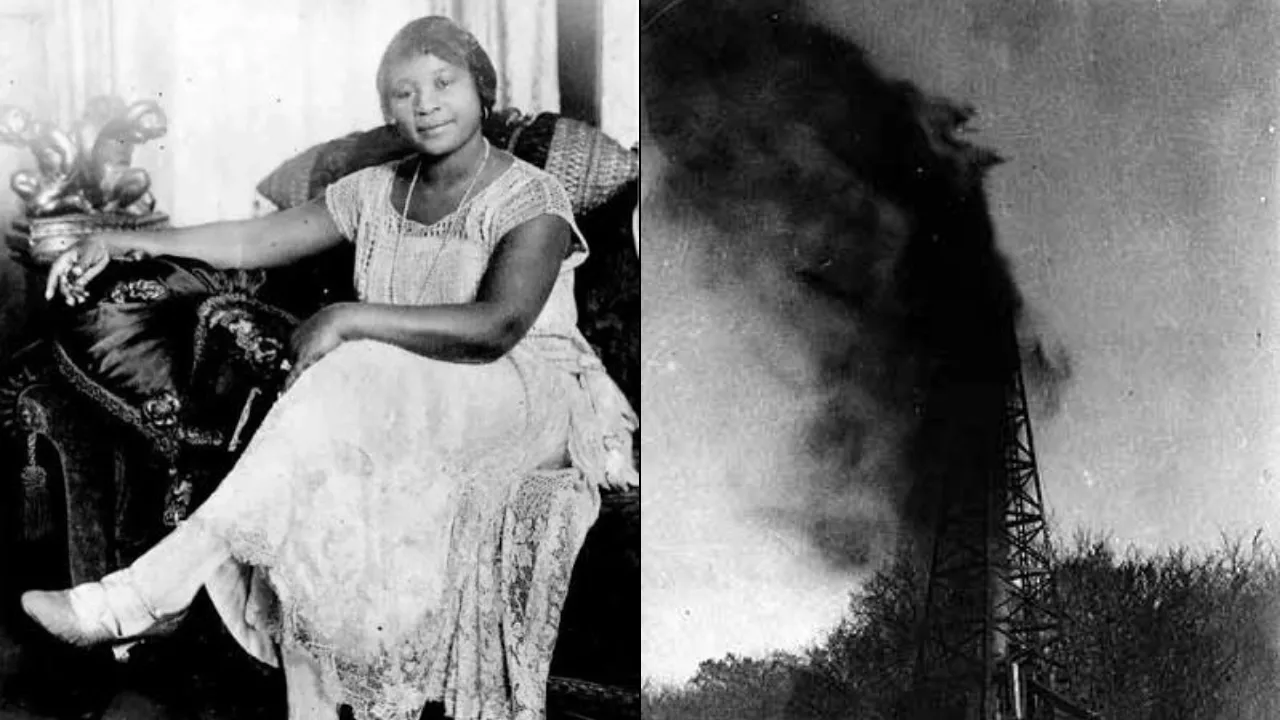
The Plundered Fortune of Sarah Rector, the Black Child Oklahoma Tried to Declare White
In October 1913, 11-year-old Sarah Rector received $11,567 in oil royalties from a 160-acre Oklahoma plot the federal government had handed her family as worthless scrubland. The state’s response was to appoint a white guardian to control her money and formally debate whether to reclassify her race.
In October 1913, an eleven-year-old girl in Taft, Oklahoma received a royalty check for $11,567. Her name was Sarah Rector. The check represented a single month’s share of the crude oil being pulled from 160 acres of rocky, infertile land sixty miles from her home, land the federal government had assigned her family because no one else had wanted it.
A law on the books in Oklahoma required that a white man oversee every dollar of it.
Sarah Rector was in the fifth grade.
The Government Gave Sarah Worthless Land
Sarah Rector was born on March 3, 1902, near the town of Twine in Indian Territory, the land that would become the state of Oklahoma. Her parents, Joseph and Rose Rector, were Creek freedmen, the designation given to formerly enslaved African Americans and their descendants who had been held in bondage by members of the Muscogee Creek Nation before the Civil War. Under the Treaty of 1866, the U.S. government declared them citizens of the Creek tribe. That legal status would shape the course of Sarah’s life in ways no one anticipated.
The Dawes General Allotment Act of 1887 had begun stripping tribal lands across the American West, distributing individual plots to tribal members in place of communal holdings. The Curtis Act of 1898 extended that process specifically to Indian Territory, dividing what would become Oklahoma and requiring enrollment on the Dawes Rolls as a condition of receiving land. Sarah, along with two of her siblings, received her allotment during a distribution that ran from 1898 through 1906. Her parcel was 160 acres in Glenpool, approximately 60 miles from the family’s home.
The government had selected that land with purpose. The soil was rocky. Nothing cultivable grew there. More fertile land had been reserved for white settlers. What no one had predicted was what lay beneath the surface.
The $30 annual property tax on Sarah’s parcel was a strain the family struggled to absorb. Joseph Rector petitioned the Muskogee County Court for permission to sell it. The court denied the petition, citing legal restrictions on property belonging to minors. Joseph kept paying the taxes. In February 1911, he leased the allotment to the Standard Oil Company, finally relieving some of the financial pressure.
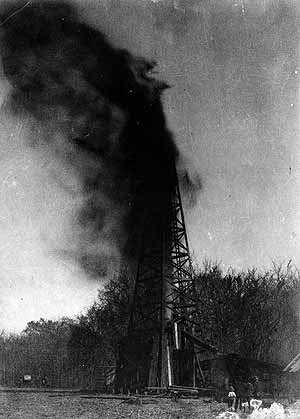
Two years later, a wildcatter named B.B. Jones put a drill in the ground.
B.B. Jones Drilled and Changed Everything
The well Jones struck in 1913 produced a gusher at 2,500 barrels of crude oil per day. Additional wells came online in the following months, and Sarah’s allotment became part of the Cushing-Drumright Oil Field, one of the most productive deposits in Oklahoma’s history. By October 1913, her monthly royalty had reached $11,567. Her daily income exceeded the annual salary of most American workers.
Newspapers across the country ran her name in headlines that ranged from astonished to openly contemptuous. The Kansas City Star described her as “ignorant, with apparently limited mental capacity.” She was eleven years old.
As news of the discovery spread internationally, Sarah began receiving gifts, requests for loans, and marriage proposals from men far older than herself, men who understood exactly what those proposals meant. In January 1914, the Kansas City Star reported that at least four men in Germany had written letters proposing marriage to an Oklahoma child none of them had ever met. Their interest was not romantic. In 1913, the Oklahoma Legislature had formally discussed declaring Sarah legally white. The stated purpose was to permit her to ride in the first-class section of a train.
The state had found a way to make Sarah’s existence a problem requiring a legislative solution. The fortune was not the problem.
Oklahoma Stripped Sarah of Financial Control
A statute in Oklahoma required that Black children and Native American minors who were citizens of Indian Territory and held significant property be assigned a court-appointed white guardian, regardless of whether their parents were living and regardless of any evidence of parental wrongdoing. No accusation was needed. The law’s presumption was structural and absolute.
A Muskogee County probate judge appointed Thomas Jefferson Porter, a white local resident known to the Rector family, to oversee all of Sarah’s financial affairs. Her parents retained no legal authority over her fortune.
This was not exceptional. Hundreds of Black children across Oklahoma had discovered oil beneath their allotted land. Hundreds had been placed under white guardianship through the same mechanism. What made Sarah different was the scale of her royalties and the national press attention that followed. What she had in common with those other children was the law itself, which had been designed to ensure that outcome.
The Nation Questioned Who Controlled Her Fortune
In 1914, the African-American newspaper the Chicago Defender took an interest in Sarah’s case. It published an article claiming her estate was being mismanaged and that she was uneducated, dressed in rags, and living in unsanitary conditions while her guardian prospered. In a separate story that same year, the Defender ran the headline “RICHEST CHILD OF THE RACE MYSTERIOUSLY DISAPPEARS.” Sarah had not disappeared. She was at home in Taft. The story appears to have been fabricated, consistent with the broader pattern of misreporting that had surrounded her since 1913.
Accurate or not, the coverage reached its intended audience. Booker T. Washington and W.E.B. Du Bois both became involved. On June 18, 1914, James C. Waters Jr., a special agent and attorney for the NAACP, sent Du Bois a memo detailing a weeks-long investigation into the management of Sarah’s estate. Waters described a child who wore no shoes and received no education while her white guardian earned a percentage of her income. He asked Du Bois whether it was not possible for Sarah to be cared for by people of her own race rather than, as he wrote, “a member of a race which would deny her and her kind the treatment accorded a good yard dog.”
Papers across the country published demands for answers. Sarah’s case had become the focal point for a systemic problem: hundreds of Black children in Oklahoma sat atop oil-producing land with their finances in the hands of court-appointed white men.
The full picture of what Porter had or had not done with Sarah’s money remained contested. When Du Bois corresponded with Judge Thomas Leahy, the Muskogee County judge overseeing the guardianship, Leahy reported that the Rector family had themselves chosen Porter, that he received only two percent of Sarah’s income, and that the family lived in a modern five-room cottage with a well and outbuildings, the children attending school in Taft. Whether conditions had ever been as dire as the Defender reported, or whether the paper had been working from rumors with little basis in fact, historians have not resolved.
The institutional consequences were real and lasting regardless. Du Bois established the Children’s Department of the NAACP to investigate white guardians suspected of depriving Black children of their land and wealth. Washington intervened personally. In October 1914, Sarah and her older sister Rebecca enrolled in the Children’s House, a boarding school at the Tuskegee Institute in Alabama. Contemporary press reported that while at Tuskegee, a group of schemers followed Sarah there with the intention of holding her for ransom, and that students prevented the abduction. The precise details are unclear from the historical record.
Sarah stayed at Tuskegee anyway.
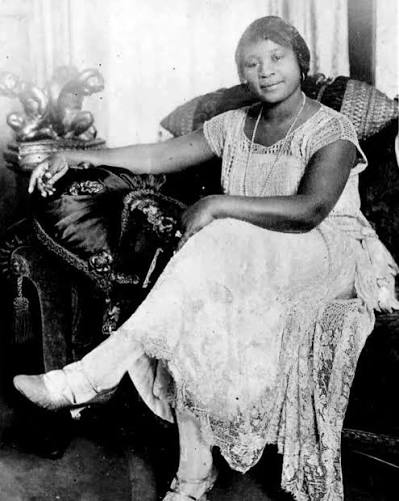
Sarah Rector Outlasted Everyone Who Doubted Her
When Sarah turned 18 in March 1920, she left Tuskegee and her family moved with her to Kansas City, Missouri. By that point she owned stocks and bonds, a boarding house, a bakery, the Busy Bee Café in Muskogee, and 2,000 acres of prime river bottomland. The family settled into a large brick-and-stone home at 2000 East 12th Street. Kansas City would call it the Rector Mansion.
In September 1922, at 20 years old, Sarah married Kenneth Campbell, a recent Lincoln High School graduate. The wedding was held in Lawrence, Kansas, witnessed only by Sarah’s mother and Campbell’s grandmother. They had three sons: Kenneth Jr., Leonard, and Clarence. The marriage ended in 1930. In 1934 she married William Crawford, a restaurateur, and the two later expanded his business to a second location in Tulsa.
Sarah drove a green and black Cadillac and later added a silver-plated Lincoln and a chauffeur-driven Rolls-Royce. She hosted parties at the mansion for Duke Ellington, Count Basie, Joe Louis, and Jack Johnson. Stores that typically refused Black customers closed their doors and opened exclusively for the Rectors. She received speeding tickets with regularity.
The Depression that followed the Wall Street crash of 1929 cost her much of her fortune. She eventually sold the mansion. Details about her final decades are difficult to find. She had spent her childhood as the most investigated, misrepresented, surveilled, and nearly kidnapped child in the country. Whatever quiet looked like on the other side of all that, she kept it to herself.
She died on July 22, 1967, from a cerebral hemorrhage in Kansas City, Missouri. She was 65. Sarah Rector was buried at Blackjack Cemetery in Taft, Oklahoma, sixty miles from the parcel of infertile ground she had never farmed and never needed to.
Leave a Reply