
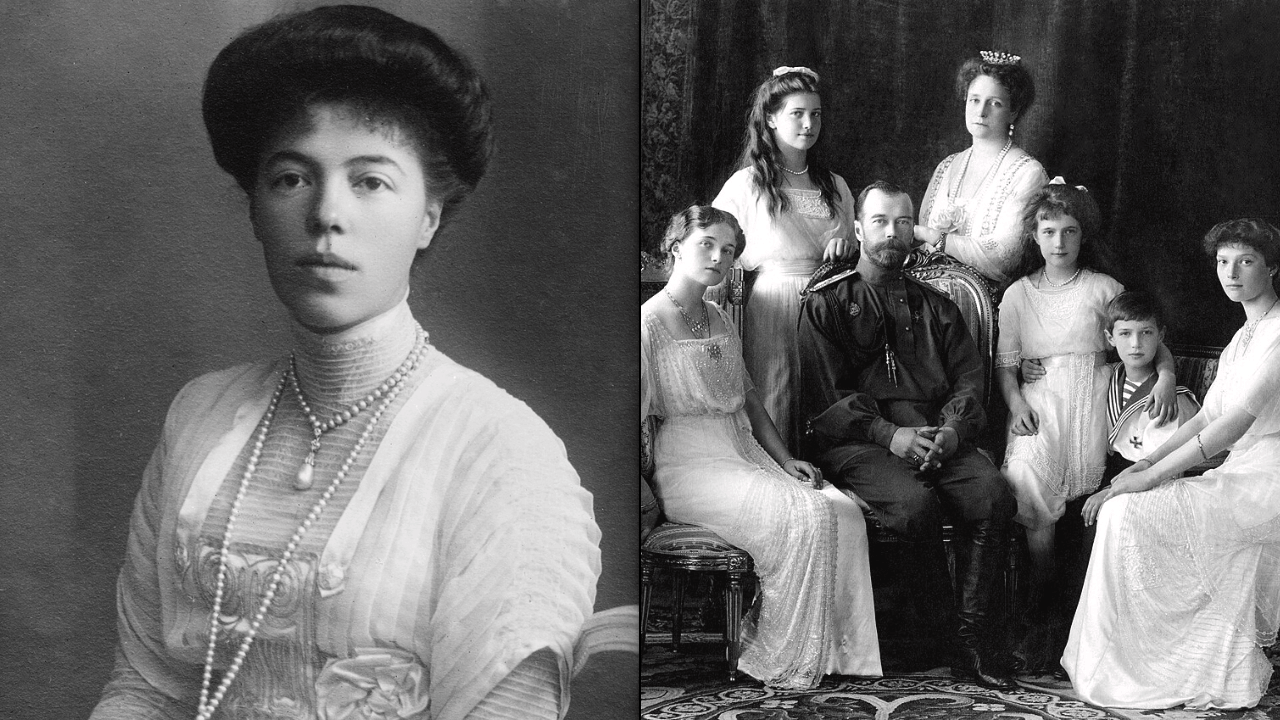
When the Bolsheviks executed Tsar Nicholas II and his family in a basement in Yekaterinburg on July 17, 1918, his youngest sister was under house arrest 750 miles away in Crimea and had less than a year before the same soldiers would come for her.On November 24, 1960, a 78-year-old woman died in a small apartment in East Toronto.
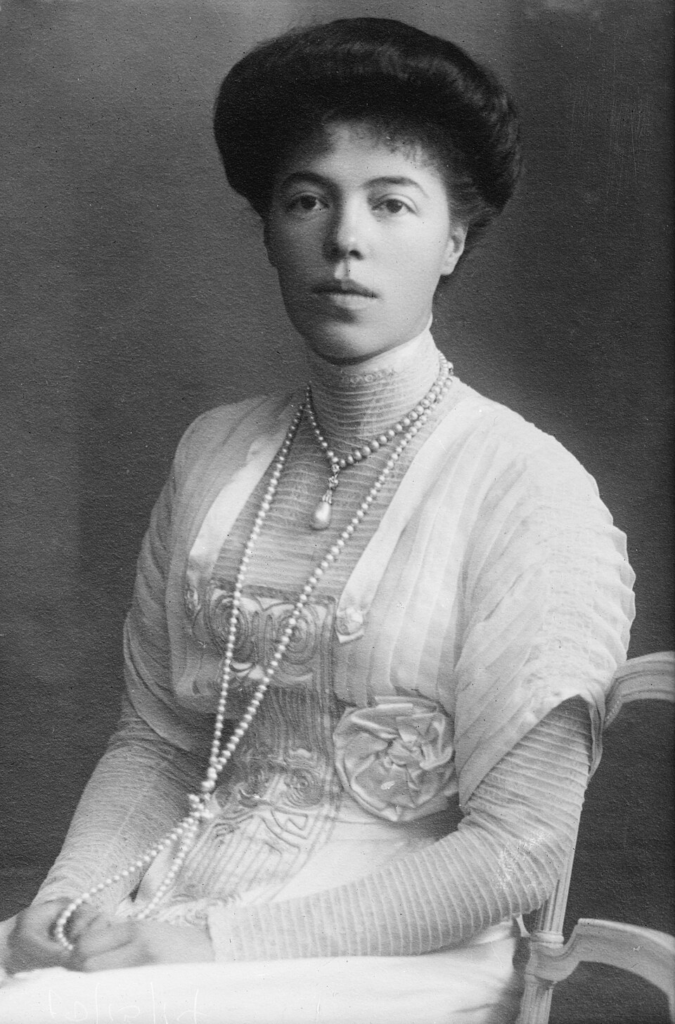
She had worked a cattle farm, raised chickens, painted watercolours to supplement her income, and lived for the last decade of her life in a five-room bungalow. She was Grand Duchess Olga Alexandrovna of Russia youngest child of Tsar Alexander III, younger sister of the last Tsar, and the final surviving child of any Russian emperor.
When she died, the last direct link between the modern world and imperial Russia was severed.How she got from Peterhof Palace to a Toronto suburb is a story of survival so improbable it required the failure of three separate attempts to kill her.
A Childhood Designed for Catastrophe
Olga Alexandrovna was born on June 13, 1882, at Peterhof Palace outside St. Petersburg, her birth announced by a 101-gun salute from the ramparts of the Peter and Paul Fortress. She was the youngest of six children born to Tsar Alexander III and his consort, Empress Marie Feodorovna, formerly Princess Dagmar of Denmark. Her mother’s royal connections radiated across Europe: Dagmar’s sister Alexandra had married the future King Edward VII of Britain, and her brother had become George I, King of the Hellenes. Olga was related to nearly every reigning house on the continent a fact that would matter enormously to her later.
She was, by her own account, her father’s favourite. The two would hike through the forests of Gatchina, the fortified country palace southwest of St. Petersburg where the imperial family had been sent for safety after the assassination of Alexander II in 1881. Life at Gatchina was deliberately unglamorous. The children slept on hard camp beds, rose at dawn, washed in cold water, and ate a plain porridge breakfast. The tsar’s approach to child-rearing appeared to be the removal of all softness.
Her mother was another matter. Empress Marie valued court formality over emotional warmth, and her relationship with Olga remained strained and reserved throughout both their lives. Olga later described her father as “everything to me” and offered no comparable sentiment about her mother.
The family came close to catastrophe early. On October 29, 1888, the imperial train was returning from Crimea to St. Petersburg when it derailed at high speed near Borki station in the Kharkov Governorate, 295 kilometres south of Kursk. Twenty-one people died at the scene. The six-year-old Olga was in the dining car when the roof collapsed.
The official account held that Alexander III physically held up the wreckage on his shoulders while his family crawled to safety a claim historians have since treated with scepticism, though the tsar’s extraordinary physical strength was well documented. What no one disputed was the personal cost: the blunt trauma Borki inflicted was later linked to the kidney failure that killed Alexander III six years later.
He died on November 13, 1894, at 49. Olga was 12. His death elevated her 26-year-old brother Nicholas to the throne of Russia and pushed the younger generation of the Romanov family from the seclusion of Gatchina into the full exposure of court life.
An Unconsummated Marriage and a Decade of Misery
Olga did not adapt easily. Her first public appearances in 1900 delayed a year after the death of her brother Grand Duke George from tuberculosis felt, she later said, like being caged and put on display. It was at these events that she met Duke Peter Alexandrovich of Oldenburg.
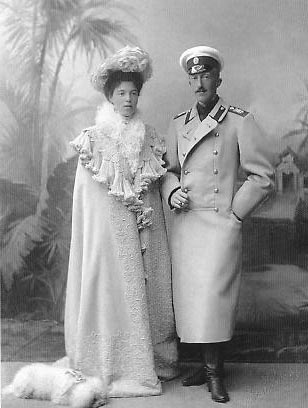
Peter was a man of literary tastes, expensive gambling habits, and, as was widely believed within the family and St. Petersburg society, no interest in women. He was 33 when he proposed to Olga in 1901; she was 19. The match baffled Russian society: Peter had shown no inclination toward marriage, and the considerable age difference underlined the practical calculation behind the arrangement. He appears to have needed money. The imperial family provided it.
They married later that year and settled into a palace in St. Petersburg where they occupied separate bedrooms at opposite ends of the building. The marriage remained unconsummated. Peter was not cruel to her. He was, by several accounts, considerate and kind. But Olga wanted children, a genuine marriage, and a life that bore some resemblance to what she understood life to be. She had none of it.By 1903, she asked for a divorce. Peter refused.
She fell into a depression so severe she began losing her hair, forcing her to wear a wig. The emotional and physical toll accumulated across years. The only relief came through her bond with Nicholas and his family, particularly his four daughters. She adored her youngest niece, Anastasia her goddaughter, whom she nicknamed Shvipsik, “little one.”
She had been conducting a quiet affair for several years with Nikolai Kulikovsky, a cavalry officer from a landed but untitled family. Her brother Nicholas, the tsar, refused for years to sanction a marriage to a man of lower social station. Olga waited him out. By 1916, with Nicholas finally granting the annulment of the first marriage on grounds of non-consummation, she married Kulikovsky within weeks. She was 34 years old.Their sons Tikhon and Guri were born in 1917 and 1919 respectively. They arrived into a world coming apart.
Escape from Crimea
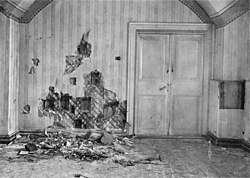
The Russian Revolution of March 1917 stripped Nicholas of the throne. The radical communist revolution followed in October. In the early hours of July 17, 1918, Nicholas II, Empress Alexandra, and their five children were shot and bayoneted to death in a basement room in Yekaterinburg. Their bodies were disposed of in secret. For decades, the precise location would remain unknown.
Olga and Kulikovsky were under house arrest on the Crimean Peninsula, together with her sister Xenia and their families. As the revolution darkened into civil war, executions of Romanov relatives and members of the Russian aristocracy spread across the country. A separate group of Romanovs grand dukes held at the Peter and Paul Fortress in St. Petersburg were shot by the Bolsheviks in early 1919.
Crimea’s temporary fall to the White Army saved them. In November 1919, with revolutionary troops advancing again, the family fled at the last moment, finding temporary shelter in the residence of the Danish consul. From there, over months of displacement through Constantinople and the Black Sea region, they made their way north.
They arrived in Denmark during the Easter holidays of 1920, where Olga was reunited with her mother, the Dowager Empress Marie Feodorovna, who had been evacuated from Russia earlier with the assistance of British relatives.They had survived. They had also lost everything.
The Woman Who Came to Berlin
The family settled in Copenhagen, initially staying at Amalienborg Palace before Olga’s mother and aunt arranged use of their jointly owned summer estate, Hvidøre, acquired in 1907 as a Danish haven for Russian family visits. When Olga’s mother died in October 1928, Hvidøre was sold and the proceeds distributed. With her share, Olga purchased a modest farmhouse at Knudsminde in Ballerup, northwest of Copenhagen.
The sister of the last Tsar and daughter of an emperor worked the land, kept the accounts, and sold her watercolour paintings to supplement the family’s income. She produced more than 2,000 works over her lifetime. The simplicity was not performance. She had genuinely chosen it.
It was during these years that the legend of the surviving Romanov daughter began to circulate through European exile communities. Nicholas II’s five children had been murdered alongside their parents in Yekaterinburg in 1918, though the Soviet regime would not confirm the disposal of the remains for decades. Into that silence stepped several women claiming to be survivors.
The most prominent was a Polish factory worker named Franziska Schanzkowska, who in 1921 and 1922 began claiming to be Grand Duchess Anastasia Nicholas’s youngest daughter and Olga’s goddaughter. By the time Olga travelled to Berlin in the autumn of 1925 to meet her, the woman was already known as Anna Anderson and was receiving visitors at the Mommsen Nursing Home, where she was being treated for tuberculosis.Olga spent nearly four days with her.
She rejected the claim outright. Anderson spoke only German; Anastasia had spoken Russian natively and English fluently, and could not speak German at all. Anderson’s appearance could not, in Olga’s assessment, be explained by illness alone. “My beloved Anastasia was fifteen when I saw her for the last time in summer of 1916,” Olga later said. “She would have been 25 in 1925. I thought that Mrs. Anderson looked much older than that.
” She stopped short of calling Anderson an outright fraud, concluding instead that the woman was not who she believed herself to be a judgment that would prove technically accurate: DNA testing in the 1990s confirmed Anderson was Schanzkowska, not a Romanov.Anderson died in Charlottesville, Virginia, in 1984, still claiming to be Anastasia. She had maintained the identity for six decades.
The Last Journey West
The Second World War found Olga’s two sons serving in the Danish army. Both were taken prisoner of war. Denmark fell to Nazi occupation in April 1940. Olga endured it, but the postwar map unnerved her far more than the occupation had.Soviet forces occupied the Danish island of Bornholm in the Baltic at the war’s end, and in the years that followed, the Soviet Union accused Olga and a Danish Catholic bishop of conspiring against the Soviet government an accusation that may have been fabricated but carried real danger while Stalin lived.
The surviving Romanovs in Denmark began to fear assassination or kidnapping.In the summer of 1948, Olga and Kulikovsky both 66 years old left Denmark for the last time. They stayed briefly at Hampton Court Palace as guests of King George VI before sailing from Liverpool on June 2, 1948 aboard the SS Empress of Canada, bound for Halifax, Nova Scotia.On the long train journey from Halifax to Toronto, Olga looked out at the landscape and felt something she had not expected.
“The immense spaces I saw deeply impressed,” she said later. “I felt at home. Everything spoke to me of the vastness I had known in Russia.”The family settled on a 200-acre cattle farm in Campbellville, Halton County, Ontario. Olga tended the poultry yard. Kulikovsky managed the cattle and pigs. The locals, as the Globe and Mail reported in 1950, tactfully ignored the titles of the past and treated the Kulikovskys as they would any other newcomers. A watercolour exhibition at Eaton’s College Street store in 1951 drew strong interest.
By 1952, old age had made the farm unmanageable. They sold it and moved to a five-room bungalow at 2130 Camilla Road in Cooksville, now part of Mississauga. Kulikovsky died there in August 1958, at 76, after years of declining health. “I was in a way relieved to see him go and escape from his suffering,” Olga said.She was 76 years old, alone, and still painting.In June 1959, Queen Elizabeth II and Prince Philip hosted a luncheon aboard the royal yacht Britannia during their Canadian tour.
Olga and her elder son Tikhon were invited. For the last time, the former Grand Duchess sat with her royal relatives, the two threads of her life what she had been and what she had become briefly meeting in the middle of Toronto harbour.The following year, her health declined. She moved to a small apartment in East Toronto with friends. She died on November 24, 1960, after falling into a coma a few days earlier, at 78 years of age.
Her sister Xenia had died seven months before her, in April 1960, in England. With Olga’s passing, the last child of any Russian Tsar was gone.She was buried beside Kulikovsky at York Cemetery in Toronto. The estate she left accumulated through decades of frugal living and the sale of more than 2,000 paintings amounted to over $200,000 Canadian dollars. “I always laugh,” she had said, “for if I ever start crying, I will never stop.”
Leave a Reply