
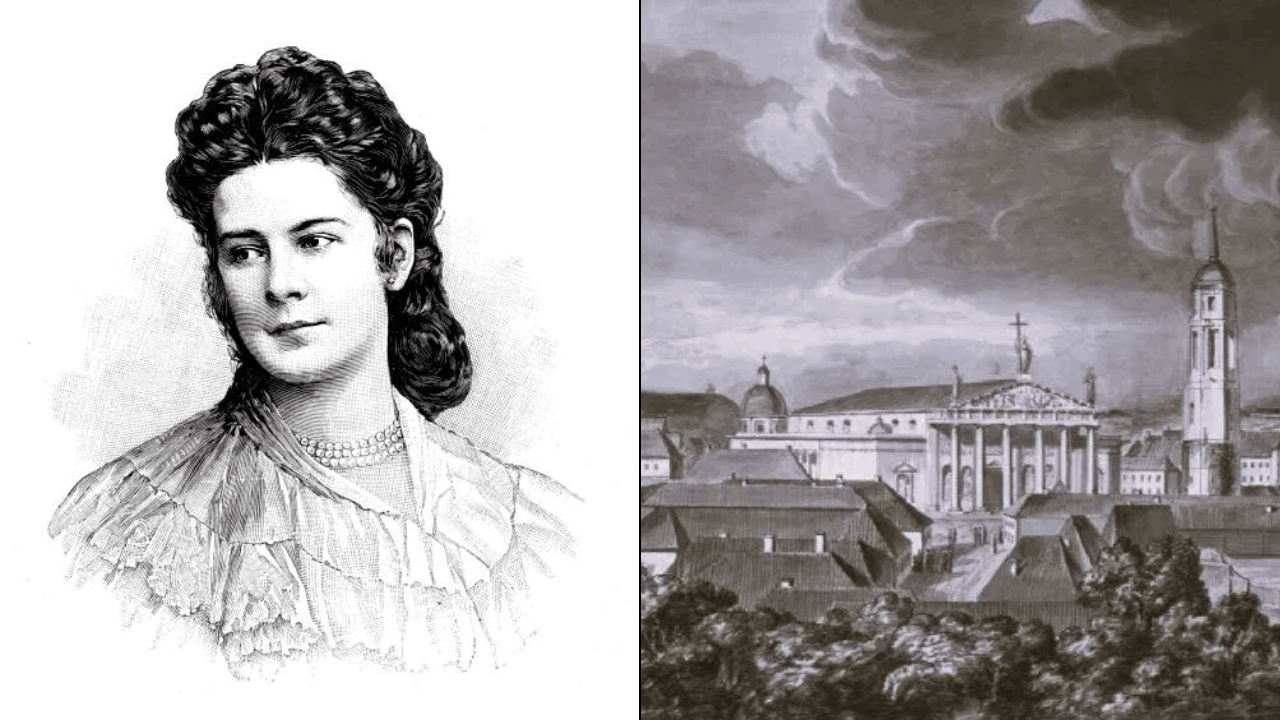
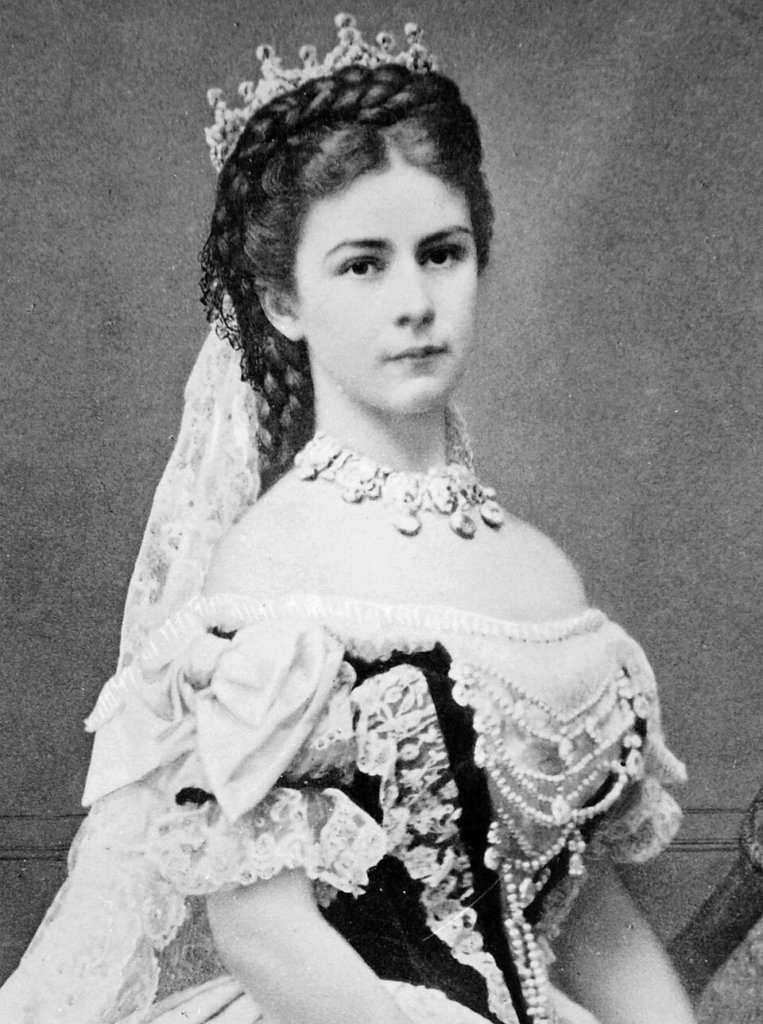
On the morning of May 6, 1543, a Habsburg princess was crowned Queen of Poland inside Wawel Cathedral in Kraków. She was sixteen years old. She had spent thirteen years promised to a man she had never met. She could speak German, Italian, and French, but not a word of Polish. And she was already ill.Her name was Elizabeth of Austria. She had two years left to live.
The Habsburg Nursery
Elizabeth was born on July 9, 1526, in Linz, in the province of Upper Austria, the first child of Ferdinand I, Archduke of Austria, and Anna of Bohemia and Hungary. Her arrival had been anxiously anticipated. The Habsburg court had grown uneasy at the possibility that Anna might not bear children a catastrophic problem for a dynasty whose entire political architecture rested on the production of marriageable heirs.
Elizabeth’s birth proved only the beginning. Anna would go on to bear fifteen children in total, most of whom survived well into adulthood, defying the crushing odds of sixteenth-century infant mortality.Elizabeth grew up within the corridors of the Hofburg Palace in Innsbruck, surrounded by courtiers, scholars, and the saturating piety of a devout household. Ferdinand was no gentle father where faith was concerned.
When he learned that one of his children’s tutors had been heard making light of the cardinals, he made his position clear: Lutheran ideas would be met with execution. It was an intense atmosphere in which to spend a childhood.The education, however, was serious and thorough. Elizabeth was trained in languages, the arts, and the harpsichord, becoming fluent in German, Italian, and French. Polish, the language of the court she was destined for, was apparently never thought necessary.
In the sixteenth century, the condition occupied a dangerous and ambiguous space in the medical imagination: sometimes interpreted as divine visitation, sometimes as demonic possession, sometimes as physical illness, depending entirely on who was doing the interpreting. What it meant for Elizabeth was a body she could not trust, and a future already shadowing itself before it had properly begun.
The Battle That Made the Marriage
Seven weeks after Elizabeth was born, Europe shifted.On August 29, 1526, at Mohács, a flat plain in southern Hungary near the Danube, the Ottoman forces of Sultan Suleiman I met and destroyed the Hungarian army of King Louis II. The battle lasted barely two hours. Louis II, twenty years old and without an heir, was killed in the rout thrown from his horse while fleeing and drowned. Three crowns died with him: those of Hungary, Bohemia, and Croatia.
The succession dispute that followed drew in most of central Europe. Two principal claimants emerged. The first was Elizabeth’s father, Ferdinand, whose claim ran through his wife Anna sister of the dead king and daughter of Vladislaus II, who had ruled Hungary, Bohemia, and Croatia until his own death in 1516. Through Anna, the Habsburg children, infant Elizabeth among them, carried Jagiellonian blood: a matrilineal thread linking them to the vanquished crowns.
The second claimant was John Zápolya, Voivode of Transylvania, who had the support of the Hungarian nobility and the tacit backing of Poland. The reigning Polish king, Sigismund I, had no desire to extend his reach into Hungary, but he watched the Habsburg advance with considerable alarm. If Ferdinand secured Hungary and Bohemia, the balance of power in central Europe would tilt sharply westward. Poland needed leverage. It would use the only currency that reliably crossed borders.
The Diplomatic Bargain
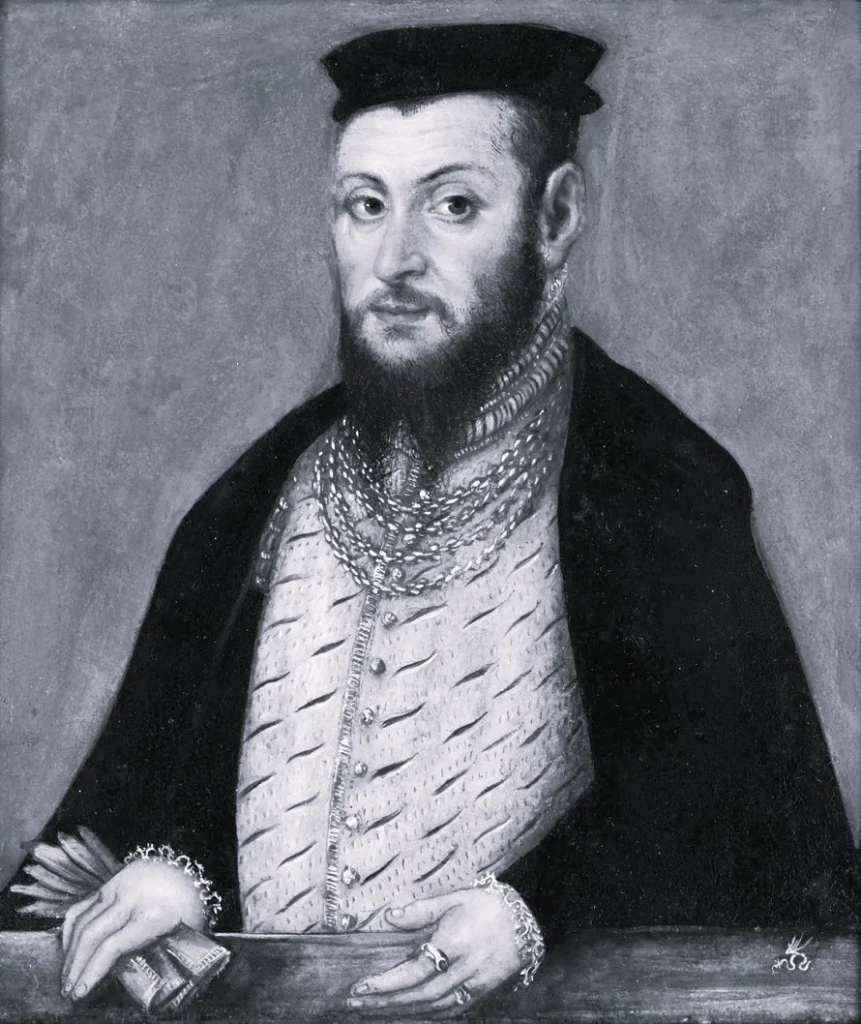
When Sigismund II Augustus was co-crowned King of Poland in 1529, Chancellor Krzysztof Szydłowiecki moved quickly to exploit the opportunity. Marriage negotiations with the Habsburg court were opened, and on November 10-11, 1530 in Poznań, a formal treaty was signed committing Elizabeth, Ferdinand’s eldest daughter, to the young Polish king. Elizabeth was four years old.
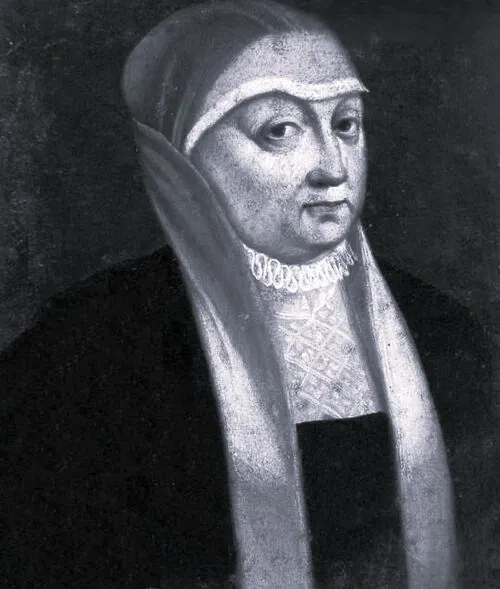
The arrangement was immediately complicated by Bona Sforza, Sigismund’s Italian mother and the most formidable political operator at the Polish court. She detested the match, and lobbied against it relentlessly, at one point proposing Marguerite de Valois of France as an alternative bride. Her opposition succeeded in delaying the union for years. The treaty was formally renewed on June 16, 1538 in Wrocław, and a betrothal ceremony followed on July 17, 1538 in Innsbruck eight years after the original contract had been signed.
Still the marriage was delayed. By the time Elizabeth finally departed Vienna in April 1543, she was sixteen. She arrived in Kraków two weeks later and met Sigismund II Augustus for the first time. He was twenty-two. On May 6, 1543, inside Wawel Cathedral, they were married and Elizabeth was crowned Queen of Poland and Grand Duchess of Lithuania. For two weeks, Kraków celebrated with feasts, festivals, and fireworks a display of diplomatic optimism that the principals involved did not appear to share.
Bona Sforza and the Architecture of Isolation
The celebrations ended. Reality did not take long to follow.Bona Sforza had opposed this marriage for thirteen years, and Elizabeth’s coronation did not end the opposition. It shifted its terrain. Bona contested the terms of the marriage contract. She challenged the dowry arrangements. She made her new daughter-in-law’s position at court as uncomfortable as the formalities of royal life permitted. Elizabeth, by most accounts a quiet and gentle young woman, was no match for her. Far from home, speaking no Polish, accompanied by only a small retinue of Austrian attendants, she found herself isolated in a foreign court presided over by a woman who had never wanted her there.
The husband was no refuge. Sigismund II Augustus had not wanted this marriage and made little effort to conceal his indifference. He kept mistresses openly. The queen who had sealed a political alliance between two of Europe’s great dynasties was, within the walls of her own palace, almost entirely alone.
Her epilepsy worsened. Courtiers reported her seizures growing more frequent and more severe. Whispers circulated some claiming poison, most naming Bona Sforza. No evidence was ever produced to support the accusation, but the fact that it found ready believers speaks to how visible Elizabeth’s deterioration had become, and how hostile the atmosphere surrounding her had grown. The Polish nobility generally admired her grace and gentleness. Their admiration changed nothing.
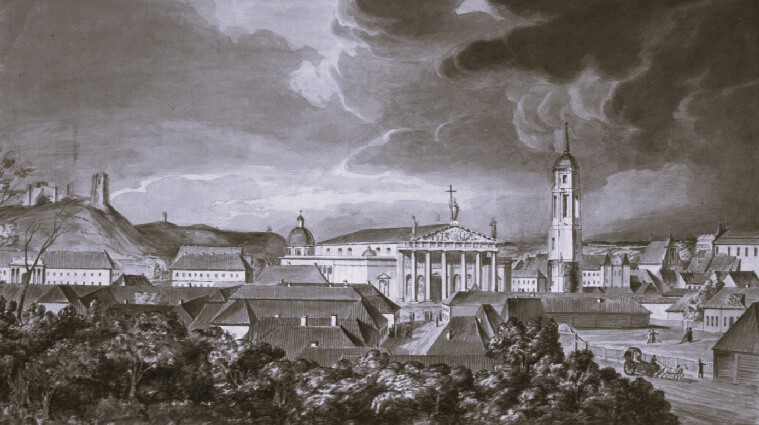
Vilnius and the Final Decline
In the mid-1540s, plague moved through Eastern Europe. The royal family did what courts throughout history had always done in the face of epidemic: they left.
Sigismund II Augustus traveled to Vilnius, capital of the Grand Duchy of Lithuania. Elizabeth toured Poland with her in-laws: Bona, and the aged Sigismund I, now in his late seventies, who was said to be sympathetic toward the young queen but was too frail to intervene in any meaningful way in her circumstances.
When the court reconvened in Vilnius, Sigismund performed the necessary gestures of a functioning marriage for Habsburg diplomatic consumption. But in Vilnius, Elizabeth’s condition entered its final deterioration. Her seizures came with increasing frequency and violence. Their cumulative toll on an already fragile constitution became impossible to conceal. By early summer of 1545, her parents had been notified. Austrian physicians made the journey from Vienna.
They arrived too late.
On June 15, 1545, Elizabeth of Austria died in Vilnius. She was eighteen years old three weeks short of her nineteenth birthday. She was buried at Vilnius Cathedral on July 24, 1545.
She had been in Poland for two years.
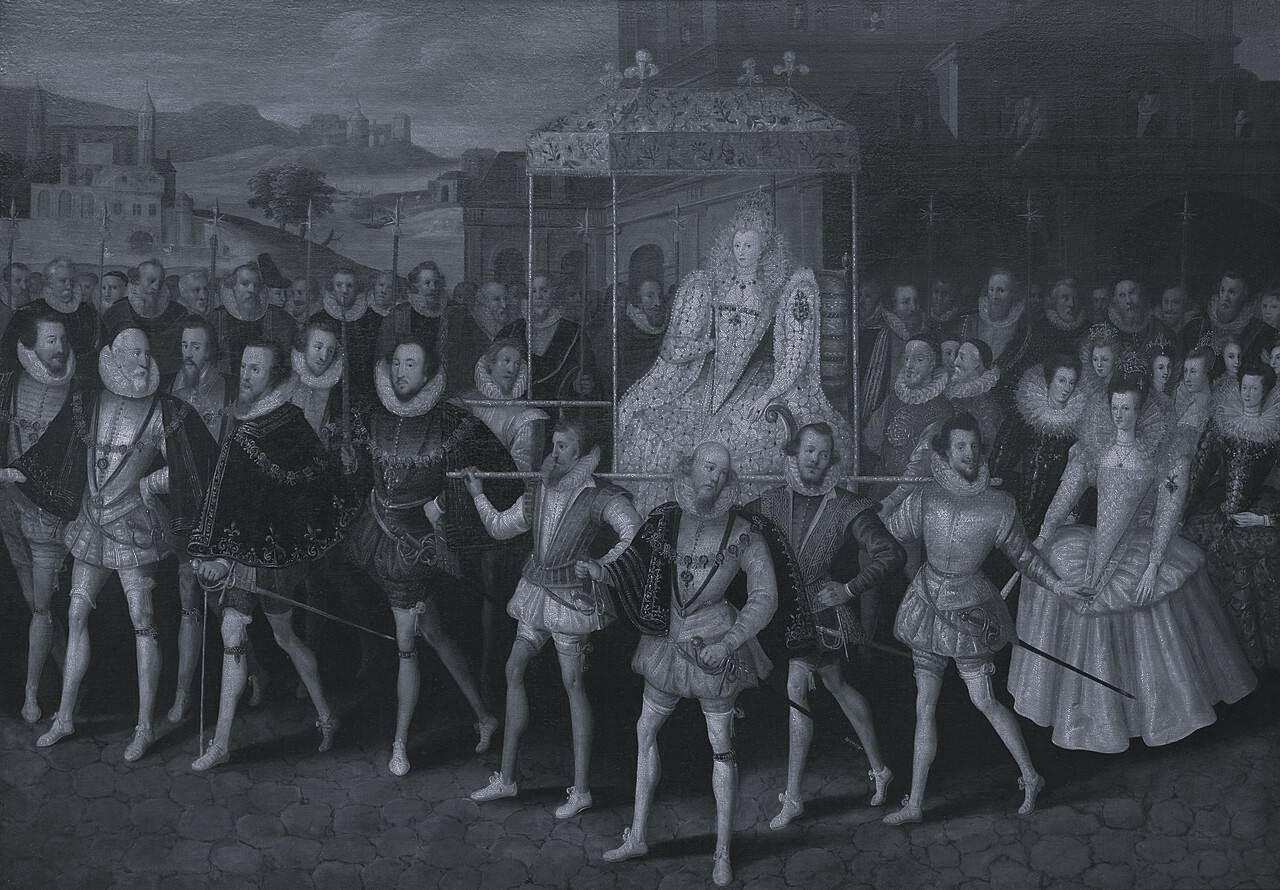
What Was Left Behind
Sigismund II Augustus would reign for another twenty-seven years. In summer 1547, two years after Elizabeth’s death, he secretly married Barbara Radziwiłł, a Lithuanian noblewoman. The union provoked fury from the court and the nobility and from Bona Sforza, who had fought Barbara’s rise as fiercely as she had once fought Elizabeth’s arrival. Barbara was crowned Queen of Poland in 1550 and died five months later.
His third wife, taken in 1553, was Catherine of Austria Elizabeth’s younger sister.
None of his three marriages produced children.
In 1569, Sigismund oversaw the Union of Lublin, formally joining the Kingdom of Poland and the Grand Duchy of Lithuania into the Polish-Lithuanian Commonwealth the defining political achievement of his reign. He died on July 7, 1572, at Knyszyn, the last male monarch of the Jagiellonian dynasty. The crown passed briefly to the French House of Valois, then, in 1575, to his sister Anna Jagiellon, the last of her line. The House of Vasa would follow.
None of it had required Elizabeth of Austria to survive. The diplomatic arrangement her marriage had been designed to cement had long since played itself out by the time she died. She had been, as these marriages so often made of their principals, entirely instrumental and ultimately expendable.
She arrived in Kraków as the solution to a problem. She left Vilnius as a footnote.
Leave a Reply