
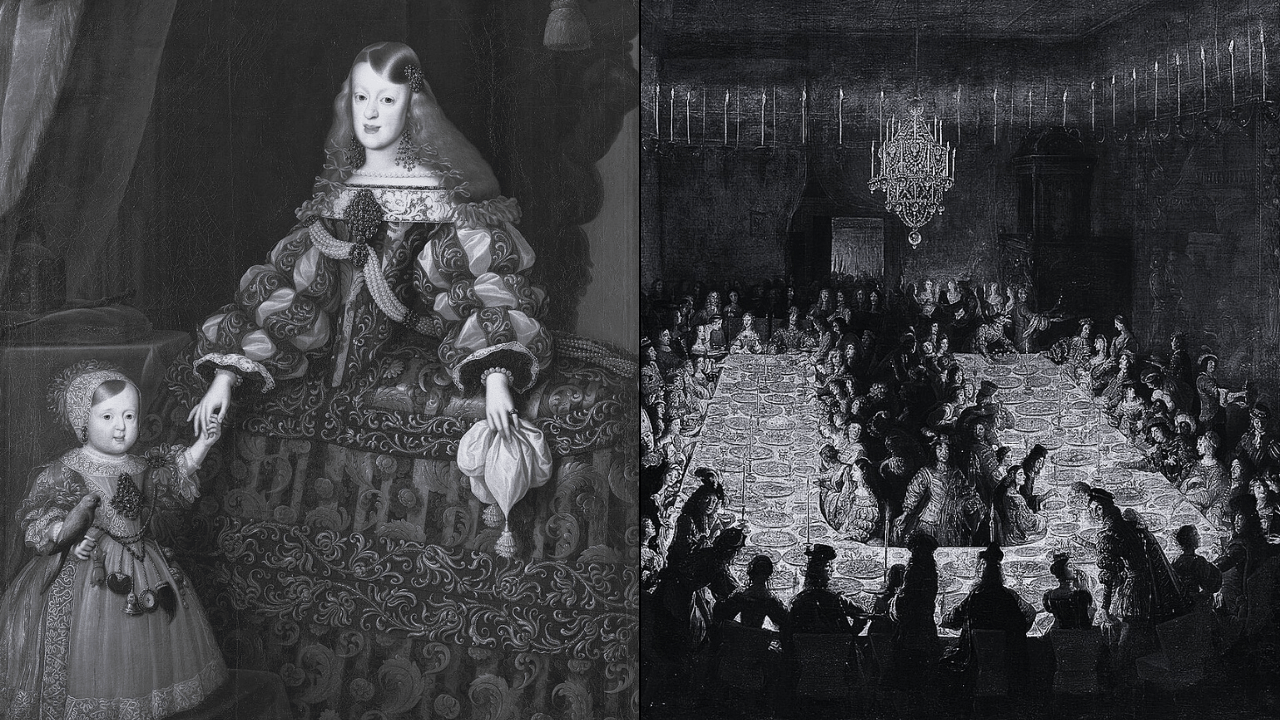
Betrothed at eleven to a man who was both her first cousin and her maternal uncle, she endured six pregnancies in six years and was dead by twenty-one.In 1656, Diego Velázquez placed a five-year-old girl at the centre of the most debated painting in Western art. She stands calmly in the middle of the canvas, surrounded by her ladies-in-waiting, a court dwarf named María Bárbola, and a large, sleepy dog. She is dressed in silver and black silk.
Her expression is serene, certain, composedly royal. She does not yet know that her destiny has already been decided above her head. The talks have been going on for a year. By the time she is eleven, she will have been officially promised to her uncle.This is the story of Margarita Teresa of Spain: a girl painted into immortality before she was old enough to understand what immortality cost.
Philip’s Niece Became His Queen
Margarita Teresa was born on July 12, 1651, in the Royal Alcázar of Madrid, the daughter of King Philip IV of Spain and his second wife, Mariana of Austria. The union that produced her was, even by the Habsburgs’ standards, alarmingly close. Philip IV was Mariana’s uncle. He was thirty years her senior. She was the daughter of his own sister.
Philip had come to the Spanish throne in 1621, at fifteen years old, inheriting an empire that covered most of Central and South America, the Caribbean, the Philippines, and portions of the western African coast. His contemporaries called him el Rey Planeta, the Planet King, a title that derived not from the empire’s reach but from his court’s identification of him with the Sun, which in the geocentric astronomy of the era counted as one of the seven planets, and which served as the dominant symbol of his authority.
The reality of his reign was a slow-motion contraction. The empire was not expanding. It was beginning, almost imperceptibly, to crack.The marriage between Philip and Mariana produced five children. Three died in infancy. The two who survived would each carry the consequences of two centuries of Habsburg inbreeding in different ways. Margarita appeared, to the relief of the court, relatively healthy: attractive, lively, her parents’ “little angel.” Her younger brother Charles did not escape so cleanly. By the time he reached his twenties he could not chew his food.
His jaw protruded so severely that his teeth did not meet. He showed signs of early cognitive decline, suffered seizures, and would go childless to his grave. His contemporaries called him El Hechizado, the Bewitched, because sorcery seemed more explicable than the truth. Modern researchers have calculated his inbreeding coefficient at 0.25, comparable to that of a child whose parents are biological siblings.Margarita had been luckier. She was not untouched, but the damage in her case was quieter, internal, and would take years to reveal itself.
Velázquez Painted Her Into Immortality
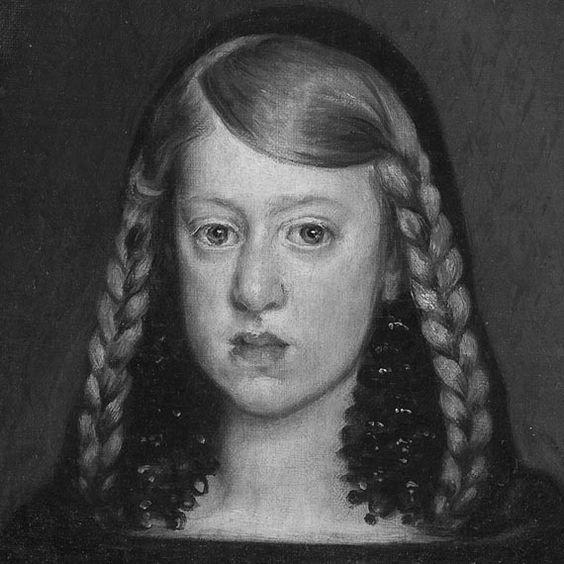
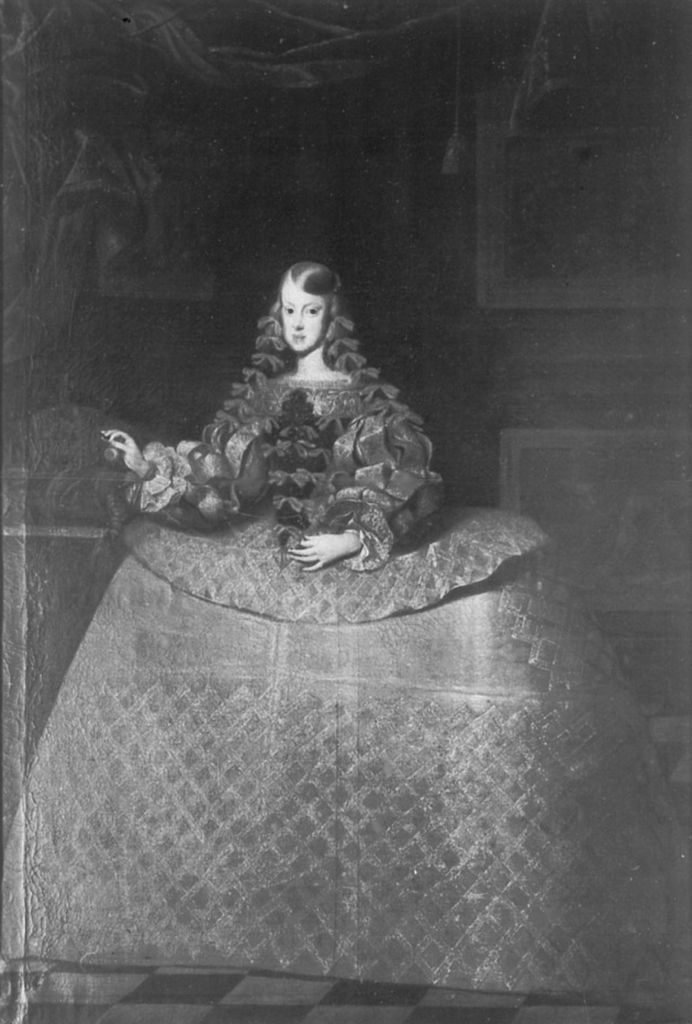
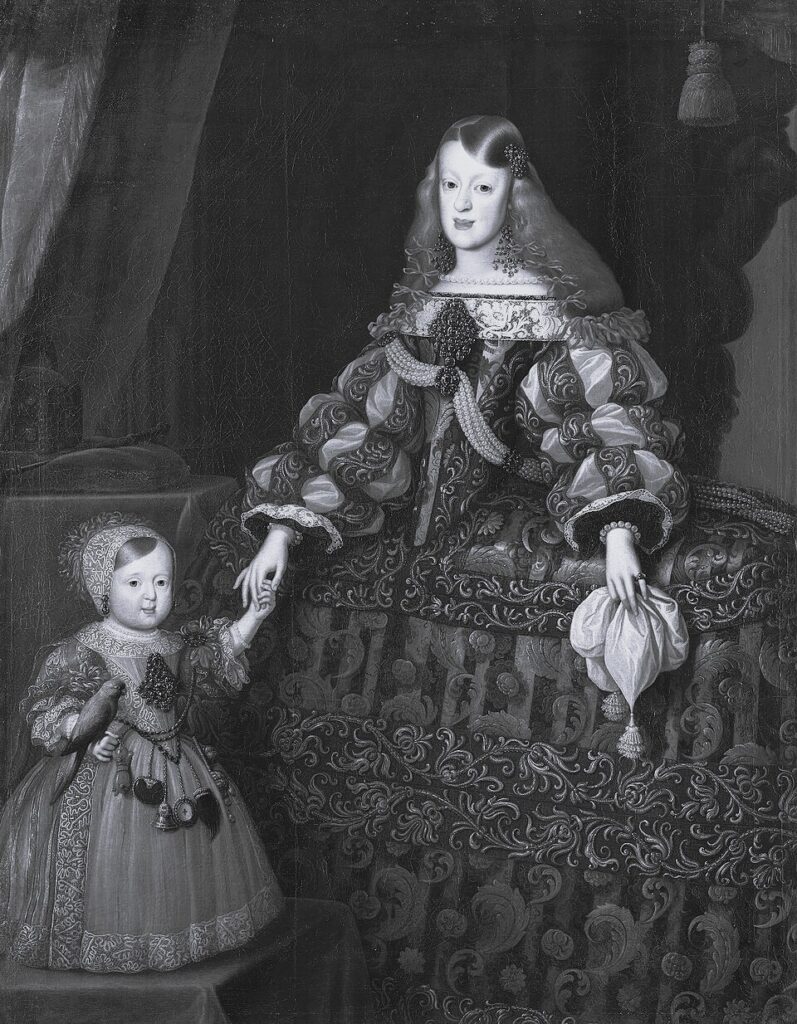
Between 1653 and 1659, Diego Velázquez painted at least five portraits of Margarita Teresa, each one sent north to Vienna as a kind of biological progress report for the man she was being promised to. The portraits tracked her growth from toddler to adolescent. They were not art commissioned for art’s sake. They were diplomatic dispatches, confirming to Emperor Leopold I that his future bride existed, that she was developing, that the arrangement was still viable.
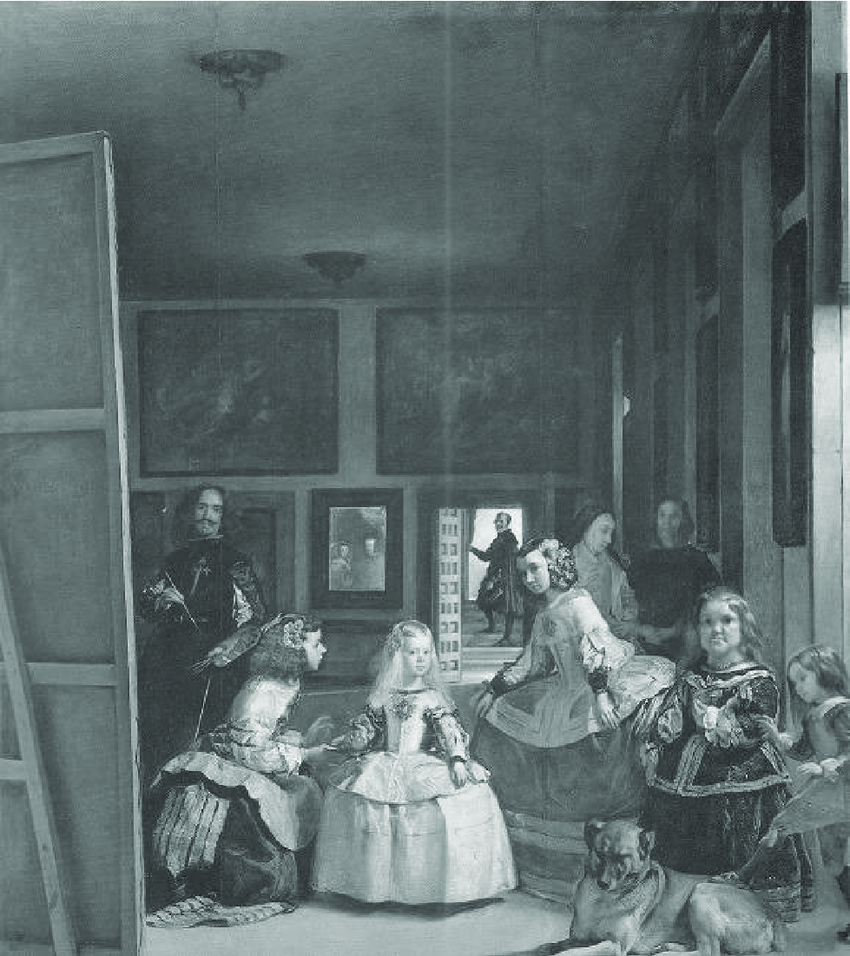
The most famous of these paintings, completed in 1656, was originally recorded in court inventories as Retrato de la señora emperatriz con sus damas y una enana: Portrait of the Empress with her Ladies and a Dwarf. After the Alcázar fire of 1734 it became known simply as La Familia. When the Prado catalogued it in 1843, it acquired the name it carries today: Las Meninas, the Ladies-in-Waiting.
What Velázquez did with the painting went far beyond portraiture. He placed himself inside the canvas, brush in hand, painting a canvas whose face we cannot see. In the mirror on the back wall, faint and blurred, appear the reflections of Philip IV and Mariana. The court dwarf María Bárbola stands at the right edge of the composition, her gaze direct and unsettling, given a gravity by the painter that her world generally denied her.
The Infanta herself stands at the centre, offered a cup of water on a silver tray. She accepts it as if the court were built around her. It was. She simply could not leave it.
Spain Sold Her to Her Own Uncle
The discussions began, formally, when Margarita was eleven. Her intended husband was Leopold of Habsburg, Archduke of Austria, King of Hungary, Croatia and Bohemia, and Holy Roman Emperor. Leopold was Mariana’s younger brother, which made him Margarita’s maternal uncle. He was also, through the overlapping branches of the family tree, her first cousin. The relationship was not hidden and not apologised for. In Vienna, she would call him uncle, because that is what he was.
There had been a brief suggestion that she might marry Charles Stuart, the restored King of England. Philip IV rejected the idea. His instinct was dynastic consolidation, keeping the Habsburg bloodline circling within itself. Spain’s power had already started its long contraction, and a Habsburg-to-Habsburg marriage was, in his estimation, the correct response.
Margarita was betrothed in 1663. She was too young for the ceremony to take place immediately. In April 1666, two months before her fifteenth birthday, she left Madrid for the last time. A six-month ceremonial journey followed, the Spanish royal party processing across Europe with appropriate grandeur. She arrived in Vienna in December 1666.
The marriage ceremony was held on December 12, attended by the great powers of the continent, the celebrations stretching well into the following year.
Vienna Took Six Pregnancies in Six Years
Leopold went to considerable lengths to ease Margarita’s transition. He commissioned operas and ballets for her. He allowed her to keep her Spanish household, filling her new life in Vienna with familiar faces. He shared her interests in music and art. She called him uncle, and despite the strangeness of that arrangement, they appear to have found each other’s company bearable, even genuinely pleasant. He would later write of her as his “only Margareta.”
But Margarita remained homesick throughout her years in Vienna. She made little effort to learn German. Her complexion grew paler. The characteristic Habsburg jaw, absent in her childhood portraits, became more pronounced in her features. And from the very first year of the marriage, the pregnancies began.
A son, Ferdinand Wenzel, was born in September 1667. He died in January 1668, at approximately four months old. A daughter, Maria Antonia, was born in January 1669 and survived, the only one of Margarita’s children who would. John Leopold was born on February 20, 1670, and died within hours. A fourth child, Maria Anna, arrived in February 1672 and lived two weeks.
Contemporary physicians noted that Margarita’s health was deteriorating independently of the pregnancies. She was frequently confined to bed even in the gaps between them. She was diagnosed with an enlarged thyroid gland, a condition the medicine of the seventeenth century could neither explain nor treat.
Her Body Gave Out at Twenty-One
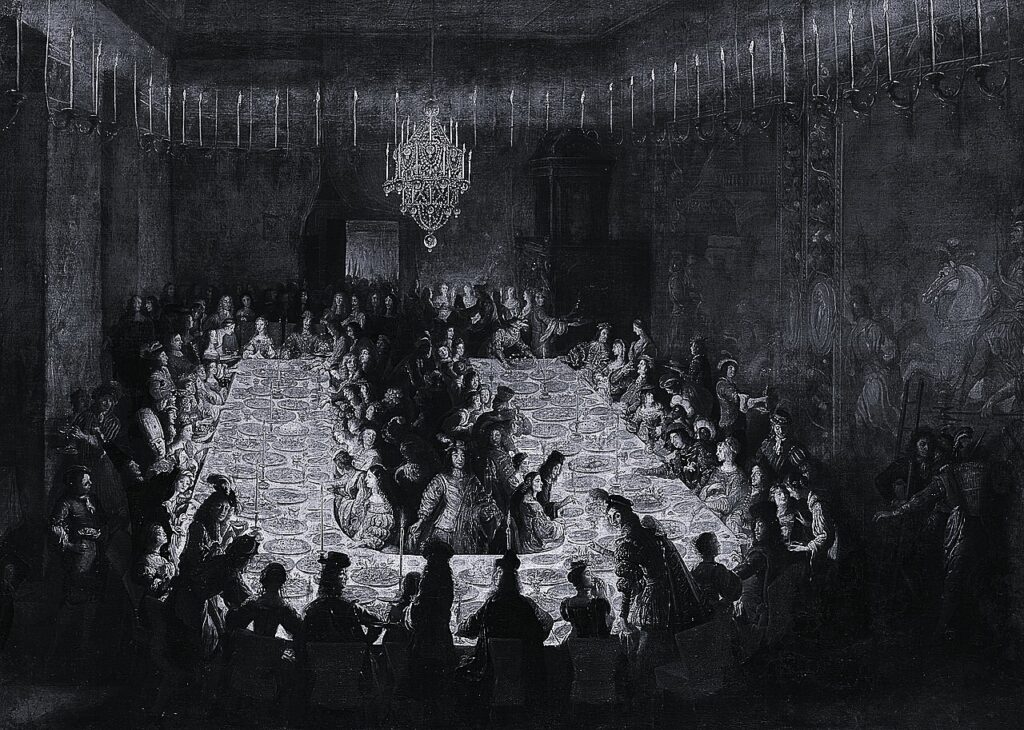
In early spring 1673, Margarita suffered a three-week bout of severe stomach pain. A fever followed. Foreign ambassadors at the Viennese court wrote home that her life was in serious danger. By early March she was struggling to breathe. On March 10, a confessor was summoned to hear her last confession.
The cause of death, confirmed in subsequent accounts, was bronchitis, the illness consuming what remained of her after six pregnancies in six years.She died on March 12, 1673. She was twenty-one years old.
An autopsy established that she had been four months pregnant at the time of her death. The unborn child was a boy. Leopold wrote in his diary: “My heart breaks, but always may Your Will be done.” She was laid to rest in the Imperial Crypt in Vienna, the funeral ceremonies extending into April. The mourning period was long. The remarriage was longer.
On October 15, 1673, less than seven months after Margarita’s death, Leopold married Archduchess Claudia Felicitas of Austria, a member of the Tyrolese branch of the Habsburgs. He described his new wife, by his own account, as not like his only Margareta. He needed heirs. The dynastic game did not pause for grief.
Her Bloodline Ignited a Continental War
Margarita’s only surviving child, Maria Antonia, inherited her claim to the Spanish throne. Maria Antonia died on December 24, 1692. Her rights passed to her only surviving son, Prince Joseph Ferdinand of Bavaria. He died on February 6, 1699, aged six, from smallpox, his death extinguishing the last direct line of descent from Margarita Teresa.
When Charles II of Spain, her bewitched, childless brother, died in 1700, the question of who would sit on the Spanish throne had no clean answer. The result was the War of the Spanish Succession, which tore Europe apart from 1701 to 1714, thirteen years of combat across five fronts, from the Low Countries to Italy to Spain itself.
The conflict that followed Margarita’s blood can be traced, step by step, back to the marriage policies of a dynasty that had spent two centuries choosing cousins over strangers and paid for it with the health of its children, the competence of its kings, and eventually the empire itself.She had been the healthiest of them. She was dead at twenty-one.
Leave a Reply