
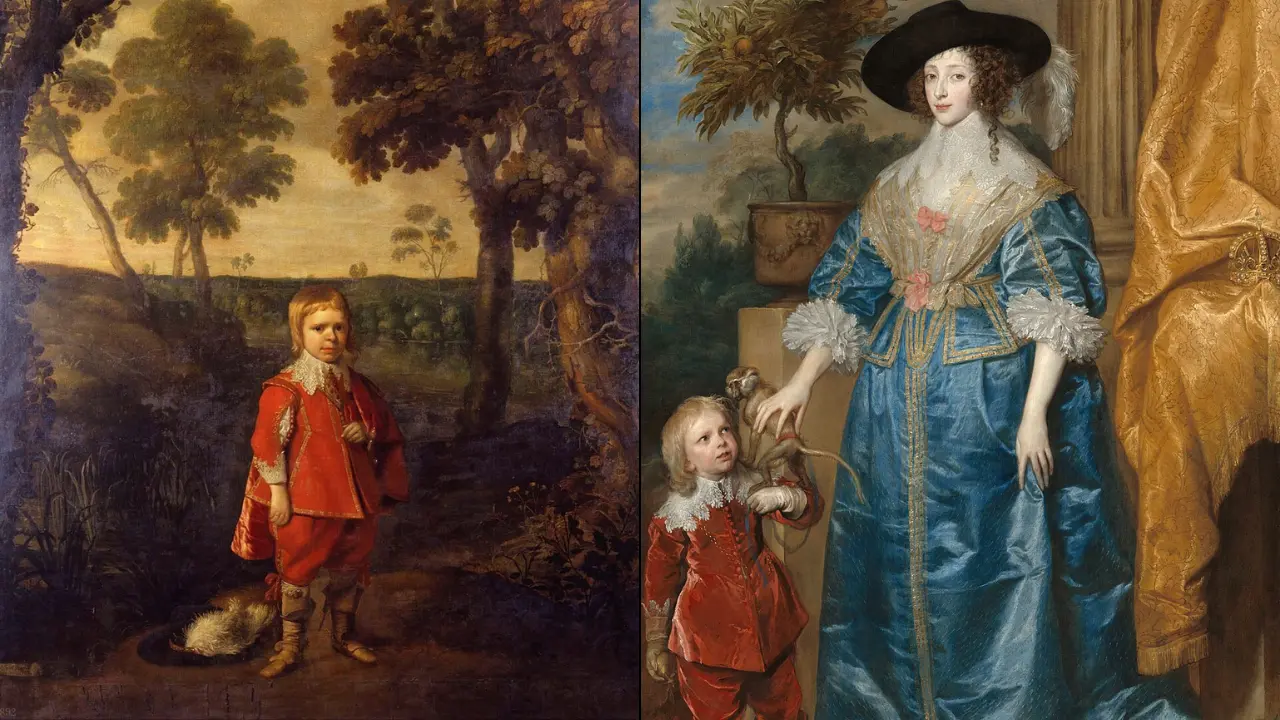
Born to a butcher’s family in Oakham, Rutland in 1619, Jeffrey Hudson rose to become a celebrated fixture of the Stuart court, fought in the English Civil War, shot a man dead in a duel in France, and spent the next 25 years enslaved on the Barbary Coast before dying in a pauper’s grave in 1682.
A Pie Delivered Hudson to the Queen
On an autumn evening in November 1626, two footmen carried a gilded pie into a banquet hall in London and placed it before Queen Henrietta Maria. The pie was two feet high and two feet wide. The crust moved. A small hand broke through it. A boy emerged, seven years old and 18 inches tall, wearing a miniature suit of armour. He marched the length of the banqueting table, waving a flag. He returned to the queen and bowed.
The Duke and Duchess of Buckingham offered him to Henrietta Maria as a gift. She accepted.
Jeffrey Hudson went home with the queen that evening. He would not see his family in Oakham for decades.
Jeffrey had been born on 14 June 1619 to John Hudson, a butcher employed in the household of George Villiers, first Duke of Buckingham. Both of his parents were of ordinary height. Jeffrey was not. By his seventh year he stood 18 inches tall, a fact of precise and well-proportioned smallness that astonished everyone who encountered him. The Duchess of Buckingham had taken him into her household in 1626 as a rarity of nature. The Duke, determined to make an impression on the royal couple, devised the pie.
He succeeded.
Hudson Became the Court’s Most Famous Curiosity
Hudson moved into Denmark House in London, where the queen maintained her household with its French attendants and Catholic priests. He was not the only curiosity at court. William Evans, a Welsh porter reported to stand seven feet and six inches tall, developed a routine in which he pulled Hudson from one coat pocket alongside a loaf of bread and proceeded to make a sandwich with both. Hudson and Evans performed this before the king and queen. A week later Hudson was appearing in court theatricals alongside the royal couple themselves.
But court life was not only performance. Hudson hunted. He shot. He received a salary of £50 per year. He had his own personal servant. He attended the elaborate costumed masques staged by Inigo Jones and appeared in the 1630 Shrove-tide production Chloridia dressed as a prince of Hell, attended by six infernal spirits.
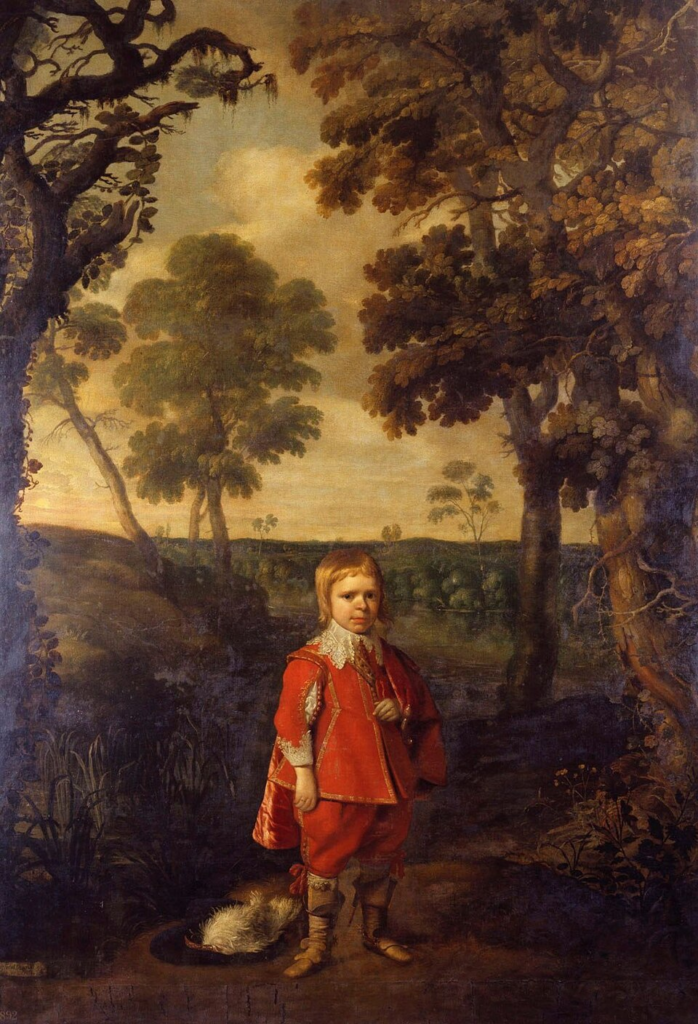
In 1627, the Dutch painter Daniel Mytens was commissioned to paint a portrait of Hudson in a woodland setting, for a fee of £40. In 1633, the Flemish master Anthony van Dyck placed Hudson beside Henrietta Maria in a full-length portrait that remains in collections today. Few figures at the Stuart court were depicted by two painters of that standing. Hudson was reportedly “wanting nothing but humility.” He was known as Lord Minimus, as the Queen’s Dwarf, and by some admirers as one of the wonders of the age.
In 1630, at approximately ten years old, Hudson was included in a government mission to France, most likely for the appreciation of the French court. On the return crossing of the English Channel, their ship was seized by pirates operating out of the port of Dunkirk. Hudson was taken captive. News reached Henrietta Maria. The Venetian ambassador reported to his government that the English court was more distressed at Hudson’s capture than it would have been at the loss of an entire fleet. He was released and returned to England. The incident was significant enough that the playwright William Davenant wrote a mock epic poem in 1638, Jeffreidos, in Hudson’s honour.
In 1636, Hudson converted to Roman Catholicism, adopting the faith of his queen in a country that had been predominantly Protestant for a century. The following year he travelled with a group of courtiers to the Netherlands to observe the siege of Breda, the Dutch effort to expel Spanish forces from the city. He was, by every account, interested in military affairs in a way that went beyond ornament.
Civil War Forced the Court Into Exile
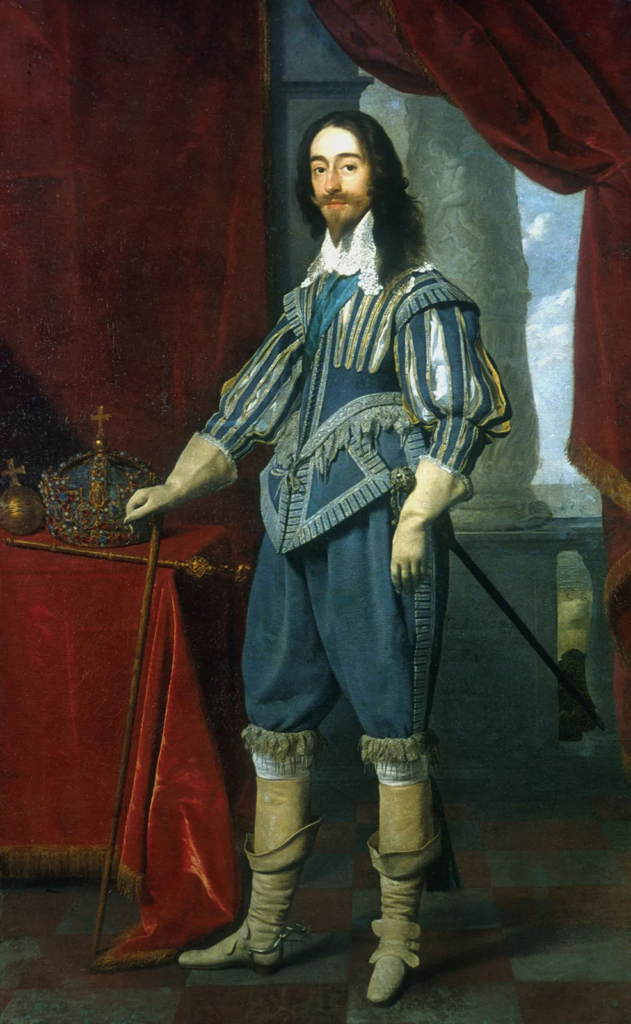
By 1642, England had fractured. Charles I, who had ruled without Parliament since 1629, faced armed rebellion. As civil war erupted, Henrietta Maria left England for the Netherlands to raise money and munitions for the Royalist cause, taking Hudson with her. She returned in February 1643, landing at the fishing port of Bridlington on the Yorkshire coast. At approximately five in the morning, Parliamentary forces opened fire on the port. The queen’s entourage fled. Hudson ran toward the quayside with a sword and pistol. The Parliamentarians did not leave their ships. He stood at the dock, armed and ready, while those around him scattered for cover.
The court eventually reassembled at Oxford, the Royalist stronghold. Henrietta Maria appointed Hudson a Captain of Horse. Whether he saw combat in one of Prince Rupert’s cavalry raids is unconfirmed. What is known is that he never relinquished the title. Forty years later, he was still recorded in documents as Captain Jeffrey Hudson.
As the Royalist position deteriorated, Henrietta Maria fled to France in 1643. Hudson followed. The exiled court settled in Paris. The queen was ailing after a difficult delivery. The English cohort in exile was restless, cramped, and bitter.
The mocking of Hudson’s size started again.
Hudson Killed a Man and Was Banished From France
There is no record of precisely what Charles Crofts said or did. What is known is that Hudson, by the autumn of 1644, had decided he was done tolerating it. He challenged Crofts to a formal duel. Crofts was the brother of William Crofts, the queen’s Master of Horse and the commander of her personal guard. He arrived at the meeting place carrying a water squirt, treating the encounter as a joke.
Hudson mounted a horse, charged, and shot Charles Crofts through the forehead. Crofts died.
The consequences arrived immediately. Duelling had been outlawed in France. William Crofts was among the most powerful men in the exile court. Henrietta Maria interceded to spare Hudson from the death sentence that followed, but she had no capacity to keep him. She banished him from France. The queen who had kept him for seventeen years, and who reportedly wept at the order she signed, put him out of her court. Hudson was 25 years old and alone in Europe.
Barbary Pirates Seized Hudson and Sold Him Into Slavery
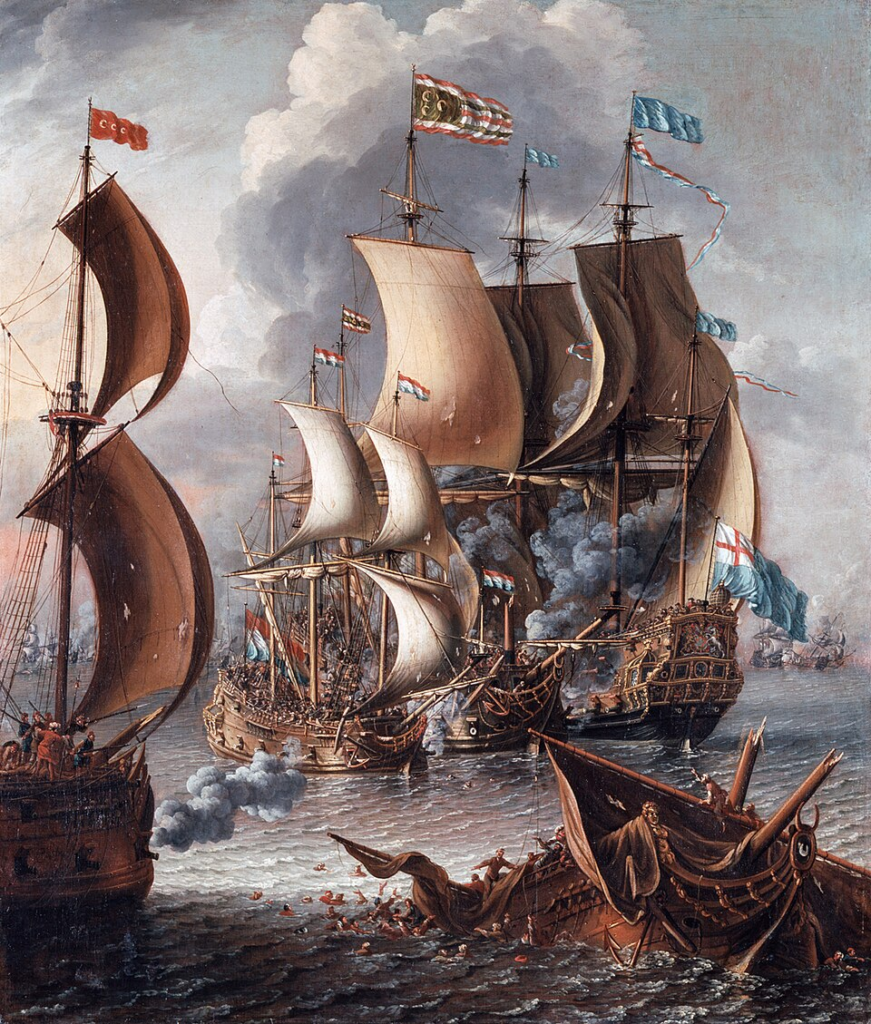
What happened in the weeks following his banishment is not known precisely. By the winter of 1644 Hudson was on a ship. The ship was captured by Barbary pirates operating from the North African coast. He was taken to North Africa, where he was sold as a slave.
He would not be free again for approximately 25 years.
Almost nothing of that quarter century has survived. James Wright, an antiquarian who later interviewed Hudson in Rutland, noted only that captivity had involved hardship, much labour, and beating. Beyond that record, the silence is total. No letters. No accounts from captors or witnesses. No documentation of the work he was forced to perform, the specific location of his enslavement, or the years between his arrival and his eventual release.
One fact survived the silence. Hudson grew. He had stood 18 inches at seven years old and no more than three feet at 25. During his years in North Africa, particularly into his thirties, he continued to grow until he reached three feet and nine inches, more than doubling the height he had carried through the Stuart court. He attributed the change to the hardships he had endured.
He was ransomed sometime in the late 1660s, reportedly with the involvement of George Villiers, the second Duke of Buckingham, son of the man who had first placed Hudson in the pie. Several diplomatic missions had been sent from England to Algeria and Tunis in that period to recover enslaved English subjects. The first confirmed record of Hudson back on English soil dates from 1669. He was fifty years old. Henrietta Maria had died that same year, in France, without seeing him again.
Hudson Returned to England and Was Thrown Into Prison
Hudson went home to Oakham, the county of his birth. He lived quietly there for several years and was interviewed by the antiquarian James Wright, whose county history of Rutlandshire, published in 1684, contains one of only two surviving contemporary accounts of his life.
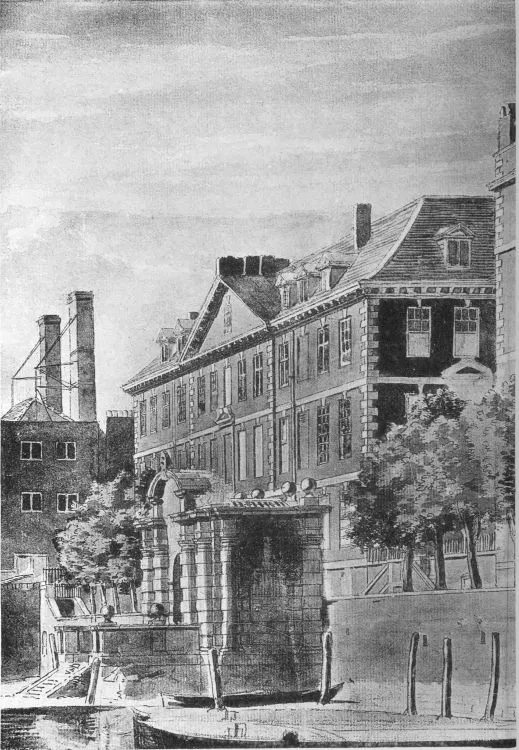
In 1679, Hudson returned to London. He was sixty years old, a former court figure now largely unknown, hoping to secure a pension in recognition of his service to the parents of Charles II. He arrived at a dangerous moment. London was consumed by anti-Catholic hysteria following the fabricated claims of Titus Oates, an informer who alleged a Catholic conspiracy to murder the king. Oates, like Hudson, was from Oakham. Hudson was Catholic. The coincidence was enough. He was arrested and confined to the Gatehouse Prison in Westminster for a considerable time, his only recorded offence being his faith.
He was released in 1680. Charles II granted him £50 in June of that year and a further £20 in April 1681.
He died around 1682. He was buried in an unmarked Catholic pauper’s grave at an unknown location.
Some of his clothes survived him. His waistcoat, breeches, and stockings are reportedly held at the Ashmolean Museum in Oxford. A pair of boots and a masking-suit had already passed into John Tradescant’s cabinet of rarities by the 1650s. The man who rode beside a queen, killed a man in a duel, and endured a quarter century in North African slavery exists in the physical record as a very small waistcoat.
James Wright, who interviewed Hudson sometime before 1684, was among the only people who thought to ask. What Hudson said about the twenty-five years in North Africa is not recorded. Wright’s account runs to fewer than three paragraphs in a county history. Whatever Hudson remembered, whatever he carried back from that silence, he appears to have kept mostly to himself. The grave is unmarked. The location is unknown. The 25 years are still blank.
Leave a Reply