
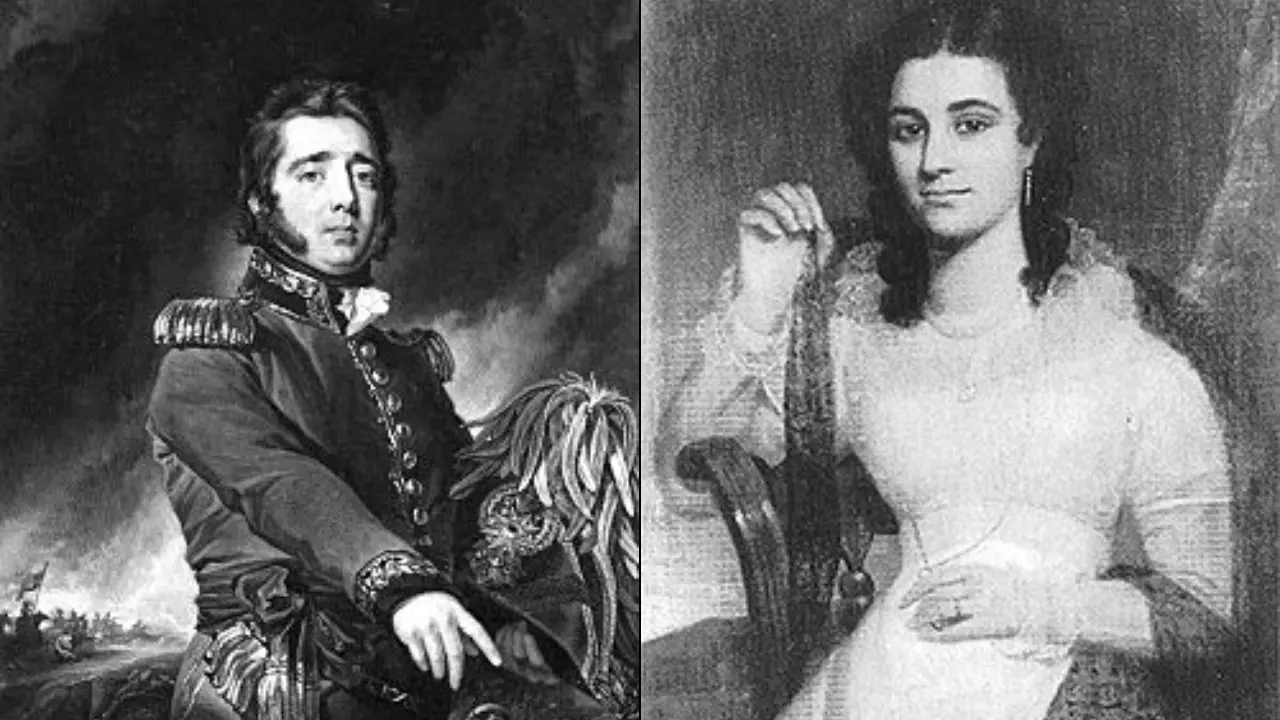
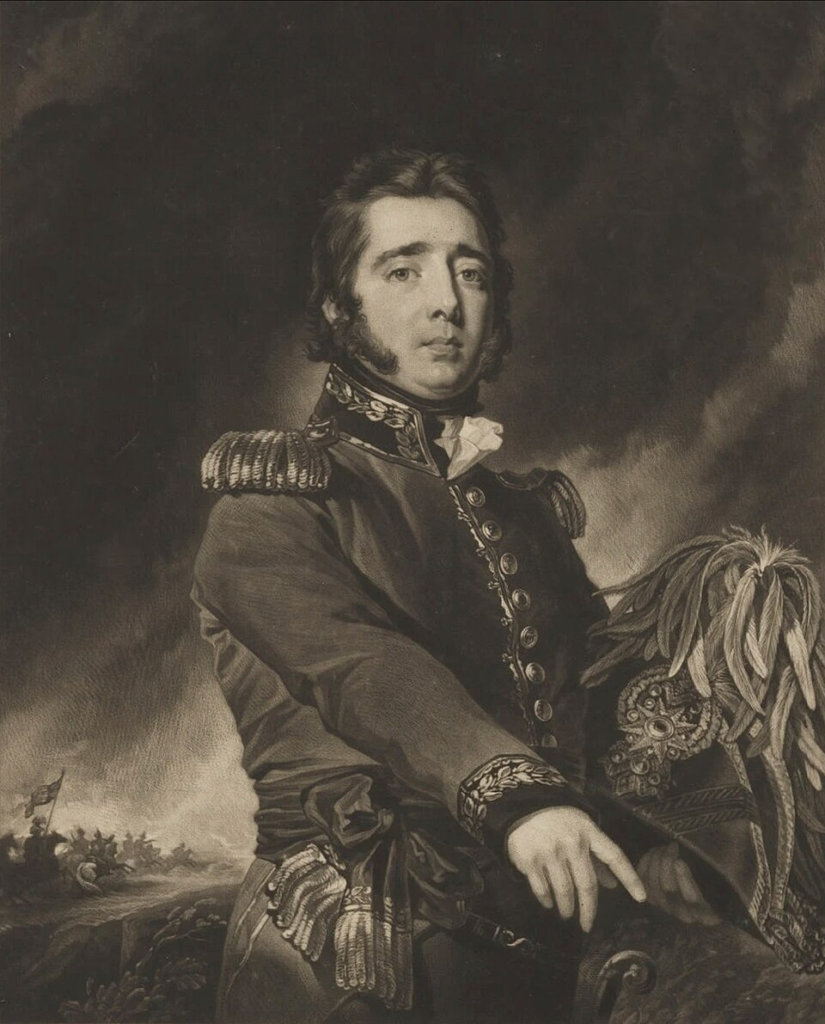
In 1822, decorated war hero Gregor MacGregor sold land certificates and government bonds in a Central American colony called Poyais that he had invented from nothing; of the 250 settlers who sailed there, more than 180 died in the jungle.
In November 1822, the merchant ship Honduras Packet dropped anchor off the Mosquito Coast of Central America. The passengers put on their best clothes. Among them were a City of London banker appointed to head the national treasury, civil servants already assigned their government offices, young men whose families had purchased military commissions on their behalf, and an Edinburgh cobbler who had been personally commissioned as Official Shoemaker to the Princess of Poyais.
They crowded the ship’s rails, searching the shoreline for the capital city they had been promised: St Joseph, with its wide paved boulevards, a domed cathedral, an opera house, a royal palace, and a parliament building. The colony’s founder, the celebrated Scottish general Sir Gregor MacGregor, had told them the rivers of Poyais ran with globules of pure gold.
No official party came to meet the ship. After waiting for hours in the heat, the settlers disembarked. There was no city. There were no authorities. There was no treasury, no cathedral, no opera house, no Bank of Poyais.
There was only jungle.
The Man Who Invents Himself
Gregor MacGregor was born on Christmas Eve 1786 at Glengyle, his family’s ancestral home on the north shore of Loch Katrine in Stirlingshire, Scotland. His father, Daniel MacGregor, was an East India Company sea captain. His grandfather, also named Gregor and nicknamed “the Beautiful,” had served with distinction in the British Army and later played an important role in the Clan Gregor’s rehabilitation into Scottish society following the Jacobite risings of the 18th century, whose defeat had led to the clan’s prolonged legal proscription. Daniel MacGregor died in 1794, when Gregor was seven. He and his two sisters were raised by their mother and various relatives.
MacGregor joined the British Army in April 1803 at the age of 16, the minimum age the military permitted. His family purchased him a commission as an ensign in the 57th (West Middlesex) Regiment of Foot for approximately £450. Within a year he had been promoted to lieutenant without purchase an advancement that typically required up to three years. When the regiment posted to Gibraltar, MacGregor was introduced to Maria Bowater, the daughter of a Royal Navy admiral who came with a substantial dowry and connections to two generals, a member of parliament, and the botanist Aylmer Bourke Lambert. They married at St Margaret’s, Westminster in June 1805.
During the regiment’s posting in Gibraltar, MacGregor developed what one contemporary biographer described as an obsession with dress, rank insignia, and medals that made him unpopular among fellow officers. He forbade any enlisted man from leaving quarters without wearing the full dress uniform. In 1809, the 57th Foot deployed to Portugal as reinforcements for the Anglo-Portuguese Army in the Peninsular War. MacGregor was seconded to the Portuguese Army with the rank of major, and then following what his biographer Michael Rafter described as a dispute “originally of a trivial nature” with a superior officer resigned his commission in May 1810 and returned to Britain.
The 57th Foot’s stand at the Battle of Albuera the following year, after MacGregor had already left the regiment, earned the unit the nickname “the Die-Hards.” MacGregor would spend the rest of his life trading on that association.Back in Edinburgh, the 23-year-old called himself “Colonel,” wore the badge of a Portuguese knightly order, and toured the city in an extravagantly coloured coach. Failing to secure the social standing he wanted in Edinburgh, he moved to London and styled himself “Sir Gregor MacGregor, Bart.” a baronetcy that did not exist while claiming the MacGregor clan chieftainship and hinting at ties to dukes, earls, and barons.
In December 1811, Maria MacGregor died. With her went MacGregor’s primary income and the influence of the Bowater family. He was 25, without a profession or a source of wealth, and without obvious prospects. He looked elsewhere.
A Soldier Makes His Name in South America
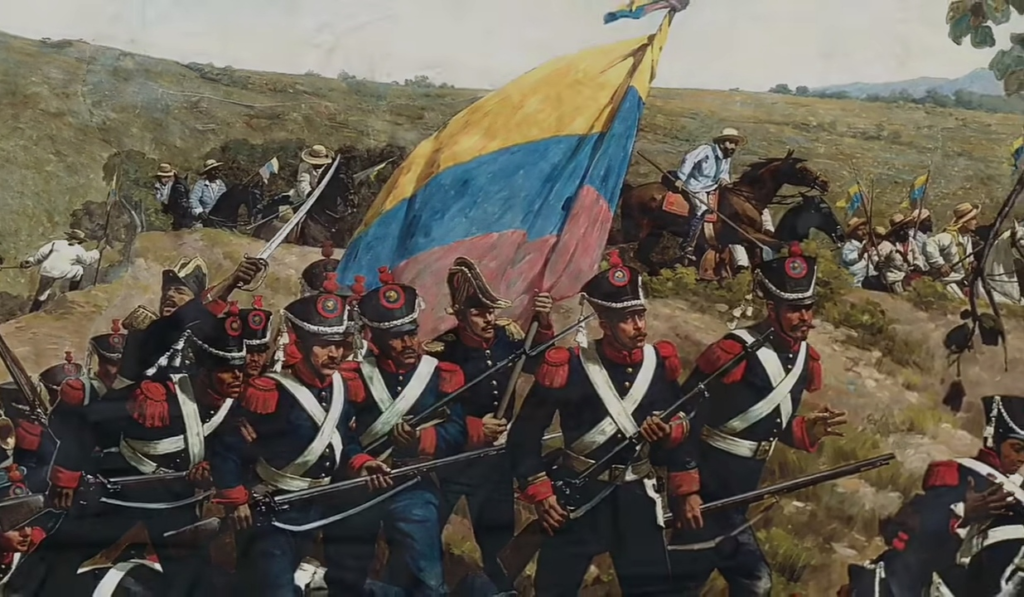
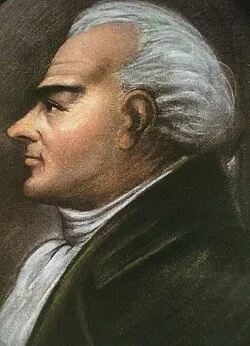
By 1811, seven of Venezuela’s ten provinces had declared independence from Spain, beginning the Venezuelan War of Independence. The revolutionary General Francisco de Miranda had recently been received with great fanfare in London society. MacGregor noted the treatment Miranda had been given and formed a calculation: that military adventures in the New World might earn him equivalent celebrity on his return to England. He sold his small Scottish estate and sailed for South America in early 1812.
MacGregor arrived in Caracas a fortnight after a devastating earthquake had destroyed much of the city, with swathes of the country already under advancing royalist control. He offered his services to Miranda, who received him with enthusiasm. As a former British officer from the celebrated Die-Hards, he was given command of a cavalry battalion with the rank of colonel. He also styled himself a knight of the Portuguese Order of Christ. In June 1812, he married Josefa Antonia Andrea Aristeguieta y Lovera, daughter of a prominent Caracas family and a cousin of the revolutionary Simón Bolívar, in Maracay. Miranda promoted him to brigadier-general within weeks.
The revolutionary cause faltered almost immediately. Miranda was captured by the Spanish, Bolívar emerged as the new leader of the independence movement, and MacGregor spent the following years campaigning through Venezuela and the neighbouring republic of New Granada fighting with genuine courage and operational intelligence, then abandoning his troops at critical moments, then fighting with courage again. His most celebrated achievement came in July and August of 1816. Cut off west of Caracas by overwhelmingly superior royalist forces, MacGregor led approximately 1,200 men mostly native archers on a fighting retreat of hundreds of miles through hostile territory to Barcelona, arriving on 20 August 1816 after 34 days of continuous march.
He outmanoeuvred two pursuing royalist armies and defeated a third at a marsh and stream, where the enemy cavalry bogged down in the mud while his archers repelled the Spanish infantry. Bolívar sent a personal congratulatory letter: “The retreat which you had the honour to conduct is in my opinion superior to the conquest of an empire.” MacGregor became known, in admiring circles, as “the Xenophon of the Americas.”He also had a habit of vanishing when his troops needed him most. In 1819 he commanded two disastrous campaigns in New Granada at Porto Bello and at Rio de la Hacha each of which ended with MacGregor abandoning his British volunteer troops under enemy fire and ordering the fleet to sea.
At Porto Bello, he reportedly escaped a Spanish dawn attack by throwing his blankets from a window onto the beach below, jumping after them, and attempting to paddle out to his ships on a log. He passed out and would have drowned had a naval officer not hauled him aboard. Colonel William Rafter and 200 men were left to surrender. Rafter and 11 other officers were subsequently shot while attempting to escape captivity.
By 1820, Bolívar had issued orders for MacGregor’s execution by hanging should he set foot on South American soil again. MacGregor returned to Britain, where his failures were largely unknown and his march to Barcelona remained the dominant public memory of his career.
MacGregor Invents a Country
In April 1820, MacGregor appeared at the court of King George Frederic Augustus of the Mosquito Coast, in the Gulf of Honduras. Britain had established a modest settlement around the Black River in the region decades earlier, but had evacuated it following the Anglo-Spanish Convention of 1786. By 1820, the most visible sign of prior colonial life was a small graveyard, overgrown by jungle.
On 29 April 1820, King George Frederic Augustus signed a document granting MacGregor and his heirs approximately 8 million acres of Mosquito territory an area larger than Wales in exchange for rum and jewellery. The land was agreeable to the eye but unfit for cultivation and largely incapable of sustaining livestock. MacGregor named the territory “Poyais,” after the indigenous Paya people of the highlands near the Black River’s source. Then he sailed for London and set about inventing a civilization to go with it.
By mid-1821, MacGregor had established a functioning Poyaisian legation at Dowgate Hill in the City of London. He appointed himself Cazique of Poyais a Spanish-American word for native chief, which he deployed as equivalent to “Prince.” His imaginary state had a tricameral parliament, a banking system, a coat of arms supported by Poyers and unicorns, an honours system, distinctive regimental uniforms, landed titles, and the same Green Cross flag he had used during his short-lived 1817 seizure of Amelia Island in Spanish Florida. A retired British Army officer named William John Richardson, persuaded the fantasy was real, gave his estate at Wanstead as the supposed Poyaisian royal family’s British base and accepted the post of chargé d’affaires of the Poyaisian legation.
In London, Edinburgh, and Glasgow, offices opened to sell impressive land certificates initially hand-written, later printed at two shillings and threepence per acre. A formal Poyaisian bond offering appeared on the London Stock Exchange in October 1822: a £200,000 loan underwritten by the respected bank Sir John Perring, Shaw, Barber & Co., offering 6% per annum interest. MacGregor raised his land certificate price to four shillings per acre without dampening demand.
He also commissioned a 355-page guidebook, Sketch of the Mosquito Shore, Including the Territory of Poyais ostensibly written by a “Captain Thomas Strangeways,” aide-de-camp to the Cazique, though almost certainly written by MacGregor or his associates. The Sketch described the Poyaisian climate as agreeable to Europeans, the soil so productive it yielded three maize harvests a year, and the fish and game so plentiful that a single day’s hunting could feed a family for a week. The Poyaisian capital, St Joseph, reportedly had as many as 20,000 inhabitants, paved boulevards, colonnaded buildings, a theatre, an opera house, a domed cathedral, a parliament, and a royal palace. The rivers of Poyais, the Sketch claimed, contained “globules of pure gold.”
Almost none of it was true.
MacGregor Sells the Dream
MacGregor ran a publicity campaign of considerable sophistication. He placed interviews in national newspapers, engaged publicists to write advertisements, and hired singers to perform Poyais ballads on the streets of London, Edinburgh, and Glasgow. He targeted Scottish settlers in particular, suggesting that Poyais might allow Scotland to redeem the humiliation of the Darien scheme of 1698 the catastrophic attempt to colonise the Isthmus of Panama that had financially ruined the country. MacGregor claimed, without any verifiable basis, that a direct ancestor of his had survived Darien.
The timing suited him precisely. Britain in the early 1820s offered declining interest rates on government bonds, driving investors toward Latin American securities: Colombian, Peruvian, and Chilean bonds offering rates as high as 6% per annum traded actively on the London Stock Exchange. A Poyaisian bond at 6% was entirely plausible in that climate. One 21st-century financial analyst would later call MacGregor the “founding father of securities fraud.”
By early 1823, according to MacGregor himself, approximately 500 people had bought Poyaisian land. Enough settlers had enrolled to fill seven emigrant ships. They included a City of London banker assigned to head the Bank of Poyais, doctors, civil servants with appointed government posts, young men whose families had purchased them military commissions in the Poyaisian Army and Navy, and an Edinburgh cobbler who had accepted the position of Official Shoemaker to the Princess of Poyais. Many had invested their life savings.
The Honduras Packet sailed from London on 10 September 1822 with 70 emigrants. MacGregor came aboard to see them off, speaking personally to each settler. He and the ship’s commander exchanged salutes. The Honduras Packet flew the Green Cross flag as it left port.
The Settlers Arrive in the Jungle
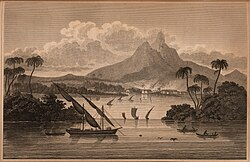
Honduras Packet reached the Black River in November 1822. There was no St Joseph. There were no boulevards, no cathedral, no opera house, no Bank of Poyais. The settlers found a shoreline of jungle and mangrove, a handful of native people, and two American hermits. Search parties sent inland found, guided by locals who recognised the name St Joseph, some long-forgotten foundations and rubble the remnants of the British settlement abandoned in 1786.
The appointed leader of the emigrant party, a retired British Army officer named Hector Hall who MacGregor had commissioned as “Baron Tinto,” quickly concluded privately that MacGregor had deceived them all. He said nothing to the settlers, reasoning that announcing this without any means of rescue would cause only chaos.
A second ship, the Kennersley Castle, arrived from Leith in late March 1823 with nearly 200 more emigrants. Their optimism did not survive the first day ashore.
The rainy season arrived. Insects infested the camp. Malaria and yellow fever spread rapidly through the settlement. Many settlers were too weak to reach the edge of the encampment. The stench from the conditions, one contemporary described, was “unendurable.” A Scottish sawyer named James Hastie, who had brought his wife and three children, wrote: “It seemed to be the will of Providence that every circumstance should combine for our destruction.” The would-be royal shoemaker, who had left a family behind in Edinburgh, shot himself.
The schooner Mexican Eagle, passing on its way to the Mosquito king’s court, found the settlers in early May 1823. Seven men and three children had already died. The ship’s commander, Marshal Bennet of British Honduras, told the survivors that Poyais did not exist and that he had never heard of any Cazique. He urged them to return with him to British Honduras immediately.
King George Frederic Augustus, when he arrived, confirmed that he had never granted MacGregor the title of Cazique, had never authorised the sale of land or the raising of loans against it, and had not known the settlers were there. They were in his territory without permission and would have to leave.
Most could barely walk to the boats.
The Wreckage MacGregor Left Behind
Of the roughly 250 who had sailed on Honduras Packet and Kennersley Castle, at least 180 died in the jungle, during transport to British Honduras, or in Belize after rescue. Fewer than 50 ever returned to Britain. Major-General Edward Codd, superintendent of British Honduras, opened an official investigation and dispatched warnings toward London. By the time those warnings arrived, MacGregor had five more emigrant ships on their way. The Royal Navy intercepted them.
MacGregor had left Britain shortly before the survivors reached home on 12 October 1823. He told his associates he was taking his wife to winter in Italy for her health. He went to Paris.
The London press reported the Poyais scandal at length. Six survivors among them James Hastie, who had lost two of his children signed an affidavit insisting the blame lay not with MacGregor but with Hall and other members of the emigrant party: “We believe that Sir Gregor MacGregor has been worse used by Colonel Hall and his other agents than was ever a man before.” MacGregor publicly declared that he himself had been defrauded, alleged embezzlement by his subordinates, and insisted that merchants in British Honduras were deliberately undermining Poyais to protect their own commercial interests.
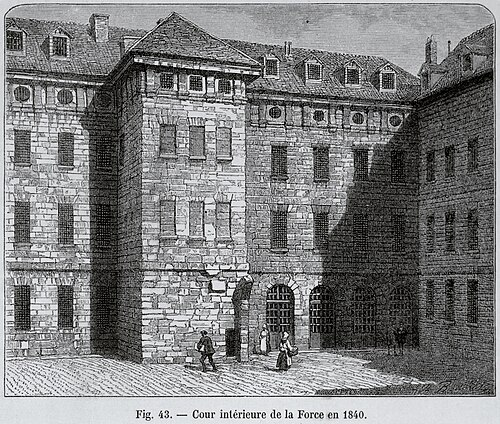
In Paris, he persuaded a French trading company to mount a variation of the scheme. French authorities grew suspicious when a group of settlers applied for passports to travel to a country no one had heard of, and arrested MacGregor and two associates in September 1825. After months in La Force Prison, MacGregor stood trial in July 1826. The scheme’s French managing director who held most of the key documents and had fled to the Netherlands was convicted and sentenced to 13 months’ imprisonment. MacGregor was acquitted on all charges.
He returned to London, was briefly held at Tothill Fields Bridewell in Westminster, and released without charge. He launched a new, reduced version of the Poyais scheme, now describing it as a “Republic of Poyais,” and arranged an £800,000 bond offering at 3% interest in 1827. The bonds did not sell. Anonymous handbills circulated in the City of London warned readers to “Take Care of your Pockets Another Poyais Humbug.” By 1834 he was back in Edinburgh, issuing yet more Poyaisian land certificates in exchange for unredeemed securities. An attempt to sell certificates in 1837 marks the last known record of any Poyais scheme.

MacGregor Dies a General
MacGregor’s wife Josefa died in Edinburgh on 4 May 1838. Almost immediately, MacGregor sailed for Venezuela. In October 1838 he applied for citizenship, restoration to his rank of divisional general, back pay, and a pension. He described years of forced exile, personal sacrifice, and loss of his wife, two children, and “the best years of my life and all my fortune.”
Defence Minister Rafael Urdaneta, who had served alongside MacGregor in 1816, endorsed the application, describing MacGregor’s contributions to Venezuelan independence as “heroic with immense results.” President José Antonio Páez approved the application in March 1839.
MacGregor spent his final years as a respected member of Caracas society, his frauds unknown to the people around him and unreported in the Venezuelan press. He died at home on 4 December 1845, aged 58. President Carlos Soublette, Cabinet ministers, and the military chiefs of Venezuela marched behind his coffin to Caracas Cathedral, where he was buried with full military honours. The Caracas press extolled his retreat to Barcelona in 1816 and remembered him as “a valiant champion of independence.”
There was not a word about Poyais.
The stretch of the Honduran Mosquito Coast that MacGregor once called a golden kingdom remains undeveloped wilderness. At the MacGregor family graveyard near Loch Katrine in Scotland, the clan memorial stones make no mention of Gregor MacGregor, the country he invented, or the more than 180 people who died there looking for it.