
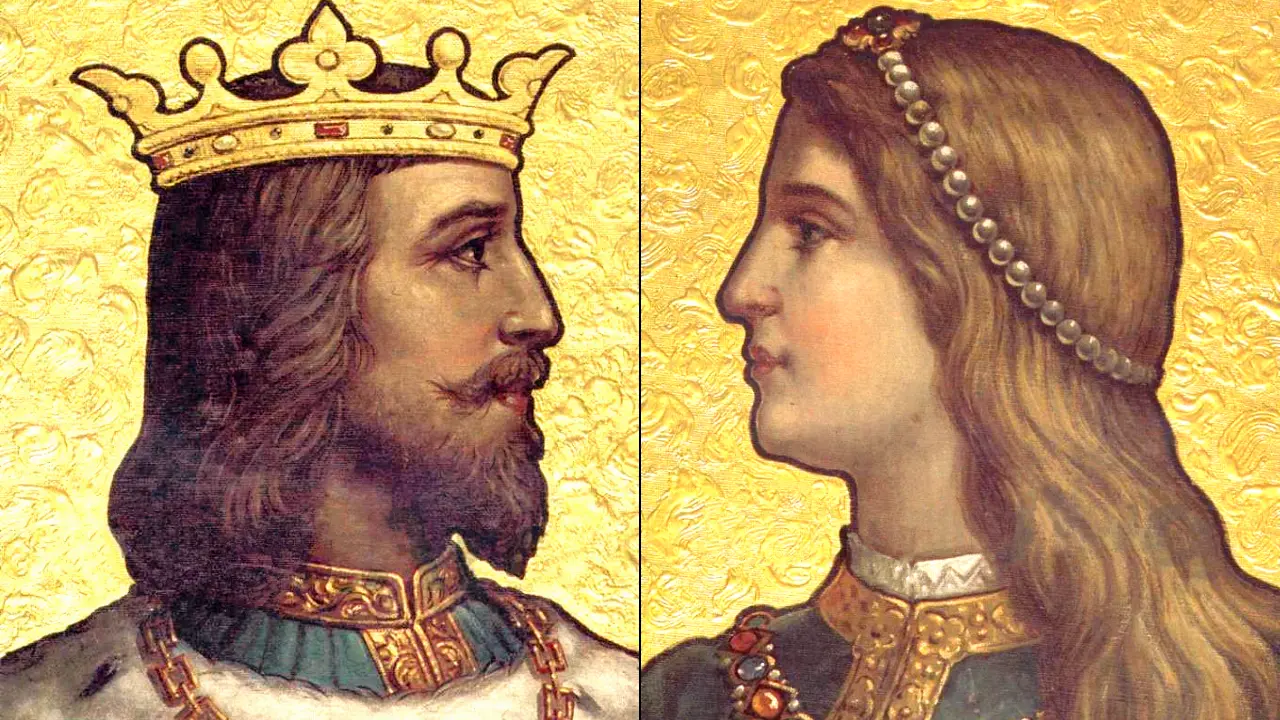
Murdered on 7 January 1355 at the order of a Portuguese king, Inês de Castro was exhumed six years later and carried across the country in a royal procession and, according to a legend that has refused to die for nearly five centuries, the man who loved her placed a crown on her decomposing head.
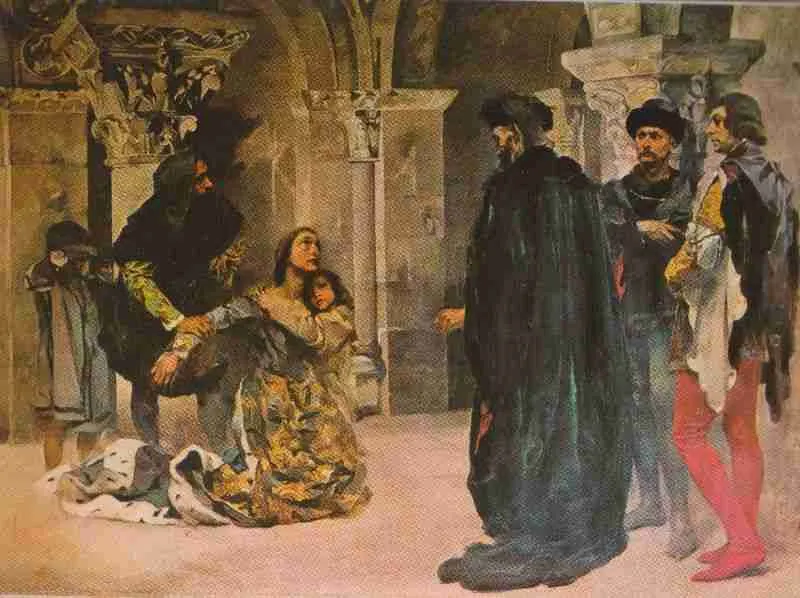
On 7 January 1355, three men rode to the Monastery of Santa Clara-a-Velha in Coimbra. They had been sent by King Afonso IV of Portugal, and they carried his orders. Inês de Castro was there with her young children when the men arrived. They decapitated her in front of them.
Her killers returned to Lisbon. The king believed the problem was resolved.
He had less than two and a half years to live, and he was wrong about nearly everything.
A Noblewoman Born Outside the Line
Inês de Castro was born in 1325 in Galicia, a semi-autonomous region in the northwest corner of the Iberian Peninsula. Her father was Pedro Fernández de Castro, Lord of Lemos and Sarria. Her mother, Aldonça Lourenço de Valadares, was not his wife but his mistress a distinction that attached the mark of illegitimacy to Inês from birth and would trail her into every chamber she entered.
The stigma was not a mark of obscurity. Through her father’s line, Inês was connected to some of the most formidable noble families on the peninsula. Her paternal grandmother was Violante Sánchez of Castile, herself an illegitimate daughter of Sancho IV of Castile, who ruled from 1284 to 1295. The Castros moved in the uppermost reaches of Iberian noble society close to royal blood, always on the wrong side of the ledger.
In 1340, that proximity became proximity to power. Constance of Castile, a senior Castilian noblewoman, was married to Pedro, Crown Prince of Portugal and heir to the throne in Lisbon. Inês traveled to Portugal with her as one of her ladies-in-waiting. Her role was ceremonial and social. What followed was neither.
A Crown Prince Fell in Love, and His Father Panicked
Pedro fell in love with Inês. The relationship is attested in later chronicles, though no contemporaneous documents survive to fix precisely when it began; scholars note that claims about the affair appear only in records written decades after the fact. What the sources agree on is that by 1344, Afonso IV had seen enough to act. He banished Inês to Albuquerque, across the border and expected the matter to end there. Pedro simply traveled to see her. Eventually Afonso concluded that Inês within reach was safer than Pedro disappearing across the border unmonitored. She was permitted to return.
Afonso’s concern was never merely moral. Portugal was a small kingdom on a peninsula where Castile had spent two centuries absorbing its neighbors. Inês’s Galician brothers, Fernando and Álvaro Pires de Castro, had attached themselves to Pedro and were accumulating influence at court. Foreign factions embedding themselves in the government through the crown prince’s private life represented precisely the kind of internal fracture that could destabilize a dynasty. Afonso had no interest in discovering how that story ended.
Constance of Castile died in 1349. Pedro declared that he intended to marry Inês. Afonso declared equally that he would not permit it: Inês was illegitimate, her relatives were too entrenched, and a marriage would give the Castros a legal position in the Portuguese succession. Pedro and Inês settled together at Coimbra regardless. They had four children: Afonso, who died shortly after birth; John, born in 1352; Denis, born in 1353; and Beatrice, born in 1354. The Castro brothers grew more powerful by the year.
King Afonso IV Decided That Inês de Castro Had to Die
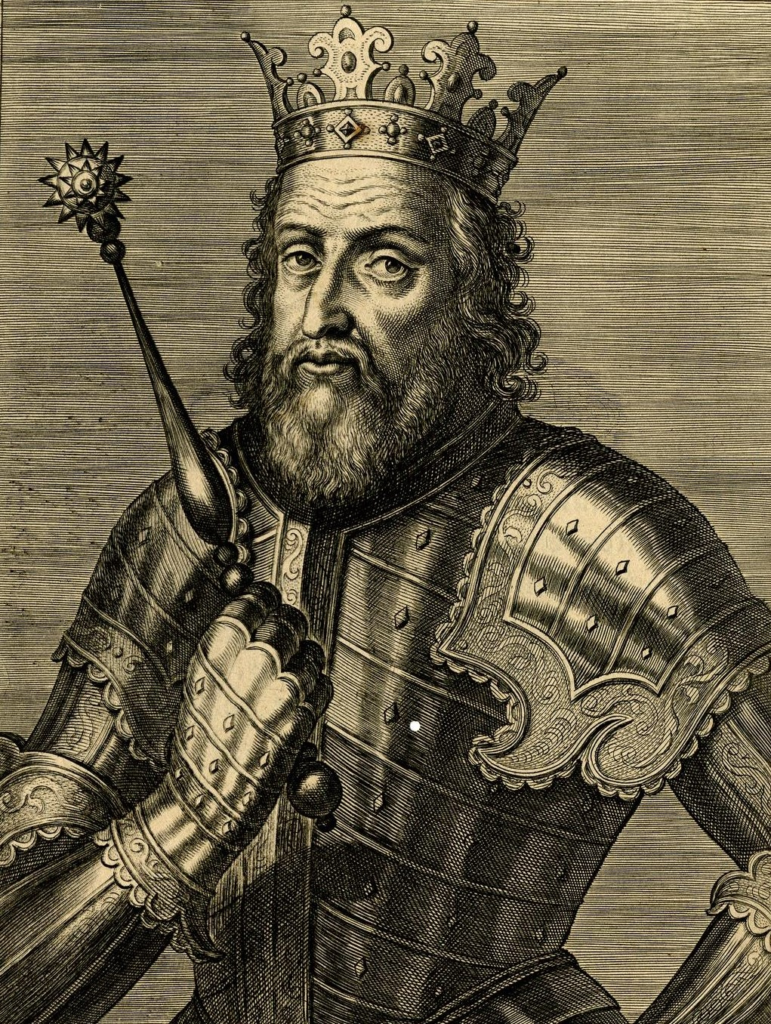
By late 1354, Afonso could calculate the future with uncomfortable precision. Pedro would marry Inês after his death. Their four children would be legitimized. The heirs from the marriage to Constance might be displaced. The Castros would inherit the kingdom through the back door of a love affair. He was an old king, and he had run out of patience for intermediate measures.
He dispatched three men: Pêro Coelho, Álvaro Gonçalves, and Diogo Lopes Pacheco.
On 7 January 1355, they found Inês at the Monastery of Santa Clara-a-Velha in Coimbra and decapitated her in front of her children. She was twenty-nine years old.
A competing tradition holds that the murder did not take place inside the monastery at all, but at a nearby estate called Quinta das Lágrimas the Estate of Tears where a fountain, the Fonte das Lágrimas, is said still to bear the stain of her blood. Whether this belongs to history or to the layer of legend that has always settled over Inês, Coimbra has never stopped telling it.
Pedro Took the Throne and Began Hunting the Men Who Had Killed Inês
Pedro revolted against his father. Portugal entered civil war. A truce was eventually negotiated signed on 15 August 1356 in which Pedro formally agreed to obey Afonso and pardon the assassins. He had no intention of honoring either clause.
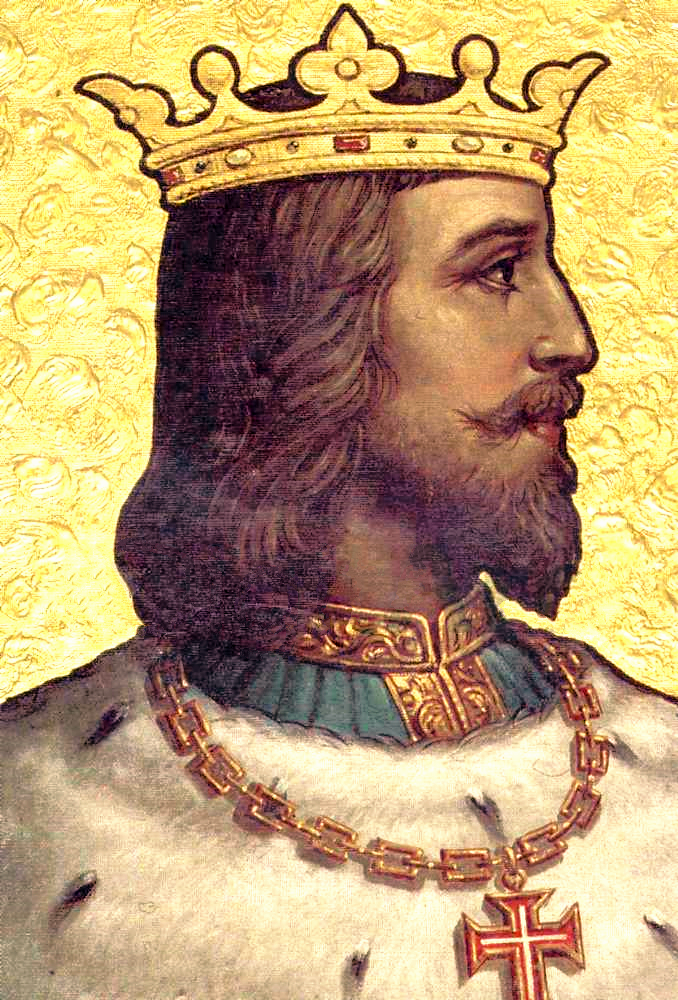
Afonso IV died on 28 May 1357, aged 66. Pedro was crowned King Pedro I of Portugal.
He then declared that he had secretly married Inês in 1353 making her, retroactively, the lawful Queen of Portugal. No independent record exists to corroborate the claim. As king, Pedro did not require one.
He hunted the killers next. Coelho and Gonçalves had fled into exile in Castile. Pedro tracked them down. According to the chronicles of the Portuguese historian Fernão Lopes, writing around 1440, Pedro had them executed publicly by having their hearts ripped from their bodies while they still lived because, he reportedly declared, they could not have had real hearts, given what they had done to his. The third assassin, Diogo Lopes Pacheco, is believed to have escaped and died in exile in 1383.
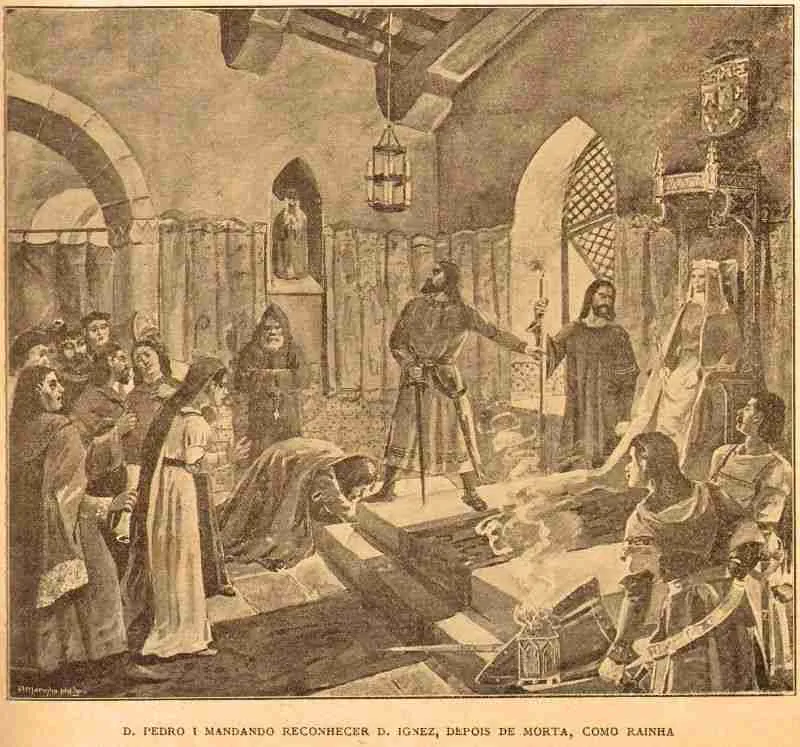
Pedro Exhumed Inês and, According to Legend, Crowned Her Corpse Queen of Portugal
What happened next belongs, in part, to confirmed history and, in part, to the imagination of a Spanish playwright writing more than two centuries after the fact.
What is confirmed: around 1361, Pedro had Inês’s body exhumed from the Monastery of Santa Clara-a-Velha and transported in a grand royal procession to the Monastery of Alcobaça, the traditional burial place of Portuguese royalty. He commissioned an exquisitely sculpted tomb for her there and later had his own tomb built alongside it. On the marble of both, he had words inscribed: até ao fim do mundo. Until the end of the world.
What is legend: the coronation ceremony. The story of a decomposing body dressed in royal robes, seated on a throne, crowned, and her hand kissed by the assembled court first appeared in the historical record not in a contemporaneous document but in a 1577 Spanish tragedy, Jerónimo Bermúdez’s Nise Laureada, written more than two centuries after the events it depicted. The scene proved irresistible to every subsequent writer, painter, and librettist who encountered it. By the nineteenth century, what began as a playwright’s invention had calcified into historical fact in the popular imagination. Whether any Portuguese nobleman actually pressed his lips to a corpse’s hand cannot be established from sources closer to 1361 than 1577.
What can be established is that Pedro gave his murdered queen a royal tomb and a royal procession, inscribed a promise on the stone above her body, and spent the rest of his reign behaving as though the coronation had already occurred.
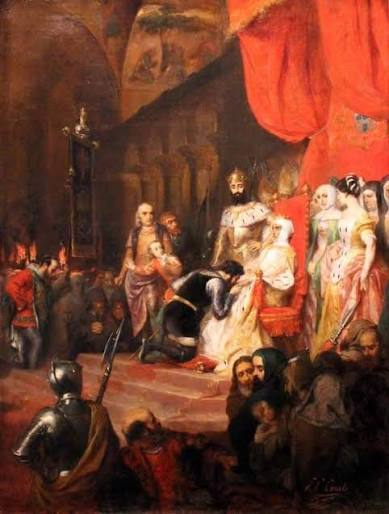
Afonso IV’s Murder of Inês Caused the Succession Crisis He Had Killed Her to Prevent
Pedro died in 1367, aged 46. He was succeeded by his son from the marriage to Constance, Fernando I, who died prematurely in 1383 leaving only a ten-year-old daughter as legitimate heir. The succession crisis that followed brought Pedro and Inês’s son John, Duke of Valencia de Campos, forward as a credible claimant to the Portuguese throne.
This was precisely the scenario Afonso IV had ordered an assassination to prevent. The crown ultimately passed to yet another of Pedro’s illegitimate children John of Aviz, born in 1357 to a woman named Teresa Lourenço and the House of Aviz ruled Portugal for the next two centuries.
The woman murdered to protect the royal succession left, in her wake, a succession crisis that reshaped the dynasty regardless.
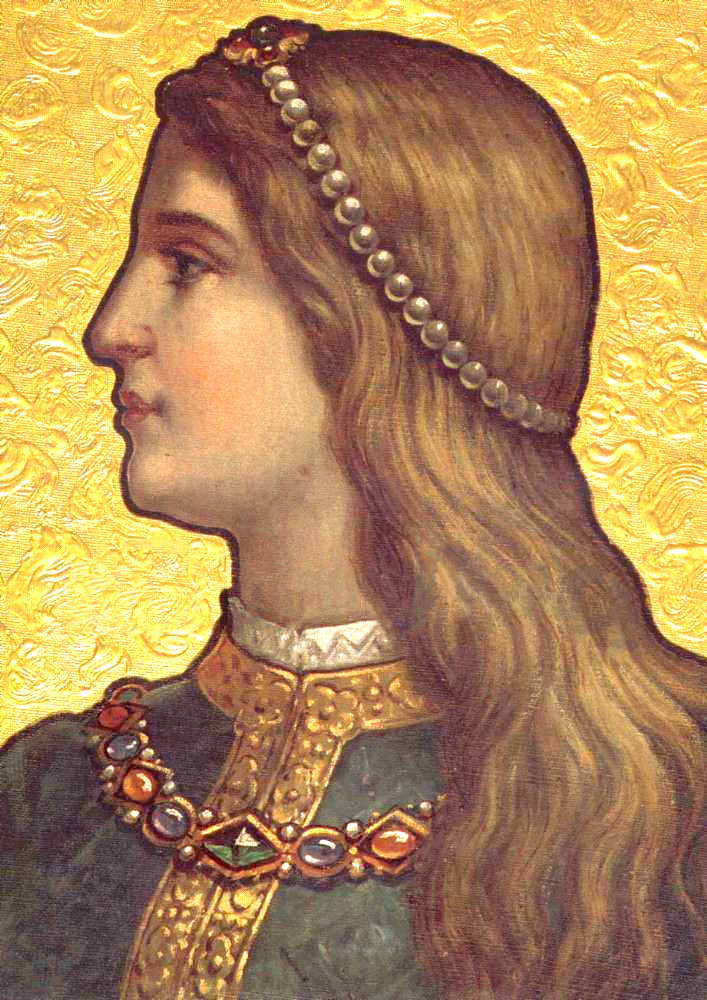
A Story That Would Not Stay Buried
Inês de Castro became, in death, one of the most retold figures in European literary history. Luís de Camões devoted seventeen stanzas to her in Os Lusíadas, the great Portuguese national epic published in 1572. By the eighteenth and nineteenth centuries, her life had inspired more than twenty operas and ballets performed across the continent, in Italian, English, and German. Ezra Pound returned to her image throughout The Cantos. In 2014, Paula Rego painted her for Cambridge University’s Murray Edwards College as a sprawled skeleton in gold and carmine robes the dead queen eyeless and dominant, commanding the composition from the throne.
The legend endures not because it can be verified but because it distills something true about what Pedro did and what grief of that order requires: that it refuses the limits the living are permitted to impose on the dead. Inês de Castro had been murdered as a political calculation. Her lover’s response, confirmed or legendary, was to refuse the calculation entirely.
Both tombs stand at Alcobaça. They were placed opposite each other centuries after Pedro had them built so that, at the Last Judgment, the lovers would rise to see one another across the moment of resurrection. The inscription on the marble remains the same as it was.
Até ao fim do mundo. Until the end of the world.
Leave a Reply