
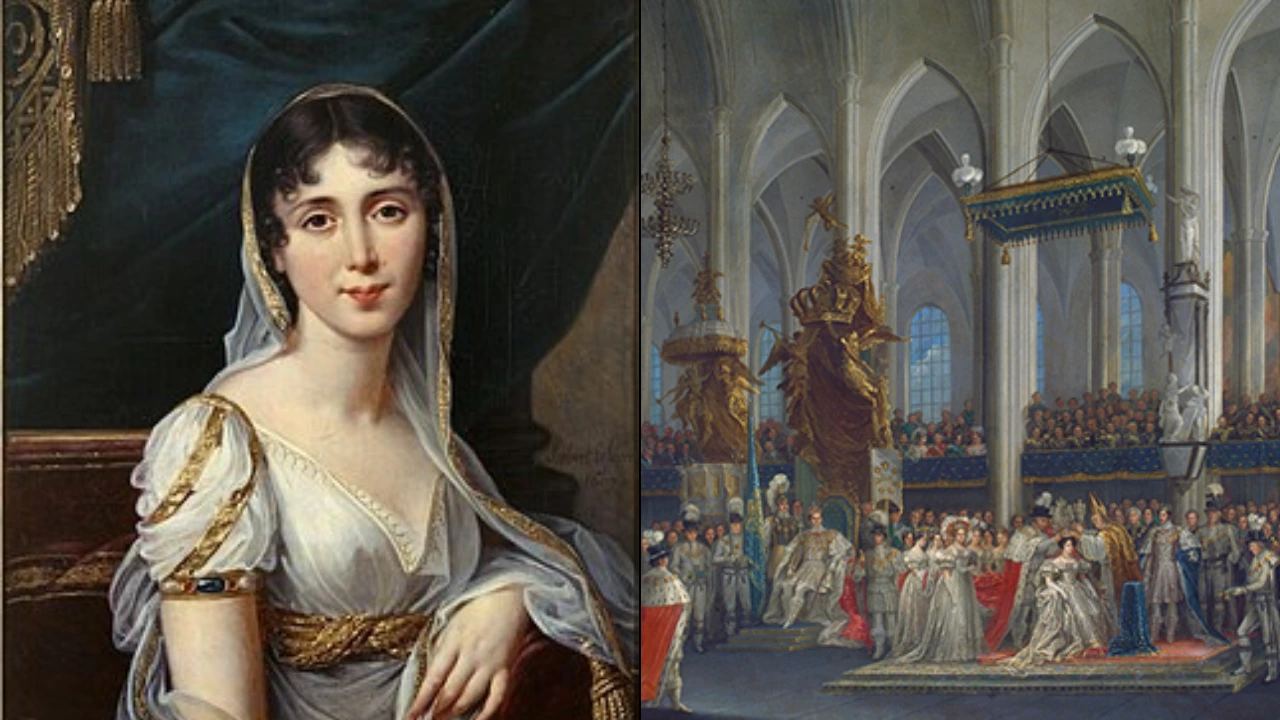
In 1818, Désirée Clary became Queen of Sweden and spent five more years in Paris, pursuing the French prime minister while her husband ruled Stockholm, never learned to speak Swedish, and spent decades attempting to leave a country she had entered weeping at the snow.
On February 5, 1818, Jean-Baptiste Bernadotte was proclaimed King of Sweden. His wife, Désirée Clary, learned the news in Paris. She remained there for five more years.
She had visited Sweden once. She had arrived at the port of Helsingborg in December 1810 and wept at the snow. Eleven months later, citing her health, she had returned to France. Her husband took a mistress. She hosted informal receptions at her house on the Rue d’Anjou and kept him informed about Paris by correspondence. When he became king, she sent her apologies.
She was 40 years old. She had once been engaged to Napoleon Bonaparte. This, too, had not worked out.
The Revolution Kills Her Father and Forces New Alliances
Bernardine Eugénie Désirée Clary was born in Marseille on November 8, 1777, the youngest child of François Clary, a prosperous silk merchant whose business had long profited from the city’s trade in oriental goods. Her mother, Françoise Rose Somis, was François’s second wife. Désirée went by Eugénie or simply Désirée, never by her first name, and received her early education at a convent until the French Revolution closed religious institutions across the country. Home-schooling followed. Later historians described her education as shallow.
When François died in January 1794, the family’s position became precarious. Revolutionary authorities discovered that he had once applied to be ennobled, a request that had been denied but whose mere existence made his survivors politically suspect. Désirée’s brother Étienne, now head of the household, was briefly arrested. In seeking his release, the family forged an alliance with the Bonapartes, a Corsican family who had fled to mainland France the previous year.
In 1794, Désirée’s elder sister Julie married Joseph Bonaparte. The following spring, on April 21, 1795, Désirée became engaged to Joseph’s younger brother, Napoleon, a 25-year-old artillery officer recently distinguished at the siege of Toulon. Napoleon wrote a romantic novella inspired by the relationship, which he titled Clisson et Eugénie.
None of it lasted.
Posted to Paris on military duty while Désirée was living in Genoa, Napoleon became involved with Joséphine de Beauharnais, a widow from Martinique six years his senior. On September 6, 1795, he broke the engagement with Désirée. He married Joséphine in 1796.
Désirée spent the next several years living in Rome with Julie and Joseph, who had secured a diplomatic posting to the Papal States, then returned to Paris. There she met Jean-Baptiste Bernadotte, a French general who had built his military reputation fighting the Austrians in the Low Countries and southern Germany. They married in a secular ceremony at Sceaux on August 17, 1798. Their only child, a son named Oscar, was born on July 4, 1799.
The marriage was one of convenience. Both parties appear to have understood this. Bernadotte campaigned across Europe. Désirée remained in Paris, described by contemporaries as pretty, pleasing, and a skillful dancer, but fairly anonymous. She kept her husband informed about political developments by letter. Occasionally she visited him, briefly, then returned to France.
Sweden Elects a French General as Its Future King
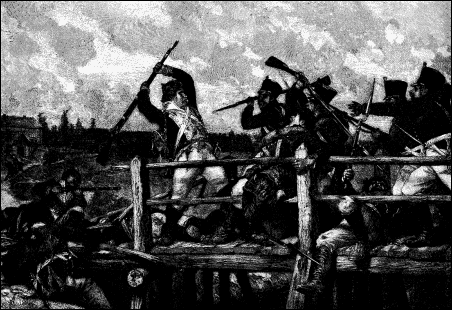
The events that would drag Désirée north began with a military disaster. Russia invaded Finland, then a Swedish territory, in 1808, and the following winter crossed the frozen Gulf of Bothnia to descend on Stockholm. Sweden surrendered Finland in 1809. The defeat triggered a coup against King Gustav IV Adolf, who was deposed and replaced by his elderly, childless uncle, who became King Charles XIII.
The Swedish parliament needed an heir. They chose a Danish prince, Christian August, but he died in 1810 before the arrangement was finalized. Napoleon pressed the Swedes to elect Bernadotte instead. The Swedish estates, calculating that Napoleon would dominate Europe indefinitely and that a French marshal on the throne would keep them on the right side of him, agreed. In August 1810, Jean-Baptiste Bernadotte was designated heir to the Swedish throne.
Désirée received this news with dread. She had assumed the position would function like Pontecorvo, the Italian principality Napoleon had granted her husband in 1806: a title attached to a place she need not actually visit. “I thought,” she later admitted, “that it was as it had been with Ponte Corvo, a place from where we would have a title.” She was told it would not be like Pontecorvo at all.
Her servants, hoping to keep her in France, warned her that Sweden was a country close to the North Pole filled with polar bears.
They did not succeed in dissuading her. But they did not make matters easier.
A Future Queen Arrives in Stockholm and Weeps
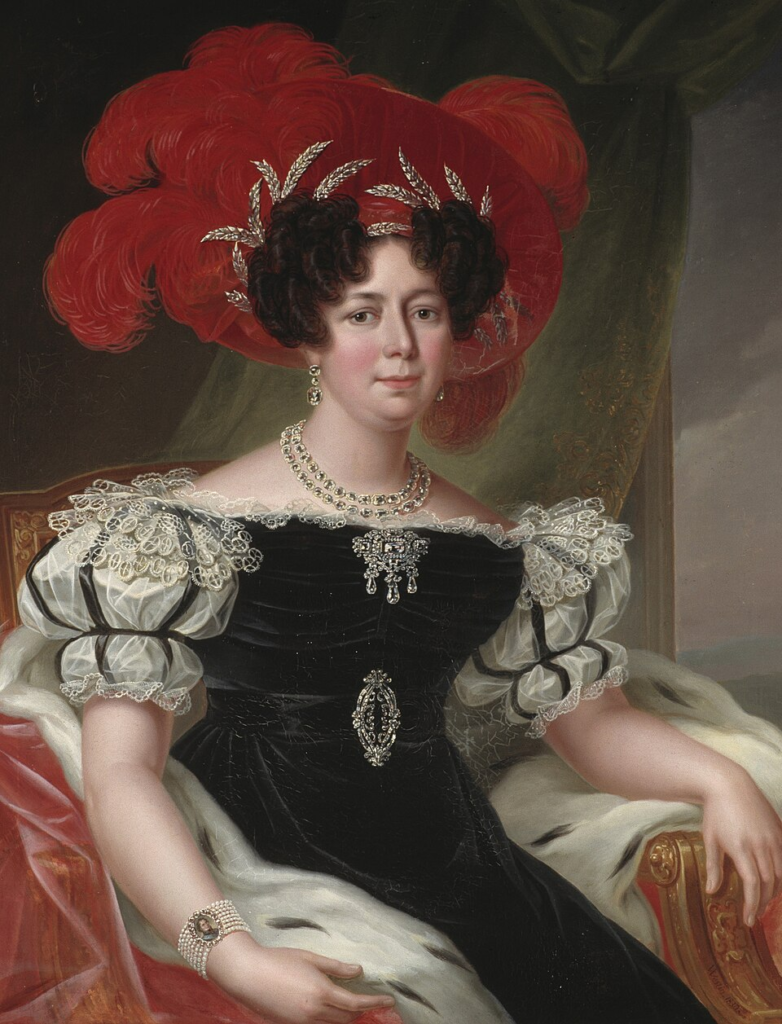
Désirée arrived in Helsingborg on December 22, 1810. She was introduced to the Swedish royal court at the Royal Palace in Stockholm on January 6, 1811.
The cold was unlike anything she had experienced. The snow was unlike anything she had expected. She wept.
Queen Charlotte, who wished to remain the center of attention at her own court, took against her immediately and influenced the aging king against her. The Swedish nobility found her constant complaining grating. Her French entourage encouraged her to complain further. Only the Dowager Queen Sophia Magdalena was reportedly kind to her.
By the summer of 1811, Désirée was gone. She left Sweden under the alias of the Countess of Gotland, citing her health, and returned to Paris. Bernadotte took a mistress, the noblewoman Mariana Koskull. Désirée kept her house on the Rue d’Anjou and resumed her receptions.
She would not return to Sweden for twelve years.
The Queen of Sweden Stays in Paris
When Bernadotte was proclaimed King Charles XIV John of Sweden, Désirée remained in Paris, officially for reasons of health. She simultaneously fell into an open infatuation with the Duc de Richelieu, who served as prime minister under Louis XVIII. According to contemporaries, she did not dare speak to him directly, but followed him wherever he went, traveled to Spa when he traveled to Spa, and had flowers placed in his room. He referred to her privately as his “crazy Queen.” She followed him until his death in 1822.
The Swedish court noted her absence. The Paris press speculated. She hosted receptions and used the title of countess.
In 1823, Oscar made a tour of Europe to find a bride. He and Désirée agreed to meet. When Oscar returned to Stockholm with his chosen wife, Joséphine of Leuchtenberg, Désirée came with them. She intended a short visit.
She never left.
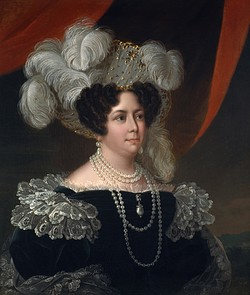
A Merchant’s Daughter Takes Her Crown at Last
Three days after arriving in Stockholm on June 13, 1823, Désirée was formally presented to the royal court and government. Her coronation was immediately proposed. It was then immediately complicated.
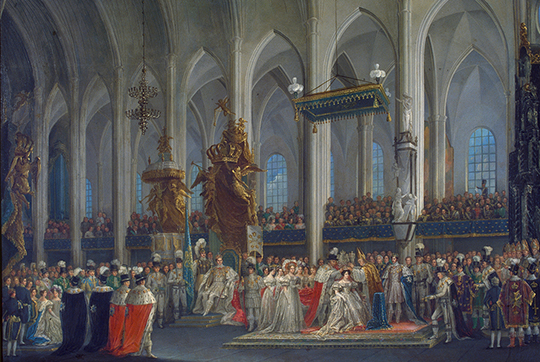
Sweden was a Lutheran nation. Désirée was Catholic and refused to convert. The question was debated for six years. Eventually, it was judged not important enough to force. On August 21, 1829, in Storkyrkan in Stockholm, Désirée Clary was crowned Queen of Sweden. She was the first commoner to be crowned queen of Sweden since Karin Månsdotter in 1568.
She later admitted that she had pressed Charles John for the coronation herself. She regarded it, according to those close to her, as protection against divorce.
Court etiquette did not improve its opinion of her. She never learned Swedish. She walked into her husband’s bedchamber in her nightgown while he was conferring with members of the state council. She was always late to dinner. Eventually Charles John stopped eating with her. She wrote to her sister Julie in sustained complaint: “How boring courts can be, when you are not born within them… I can never adjust myself to the strict etiquette, which must always be observed at court.”
The Swedish nobility privately ridiculed her past as a merchant’s daughter and a republican. They ridiculed her difficulty with the language. They were astonished, repeatedly, by her informality.
They also praised her, consistently, for never once interfering in politics. When Charles John lost his temper and threatened reprisals against political adversaries, Désirée had a habit of striking her fan on the table and saying, to the surrounding courtiers: “He could not hurt a cat!”
By the early 1830s, she was asking to return to Paris. Charles John refused. She stayed.
She Outlasts Napoleon, Her Husband, and Her Own Son
Charles XIV John died in March 1844. Désirée became queen mother. Her son Oscar I allowed her to keep her quarters and her entire court staff, reasoning that her habits should not be disturbed at this stage of her life.
Her eccentricities sharpened in her later years. She retired at four in the morning and woke at two in the afternoon. She traveled through the streets of Stockholm in her carriage late at night, stopping to sleep, then continuing. She took children from the streets into the palace and gave them sweets. She wandered the darkened corridors of the sleeping palace carrying a light.
In May 1853, she prepared at last to return to Paris. Her grandson Prince Oscar escorted her to her ship in Karlskrona. Everything was packed. She stood at the point of departure, looked at the sea, and could not board. She was afraid of the water. She went back to Stockholm.
She never left.
On December 17, 1860, Désirée Clary arrived at the Royal Swedish Opera just as the performance was ending. On her way back to Stockholm Palace, she collapsed before reaching her apartment. She was 83 years old. Napoleon had been dead for 39 years. Joséphine, the woman he had chosen over her, had been dead for 46. Charles John had been dead for 16. Her own son had predeceased her.
Désirée had arrived in Sweden weeping. She founded a dynasty.
Every Swedish monarch since has descended from her. King Carl XVI Gustaf is her great-great-great-grandson.
Leave a Reply