
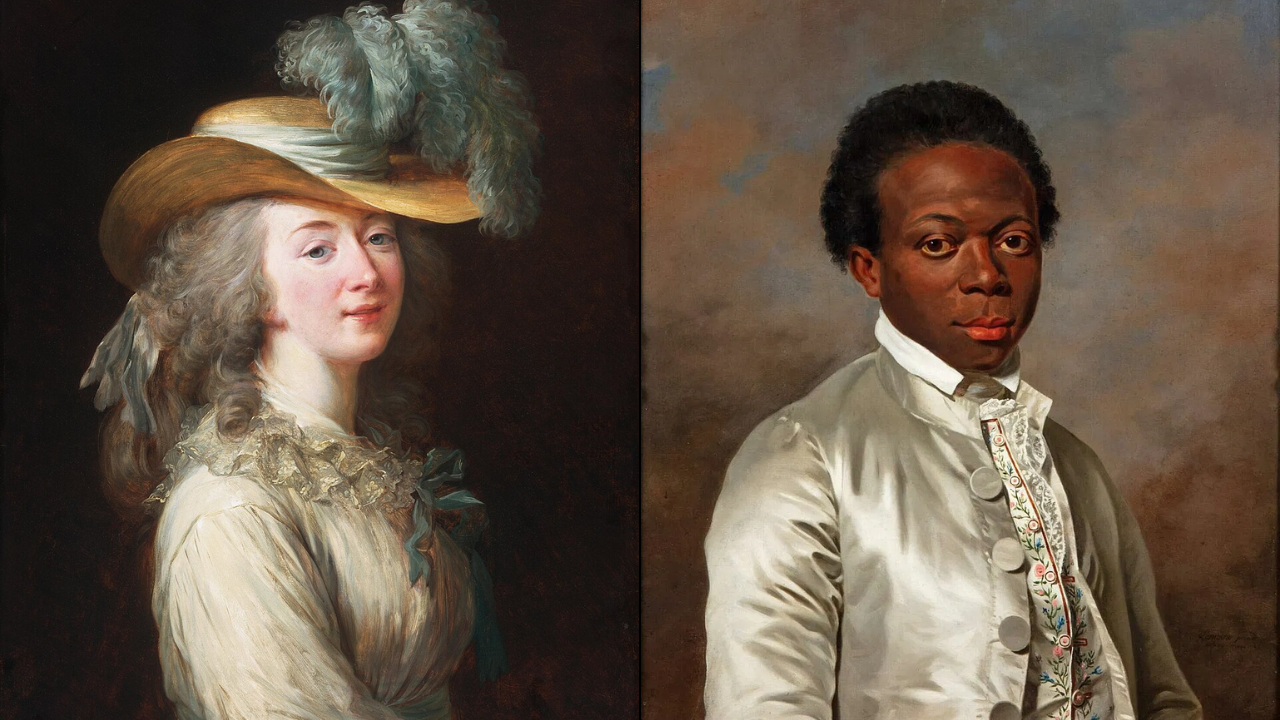
Born illegitimate in 1743 to a seamstress and a friar, Jeanne Bécu used forged documents to reach the French royal court, became the last official mistress of Louis XV, and in 1793 was sent to the guillotine in part by the Bengali slave she had raised and educated.
On December 8, 1793, at the Place de la Révolution in Paris, the crowd watched and did not cheer.
They had cheered before. They had cheered for dukes, ministers, and a queen, all of whom had walked to the blade with the rigid composure that class demanded. What they watched instead was a 50-year-old woman screaming. She clawed at her captors. She collapsed on the scaffold. She turned to the executioner and cried out: “De grâce, monsieur le bourreau, encore un petit moment!” One more moment, Mr. Executioner, I beg you.
Witnesses recorded that the noise stopped only when the blade fell.
The crowd had despised Jeanne Bécu, Comtesse du Barry, for most of her adult life. They had mocked her origins, resented her position, and applauded when the Revolution made her a target. On the day she died, they felt something none of them had anticipated. They felt sorry for her.
A Friar’s Daughter Grows Up Hungry for More
Jeanne was born on August 19, 1743, in Vaucouleurs, a small commune in the Meuse department of Lorraine. Her mother, Anne Bécu, was a seamstress of noted beauty. Her father’s identity was never formally confirmed, though most historians identify Jean Baptiste Gormand de Vaubernier, a local friar who went by the name Frère Ange (Brother Angel) and attended significant events in Jeanne’s early life, as the most probable candidate. Jeanne occasionally used his surname, a habit that suggested paternity neither party ever acknowledged.
When Jeanne was around three years old, a wealthy Parisian financier named Monsieur Billiard-Dumonceaux passed through Vaucouleurs and formed an acquaintance with Anne. He brought both mother and daughter to Paris, installing Anne as a cook in the household of his Italian mistress, Francesca, known in society as La Frédérique. Francesca took an immediate liking to little Jeanne, introduced her to the luxury of French high society, and persuaded Billiard-Dumonceaux to pay for her education at the Convent of Saint-Aure. The regime there was rigorous. For eight years, Jeanne studied painting, music, reading, and writing.
She left the convent at 15. Shortly after, La Frédérique’s jealousy of the beautiful young woman led to Anne and Jeanne being expelled from the household. They moved in with Anne’s husband, Nicolas Rancon, a storekeeper who could not adequately support them. Jeanne sold trinkets on the streets of Paris, worked briefly as a hairdresser’s apprentice, served as a companion to a wealthy widow, and eventually found employment as a shop assistant at the Maison Labille, a fashionable milliner on the rue Saint-Honoré.
Du Barry Turned Her Into a Sensation
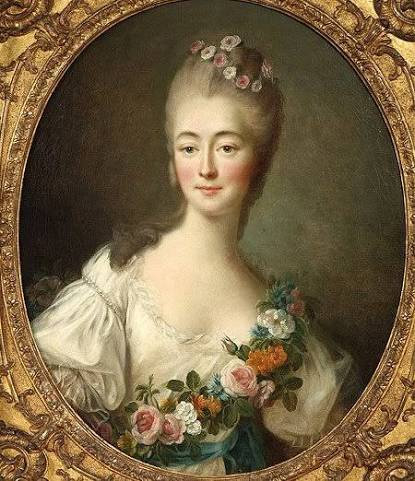
In 1763, Jeanne, now using the name Jeanne Vaubernier, came to the attention of Jean-Baptiste du Barry. He was a Gascon nobleman of modest standing and considerable cunning, known around Paris as le roué, the rake. He was then 40 years old, had accumulated money through casino operations, and made additional income procuring young women for aristocratic clients. When he encountered Jeanne, he concluded she had the beauty, the manner, and the social intelligence for something far more ambitious: he believed she could become the official mistress of Louis XV of France, a position vacant since the death of Madame de Pompadour in 1764.
Du Barry installed her in his household, gave her the professional name Mademoiselle Lange, and systematically introduced her to the highest circles of Parisian society. Within months, a procession of aristocrats were competing for her company. By 1764, the streets of Paris were already calling her the Comtesse du Barry, despite the fact that du Barry’s wife was still living and the title had no legal basis.
Louis XV Fell Fast and Hard
In the summer of 1768, du Barry arranged for Jeanne to be visible at Versailles at precisely the right moment. The setup worked. Louis XV, then 57 years old, spotted her in a corridor and instructed his valet de chambre, Dominique LeBel, to find her. The king told those close to him that she gave him “an enjoyment of a kind altogether new” and that she was “the only woman in France who makes me forget that I will soon be 60.” His companions reported he seemed more in love and more alive than they had seen him in years.
To name her maîtresse-en-titre, the official royal mistress, court protocol required that Jeanne be both married and of noble blood. She was neither. To solve both problems, Jean-Baptiste du Barry arranged for her to marry his younger brother, Comte Guillaume du Barry, on September 1, 1768. A false birth certificate was produced claiming Jeanne descended from a noble family. The marriage was a legal formality. Guillaume received royal estates as compensation and played no further role in her story.
Installed in rooms above the king’s quarters at Versailles, Jeanne endured months of near-total isolation while the formal court presentation that would legitimize her position was delayed twice, first when the king sprained his ankle, then when he broke his arm. The nobility refused to acknowledge her. She was, in their estimation, a woman of the street who had presumed above her station.
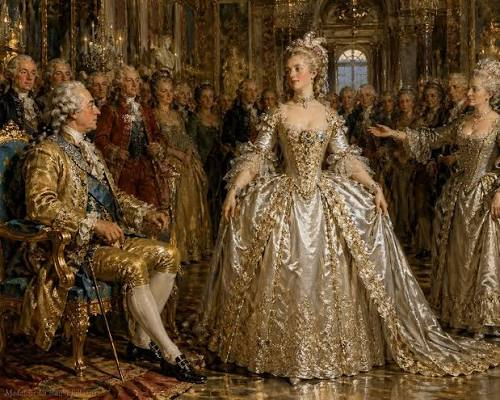
On April 22, 1769, the presentation took place. She arrived at Versailles in a white gown embroidered with gold and diamonds and executed the three required court curtsies without fault. Contemporaries recorded it as one of the grandest spectacles at court in a generation.
Marie Antoinette Refused to Speak
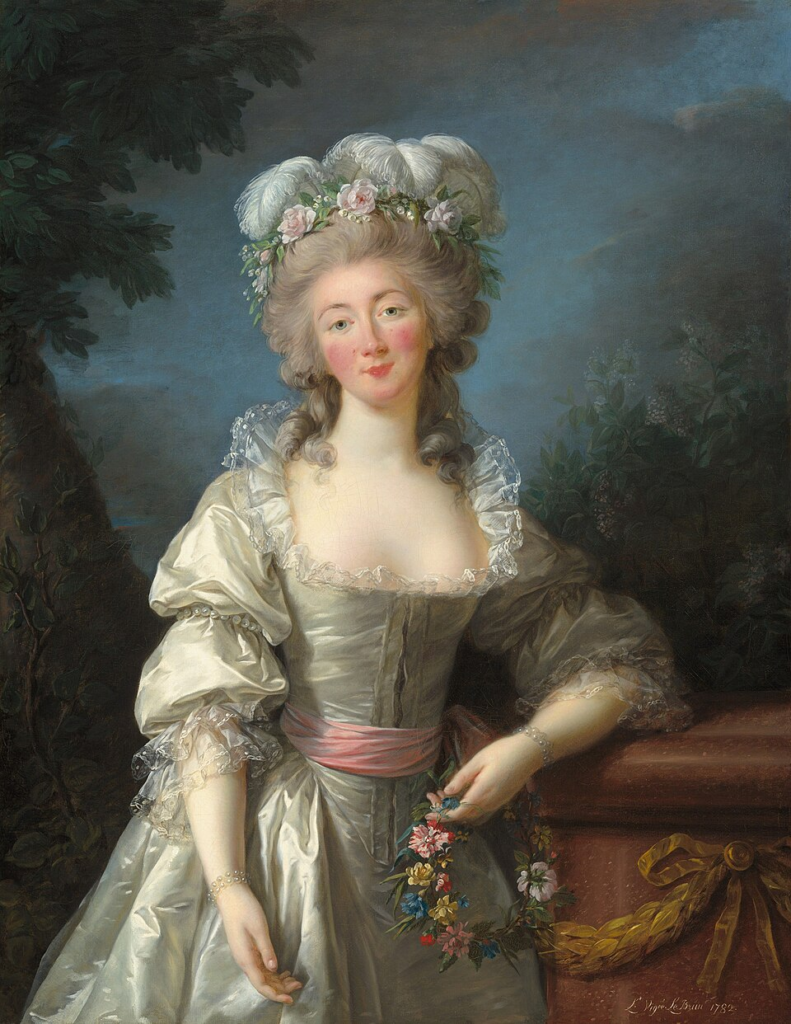
The courtiers’ contempt never fully dissolved. The Duchess de Gramont and her brother, the Duke de Choiseul, organized pamphlets defaming Jeanne through the early 1770s. When 14-year-old Marie Antoinette arrived as the Dauphine in 1770, she added a fiercer enemy. Antoinette found du Barry’s origins repugnant and refused to speak to her in public, a deliberate violation of court protocol that infuriated Louis XV. He eventually compelled his daughter-in-law to address her.
At a New Year’s ball, Antoinette turned toward Jeanne and said: “There are many people at Versailles today.”
That was all. Both women knew it was all it was.
Jeanne had little genuine interest in political maneuvering. She spent her time commissioning art, supporting emerging artists, and managing the Château de Louveciennes, the royal estate Louis XV had given her. She befriended Voltaire, who wrote warmly of her until his death in 1778. By most accounts she was generous to a fault.
Revolution Threw Brissac’s Head Through Her Window
Louis XV died of smallpox on May 10, 1774. His grandson became Louis XVI and his queen, Marie Antoinette, acted swiftly. Jeanne Bécu was exiled to the Abbey of Pont-aux-Dames. The nuns were initially unwelcoming. They eventually adjusted. After two and a half years her exile ended and she moved to Louveciennes, though a ban on returning to Versailles remained permanent.
She took two lovers in the years that followed: the English nobleman Henry Seymour and Louis Hercule Timoléon de Cossé, the 8th Duke of Brissac. Seymour eventually tired of the arrangement and sent her a painting with the words “leave me alone” written at the bottom. Brissac proved more constant. By 1782 they had established a relationship of considerable warmth, and he became a steady presence at Louveciennes.
As the Revolution consumed the aristocracy, Jeanne traveled to London several times in connection with a jewel theft at her estate. In London she made the error that would kill her. She socialized openly with émigrés, the aristocrats who had fled France and were plotting to restore the monarchy, and contributed a substantial sum to their cause. Her banker urged her to remain in England. She returned to Louveciennes.
On September 9, 1792, a mob intercepted a convoy of prisoners near Versailles. The Duke of Brissac was among them. He fought his attackers with his hands still bound before a sword cut him down. That same night, a drunken crowd approached the château. Someone threw a blood-stained cloth through the open window of Jeanne’s salon.
It contained the Duke of Brissac’s head.
She fainted.
Zamor Betrayed Her to the Committee
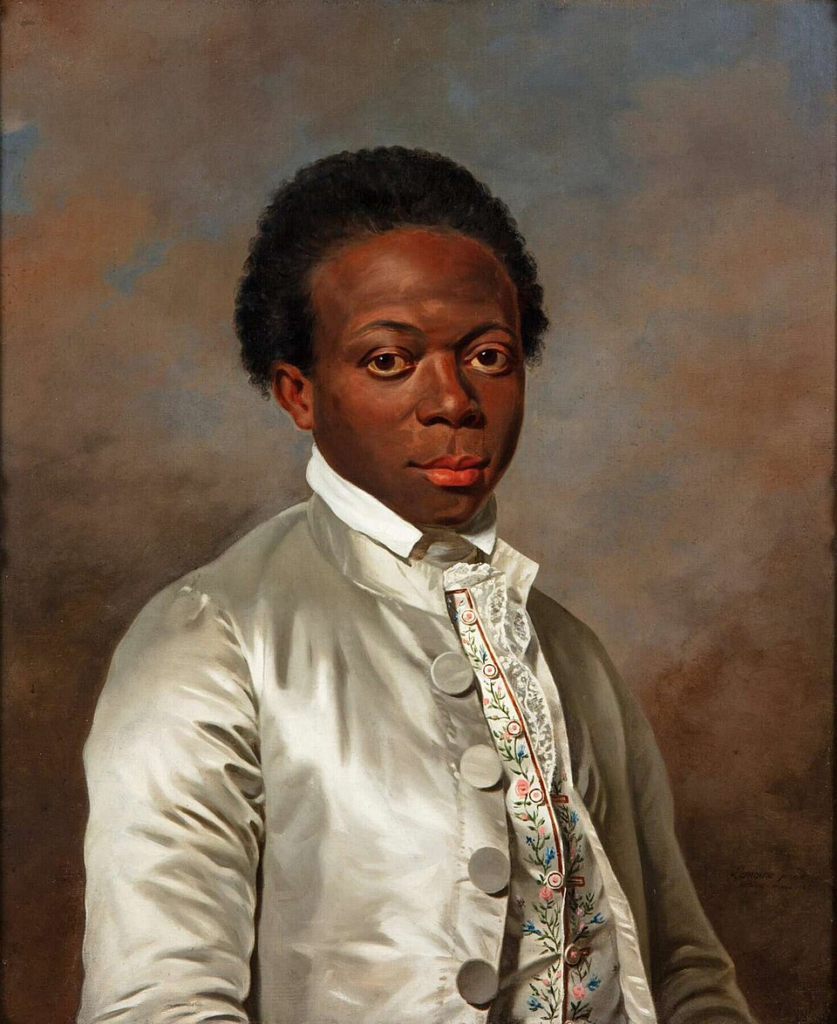
Living among the household at Louveciennes was a young man named Louis-Benoît Zamor. Born around 1762 in Chittagong, Bengal, he had been taken by slave traders at approximately 11 years old and eventually acquired by Louis XV, who gifted him to Jeanne as a personal page. She had him educated and baptized. He had grown up in her household and served her for more than two decades.
In secret, Zamor had become a committed Jacobin. He had aligned himself with George Grieve, an English revolutionary who had settled near Louveciennes and harbored a concentrated contempt for Jeanne. It was Zamor who first supplied information to the Revolutionary Committee that led to her initial arrest. She was briefly released. When she discovered Zamor’s role, she dismissed him from her service within three days. He responded by bringing further charges before the Committee of Public Safety.
She Screamed All the Way to the Blade
On December 7, 1793, Jeanne Bécu was tried and convicted of treason. She attempted to save herself by revealing the hiding places of jewels she had concealed across the grounds of Louveciennes. The jury was unmoved.
The following morning she was taken to the Place de la Révolution.
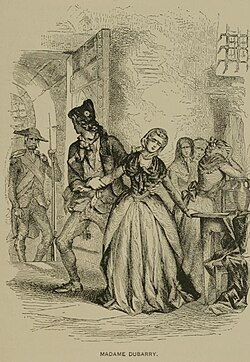
Every condemned figure before her had walked to the blade with composure. Some had gone with visible contempt for the crowd. Jeanne went screaming, collapsed, clawed at her captors, and pleaded with the executioner for one more moment. The crowd that had cheered at so many of the executions preceding hers went quiet. Some wept. The woman they had despised for her whole adult life was the first figure on that scaffold who seemed to actually want to live.
At her trial, Zamor had signed his testimony with a full name and a birthplace: “Louis-Benoît Zamor, né au Bengale, dans l’Inde.” Born in Bengal, in India. The woman who had educated him, who had been condemned in part on the strength of his testimony, was buried in the Madeleine Cemetery in Paris.
She was 50 years old.
Zamor himself was arrested six weeks after her death as a suspected accomplice, held briefly, and released for lack of evidence. He disappeared from the historical record until 1815, when he was recorded as a schoolteacher in the Latin Quarter of Paris. He died in poverty on February 7, 1820.
He outlived Jeanne Bécu by 27 years.
Leave a Reply