
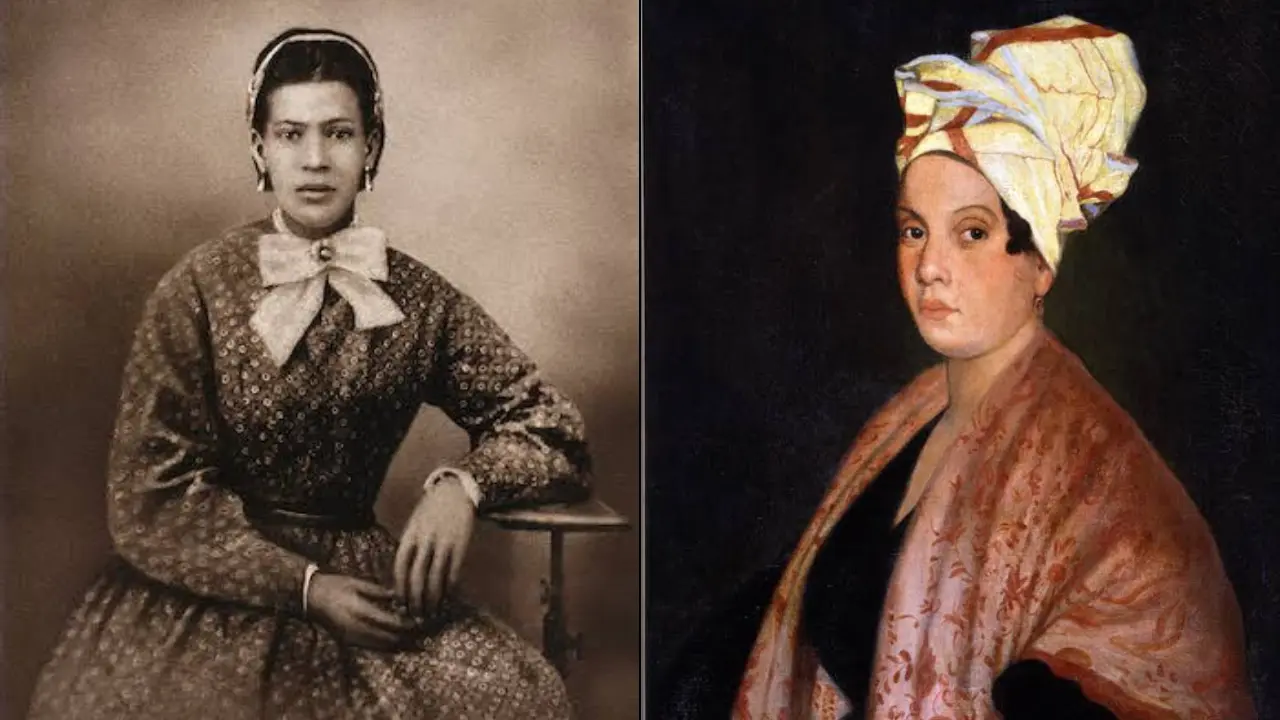
Born on February 27, 1827, the daughter of New Orleans’ most feared voodoo queen inherited a crown, a terrifying reputation, and the 19th century’s most impenetrable mystery.
On the night of June 24, 1872, the shores of Lake Pontchartrain lit up with firelight. A crowd had gathered for the feast of Saint John, an annual ritual that had, under one woman’s direction, become something else entirely. There was reportedly a bubbling cauldron. There was a great deal of alcohol. There were acts, according to contemporaneous accounts, that the New Orleans press declined to describe in full. At the center of it all stood a woman who had spent the better part of her life ensuring that no one could say with certainty who she was, where she had come from, or whether she was even the person they thought she was.
Her name was Marie Laveau II. Her mother had built the empire. She had decided to make it something to fear.
New Orleans Birthed a Voodoo Dynasty From Poverty
The city Marie-Philomène Glapion was born into on February 27, 1827 was not yet the city it would become. New Orleans had passed from French to Spanish to American hands in a single generation, and by 1827 it was an overcrowded port town in the middle of a transformation. A population of approximately 8,000 in 1803 swelled to over 100,000 by 1850. The city that grew was one of layered cultures and clashing traditions: Creole, French, American, and, crucially, African.
That last current ran deep. In the first quarter of the 19th century, thousands of refugees from Saint-Domingue, the French Caribbean colony that would become Haiti, arrived in Louisiana, bringing with them the practices of voodoo: a system of spiritual beliefs and folk rituals with roots in the Kingdom of Dahomey in what is now Benin, West Africa. It was in this environment that Marie-Philomène’s mother built an empire.
Marie Laveau was born on September 10, 1801, as a free woman of color in New Orleans. Her mother was Marguerite Henry, known as D’Arcantel, a free woman of African, European, and Native American ancestry. Her father’s identity is uncertain; the most likely candidate in the historical record is Charles Laveau, a white Louisiana Creole. She first married Jacques Paris, a free man of color who had fled Saint-Domingue in the wake of the Haitian Revolution, in 1819. Paris disappeared from city records around 1822 and is believed to have died the following year. Widowed, Laveau entered a domestic partnership with Christophe Dominick Duminy de Glapion, a nobleman of French descent, with whom she would have several children. Marie-Philomène was among the few to survive to adulthood. Yellow fever claimed the others.
Laveau began her professional life as a hairdresser to New Orleans’ wealthier families, work that placed her inside the homes of the city’s elite and within earshot of their secrets. She used what she heard. Under the tutelage of Doctor John, a well-known Senegalese root worker active in the city, she deepened her knowledge of voodoo ritual and practice. Before long, she had consolidated her position as the dominant spiritual force in New Orleans, operating out of her home on St. Ann Street, Congo Square in the historic Tremé neighborhood, and the northern shores of Lake Pontchartrain. She sold gris-gris amulets. She performed healing rituals. She dispensed counsel to clients ranging from the destitute to the politically powerful, and she sought pardons for men condemned to the gallows, often successfully.
She was known as the Queen of the Voodoos.
The Queen’s Daughter Inherited an Ambiguous Crown
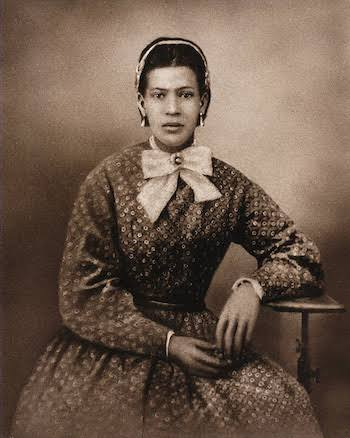
What is known of Marie-Philomène’s childhood is narrow. She grew up in the house on St. Ann Street, among the clients and the ceremonies, alongside siblings who died young and a mother whose reputation drew New Orleans to their door. Whether she chose to become her mother’s successor, or whether that role was chosen for her, is not recorded.
What happened instead was stranger. Reports began circulating that Marie II was not merely her mother’s successor. She was, some claimed, her mother made young again. Contemporary accounts noted the two women were unusually similar in appearance, a resemblance that fed a legend: that the elder Marie had used a potion to consume the youth of children across New Orleans, allowing herself to inhabit a fresh body while the original aged in secret. Individuals at the time documented their genuine belief that the woman presenting herself as Marie Laveau II was, in fact, the original Marie Laveau operating in a new form.
Marie-Philomène did not discourage this.
Marie II Embraced the Darker Edge of Voodoo
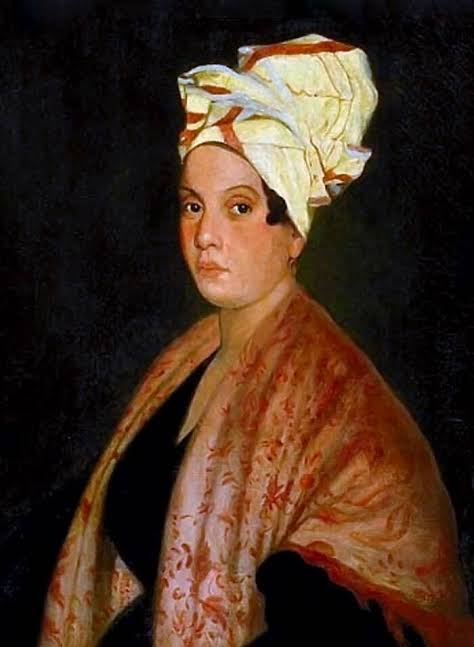
The voodoo that Marie I had practiced was, at its core, largely benevolent. She visited prisoners sentenced to death, cared for the sick during the yellow fever epidemic of 1878, and offered rituals to those who could not afford to pay. Her daughter’s reputation took a different shape.
By the time Marie-Philomène had stepped fully into her mother’s role, the folk religion she represented was under siege. The Daily Picayune reported in 1873 that just 300 dedicated adherents to Louisiana voodoo remained in New Orleans. Protestant settlers arriving from the east coast regarded voodoo as a threat to public safety and Christian morality. As the railroads spread across the country in the 1870s and 1880s, carrying the values of the American interior into every corner of the South, the cultural space that had allowed Louisiana voodoo to flourish closed rapidly.
Into that shrinking space, Marie II poured something theatrical and, to outside observers, alarming. She reportedly held ceremonies at Bayou St. John, at a voodoo house on Bourbon Street, and at the shores of Lake Pontchartrain that bore little resemblance to her mother’s more structured practice. The Saint John’s Eve gathering of June 24, 1872, was the most notorious: contemporaneous accounts described a boiling cauldron, unusual ingredients, quantities of alcohol, and rituals that the press declined to describe in full. Whether those accounts represent an accurate record of a voodoo ceremony or a sensationalized version designed to vilify the religion’s practitioners is, at this distance, impossible to determine with confidence.
The vilification itself was not new. Voodoo had long been framed by the city’s authorities and its press as immoral and threatening. The soul-stealing legend attached to the Laveau name was an early and potent example: a folk religion reduced, in popular imagination, to a tale of a woman drinking the life from children to stay young. Marie II did not invent that legend. She inherited it, understood its utility, and chose not to dispel it.
Marie Laveau I Died and Left Her Daughter in the Dark
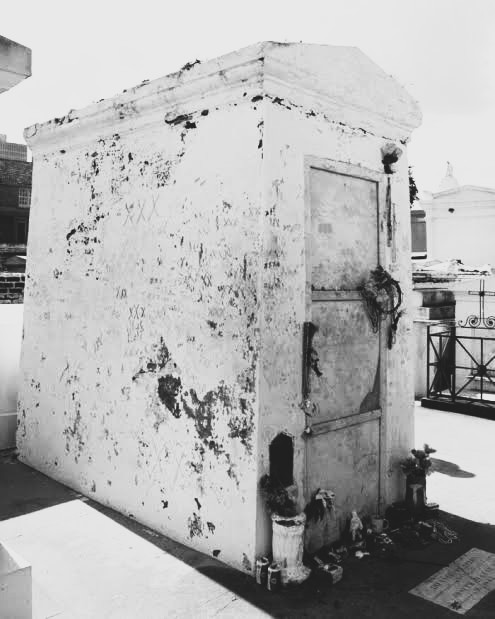
Marie Laveau I died peacefully at her home on June 15, 1881, at the age of 79. Her funeral was lavish and attended, according to reports, by representatives of every stratum of New Orleans society. Her crypt in Saint Louis Cemetery No. 1 would eventually become one of the city’s most visited sites, worn smooth by the hands of pilgrims who believed a wish drawn in X marks on its surface might still be answered.
Marie II continued after her mother’s death. But the record thins sharply in the 1880s. References to her become sparse. The momentum that had kept New Orleans voodoo alive, the density of believers, the institutional weight of its queen, the cultural insulation a French Creole city had once provided, dissipated. The churches replaced the ceremonies. By the end of the decade, Marie-Philomène Glapion had all but vanished from the public record.
No One Knows Where Marie Laveau II Is Buried
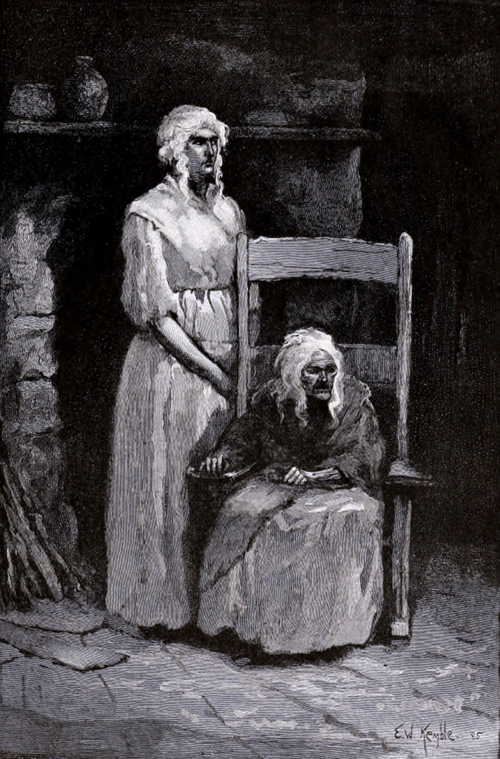
What happened to her after that is genuinely unresolved. Some sources record her death as occurring around 1862, a date that contradicts the documented accounts of her presiding over ceremonies well into the 1870s and 1880s. Other accounts hold that she drowned in a storm on Lake Pontchartrain sometime in the 1890s, when she would have been approaching 70. Neither version is supported by documentary evidence sufficient to settle the question.
What is certain is the absence. Unlike her mother, whose tomb has been marked and visited and vandalized and restored for over a century, Marie-Philomène Glapion left no confirmed grave. Whether she married, whether she had children, and precisely when her life ended are questions the record has never answered.
There were rumors, circulated decades later, that she had been seen alive in New Orleans as late as 1918.
Leave a Reply