
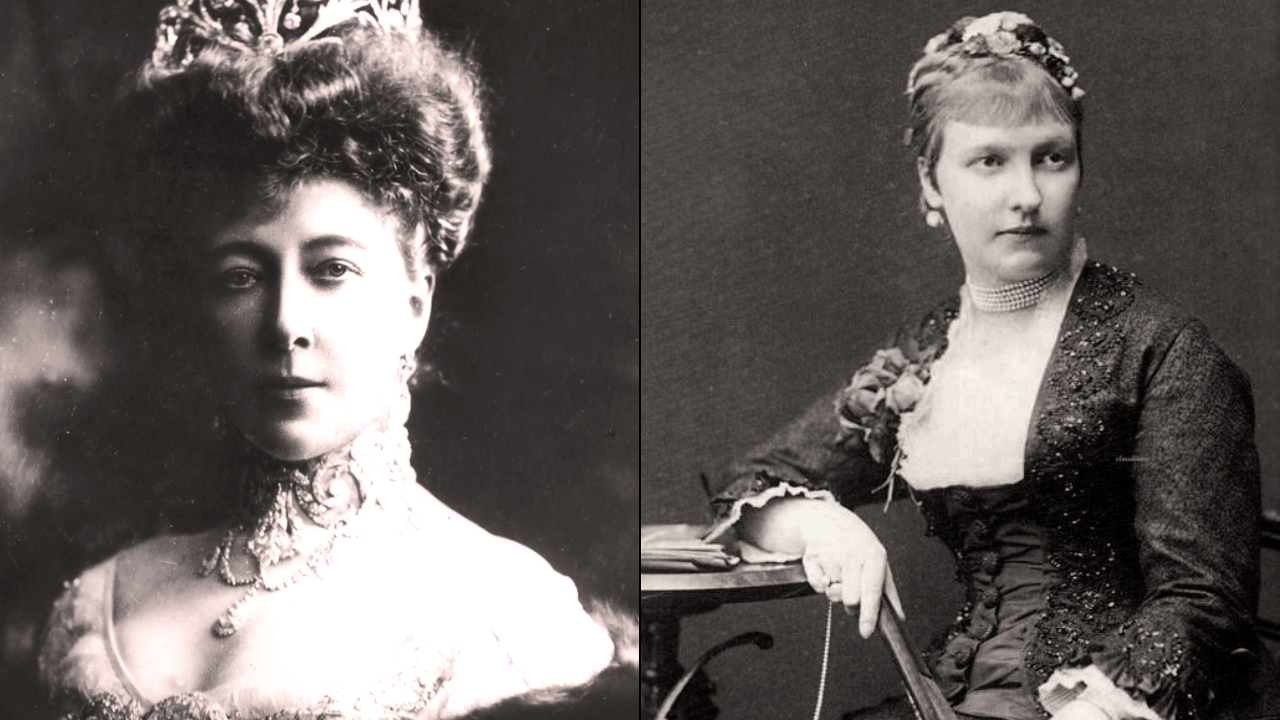
On the morning of January 30, 1889, Stéphanie of Belgium received the news during a singing lesson. A lady-in-waiting entered and whispered something that stopped the room. Stéphanie understood immediately. She said: “He is dead.” She was 24 years old, sterile, and stranded in a foreign court that had already begun the work of forgetting her.
The name that consumed her life and her body for eight years was Crown Prince Rudolf of Austria. He left her infertile at 22 and dead to the imperial world at 24. He was the single catastrophe that defined her, and in a letter discovered among the carnage at his hunting lodge at Mayerling, he had the nerve to express some affection.
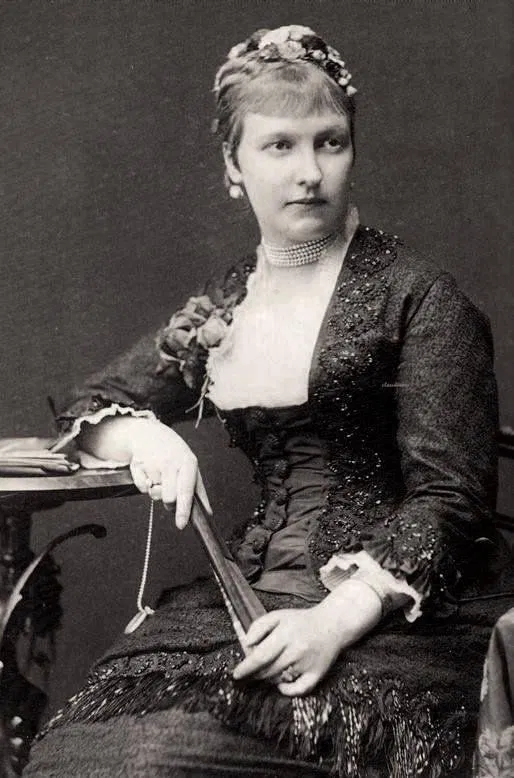
Born at the Palace of Laeken on May 21, 1864, Stéphanie Clotilde Louise Herminie Marie Charlotte was the third child of the Duke of Brabant, who would become King Leopold II of Belgium, and his wife, Marie Henriette of Austria. Her father’s name would become synonymous with colonial horror. Leopold II turned the Congo into a private kingdom, enslaving its people on rubber plantations and presiding over conditions that killed millions.
The wealth that furnished Stéphanie’s palace nursery was built on blood. She appears to have accepted this without public remark, which was the only posture available to a royal daughter in the 1870s.Her early years were shaped by disease and absence. In January 1869, her brother Leopold, the heir to the Belgian throne, died at nine years old after falling into a pond and contracting pneumonia.
The royal household fractured under the grief. Then in 1871, when Stéphanie was not yet seven, a typhus outbreak swept through Brussels and she contracted it, spending weeks unconscious, feverish, and on the edge of death before recovering. Her parents’ marriage, already cold, retreated into open estrangement.
Her mother, Marie Henriette, increasingly withdrew from Brussels; her father pursued his Congo ambitions, his mistresses, and his grand construction projects. Stéphanie and her younger sister Clémentine were largely raised by strict tutors, and from 1875 onward, Stéphanie frequently found herself the highest-ranking female royal at court, standing in for an absent mother.
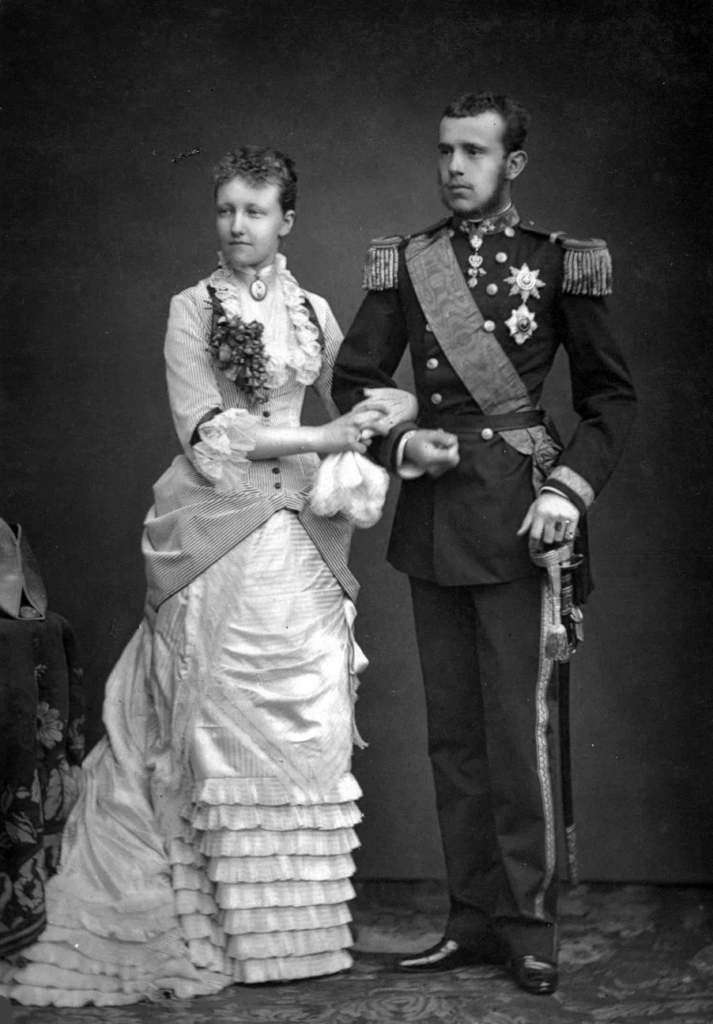
The match with Rudolf arrived in the winter of 1878 to 1879, when Empress Elisabeth of Austria passed through Brussels on her way to London. Leopold II and Marie Henriette presented their daughter to the Empress, making clear their interest in the match. Negotiations ran quietly through the following year. In March 1880, Crown Prince Rudolf came to Brussels and proposed to 15-year-old Stéphanie. He was 21. She had been told to accept, and she did.
The wedding took place on May 10, 1881, in Vienna, days before Stéphanie’s 17th birthday. Rudolf was the only son of Emperor Franz Joseph I and heir to the Austro-Hungarian Empire. Every court in Europe took note of the union. Stéphanie took note of Rudolf.
He was volatile, restless, and already committed to a way of life he had no intention of relinquishing. Their early months were reportedly cordial. Cracks appeared quickly. Rudolf drank heavily, kept multiple mistresses, and resented the constraints that marriage placed on nothing visible to anyone outside the palace. Stéphanie found herself watched, restricted, and stripped of genuine movement, a decorative presence in a court that had already
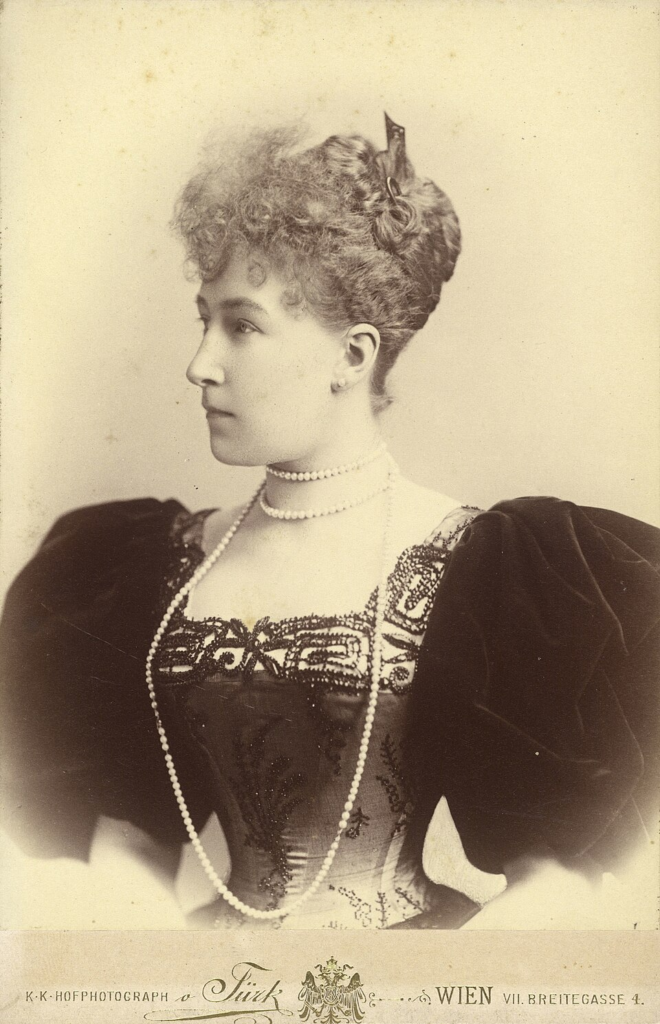
formed its judgment of her.
In September 1883, Stéphanie gave birth to a daughter: Archduchess Elisabeth Marie. Rudolf received the news with thinly veiled contempt. He wanted a male heir. She would be their only child, and the reason for that would take years to fully reveal itself.By the mid-1880s, Stéphanie was sterile. The cause was her husband.
Rudolf was not merely an alcoholic but a rampant philanderer whose behaviour crossed from reckless into predatory. He contracted sexually transmitted diseases, and the historical consensus is that he passed both syphilis and gonorrhoea to Stéphanie.Her treating physicians initially attributed her condition to peritonitis.
By the time the true source was established, it was too late. At 22 years old, the Crown Princess of Austria had been robbed of her ability to have children by the man the empire had assigned her.Rudolf had kept his own illnesses from her. She learned the truth after the damage was done. The marriage, already cold, became something colder than cold.
She refused to share a bed with him. He came home before dawn, drunk and unwashed, and stumbled toward whatever room would take him. The court knew. The imperial family knew. Nobody moved.Among Rudolf’s many affairs, one moved into a different category entirely. Baroness Mary Vetsera, born in 1871, became involved with the Crown Prince in late 1888 at the age of 17. He was 30.
The two began spending significant time together at Mayerling, an imperial hunting lodge in the Vienna Woods that Rudolf had purchased and converted into a private retreat. His behaviour in this period became increasingly erratic, likely worsened by the progressive effects of syphilis.On January 30, 1889, Stéphanie received word that her husband and Baroness Mary Vetsera had been found dead at Mayerling.
Rudolf had shot his mistress and then turned the weapon on himself.The imperial machinery moved immediately to contain the scandal: an aneurism was declared the official cause, and the body of Mary Vetsera was smuggled from the lodge under cover of darkness and secretly buried. In the letter Rudolf left for Stéphanie, he wrote: “You are free from my presence and plague; be happy in your way.”She was 24, widowed, infertile, and buried in a city that wanted her gone.
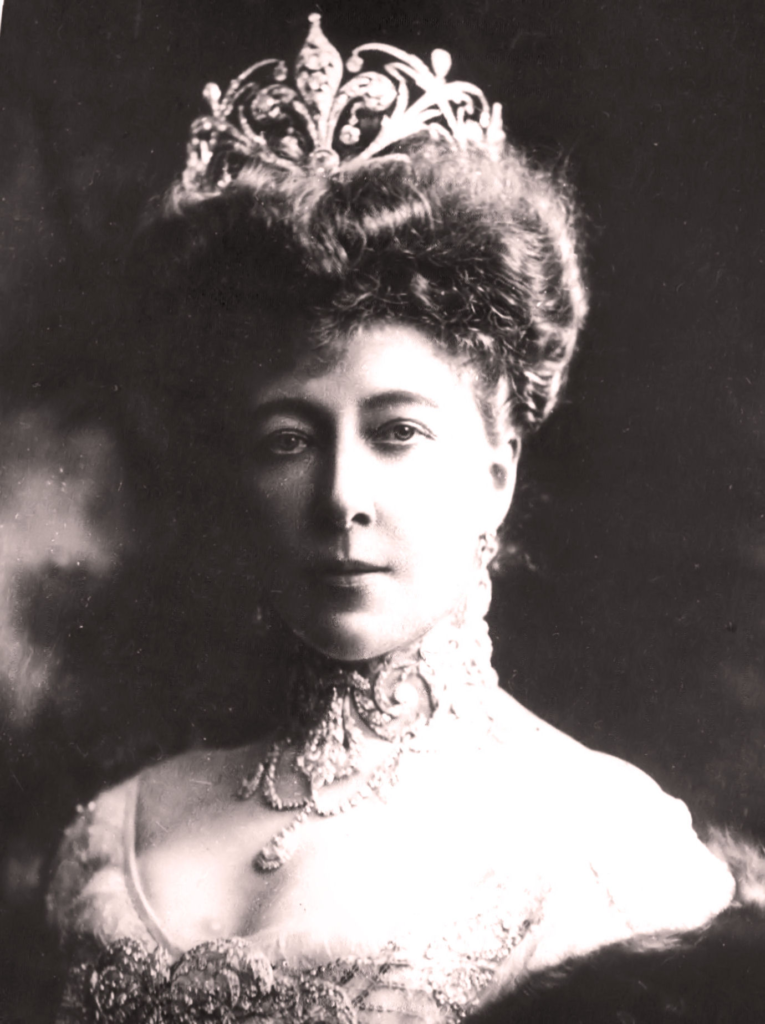
A Court That Closed Around Her
After Mayerling, Stéphanie requested permission to return to Belgium. Both Emperor Franz Joseph and her father Leopold refused it. Her daughter, Archduchess Elisabeth Marie, was a Hapsburg princess; the imperial court was not releasing the child, and they were not releasing Stéphanie while the child remained. She retained the title of Dowager Crown Princess and was left to manage the hostility of a court that viewed her as a living reminder of its most spectacular humiliation.
During this period, one person stood beside her: Count Artur Potocki, a Polish nobleman and Chamberlain at the Viennese court whom she had nicknamed “Hamlet.” He had been close to her before Mayerling, and he remained close after it. The relationship was one of genuine feeling, as documented in her sister’s letters, and it was her only source of stability in Vienna’s frozen atmosphere.
The count was not yet 40 when laryngeal cancer destroyed his voice. Surgery failed to save it. In March 1890, Potocki died. Stéphanie, who had been widowed just over a year before, went into mourning a second time.She travelled, extensively and almost continuously throughout the 1890s: Corfu, Malta, Tunisia, Sicily, the Nordic countries, North Africa, Russia. Movement was the only freedom she had been left.
Then she found something else.
By the late 1890s, Stéphanie had become close to Count Elemér Lónyay de Nagy-Lónya, a Hungarian aristocrat. This was not diplomatic alliance. It was a marriage of affection. Elemér converted to Roman Catholicism in an attempt to satisfy Leopold II, who flatly refused to recognise the match and who had no interest in watching a daughter of Belgium marry into the Hungarian gentry.
Stéphanie defied him. On March 22, 1900, she and Elemér were married at Miramare Castle near Trieste, surrendering her imperial titles in the process. She was 35 years old and she had chosen her own life for the first time.Leopold’s fury was not theatrical. When Marie Henriette died on September 19, 1902, he refused to allow Stéphanie to attend the funeral or stand beside her mother’s coffin.
He died in 1909 having all but formally severed his ties with his daughters. What he left behind caused a final confrontation.Leopold II had spent his last decade in the company of Caroline Lacroix, born Blanche Zélia Joséphine Delacroix, a Parisian courtesan he had taken as his mistress in 1899 when she was sixteen and he was in his sixty-fifth year. She bore him two sons.
On December 12, 1909, five days before his death, Leopold married her in a religious ceremony at the Palace of Laeken. No civil ceremony was held, rendering the marriage void under Belgian law. It was enough of an act to enrage his daughters and enough of a legal gap to frustrate them. Stéphanie, together with her sisters Louise and Clémentine, launched a legal battle over the inheritance that ran for years. Stéphanie eventually secured a settlement of five million francs.
A Life Found Too Late
Stéphanie and Elemér settled in 1906 at Rusovce Mansion, a neo-Gothic manor house on the banks of the Danube in what is now Bratislava, Slovakia. The house was serene. The marriage was genuinely happy. Elemér worked tirelessly alongside her, and in 1917 was elevated to the rank of Hungarian Prince.The world around them was not serene.
In the summer of 1914, Archduke Franz Ferdinand, the man Stéphanie’s father had once hoped she would marry, was shot dead in Sarajevo by the Bosnian Serb nationalist Gavrilo Princip, triggering the chain of events that pulled all Europe into war within weeks. Stéphanie, who had spent years inside the Habsburg court and understood its political machinery, became convinced that Emperor Franz Joseph had known more about the assassination than he ever admitted.
Germany invaded Belgium that August. Stéphanie sat in a house in Slovakia and watched her homeland occupied by the empire that had taken her youth.Franz Joseph died in November 1916. Stéphanie and Elemér attended both his funeral and the subsequent coronation of his successor. When Austria-Hungary collapsed in October 1918, most members of the imperial family went into exile. Stéphanie and Elemér were spared that particular fate, remaining at Rusovce and travelling freely in the years that followed.
Her relationship with her daughter had been deteriorating for years. Elisabeth Marie had become a committed socialist, known in Austria as the Red Archduchess. The political distance between them was vast. By 1925, according to the historical record, the two had effectively ceased contact. In 1944, Stéphanie disinherited Elisabeth Marie entirely. The estrangement never broke.
In 1935, Stéphanie published her memoirs in French, under the title “Je devais être impératrice.” Two years later, an English translation appeared under the title “I Was Going To Be Empress.” The memoir was notable for what it chose not to say. The book devoted its final section to Mayerling and then stopped. The half-century that followed received almost no attention. Either her publishers understood that the reading public wanted Rudolf, or Stéphanie had decided, finally, that the life she had built after him was entirely her own.
When the Red Army advanced into central Europe in the spring of 1945, Stéphanie and Elemér fled Rusovce Mansion and took refuge at the Pannonhalma Archabbey in Hungary. She died there on August 23, 1945, aged 81. Elemér survived her by less than a year, dying in 1946. He left Rusovce to the Benedictine Order, which had given them shelter in those final weeks. The two are buried side by side in the archabbey’s crypt.
Leave a Reply