
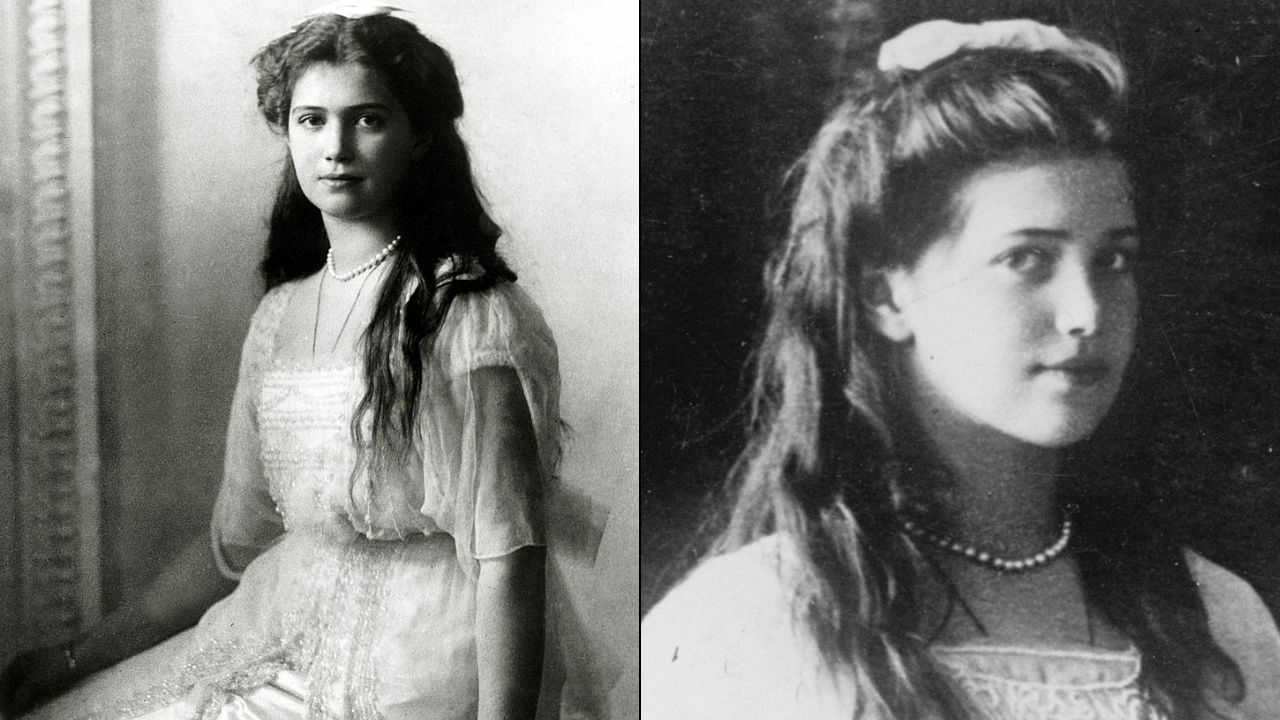
She died above a beauty salon in East Toronto, in a borrowed apartment, with Russian soil sprinkled over her coffin lid. She had been born in the Peterhof Palace to the most powerful dynasty in Europe. Between those two endpoints lay a train crash, a joyless marriage, a revolution, a murdered brother, a ghost who wore her dead niece’s face, two world wars, and four decades of exile across three continents. Grand Duchess Olga Alexandrovna outlasted all of it. When she died on the 24th of November 1960, the last living child of any Russian tsar was gone.
Born in the Purple
Olga Alexandrovna Romanova was born on the 13th of June 1882 at the Peterhof Palace, west of Saint Petersburg, the youngest of six children of Tsar Alexander III and his consort, Empress Marie Feodorovna, formerly Princess Dagmar of Denmark. Her birth was announced by a 101-gun salute from the Peter and Paul Fortress and echoed by salutes across the empire. She was, in the language of the court, born in the purple: delivered during her father’s reign, a child of power at its apex.
Her mother’s family connected the Romanovs to virtually every crowned house in Europe. Christian IX of Denmark, Olga’s maternal grandfather, had come to the Danish throne in 1863. Two of his children reshuffled the continent’s royal geography: his daughter Alexandra married the future King Edward VII of Britain, and his son Wilhelm was elected King of the Hellenes as George I. These connections would, decades later, determine whether Olga lived or died.
Inside the imperial palaces, however, comfort was deliberately rationed. For security reasons following the assassination of her grandfather Alexander II in 1881, the family was raised at the Palace of Gatchina, 30 miles south of the capital. The children slept on hard camp beds, rose at dawn, and washed in cold water. Their education covered history, geography, classical languages, and the European tongues the family moved among fluently.
Religion was central and unquestioned. Olga would later describe the life as spartan but loving, anchored entirely by her father, of whom she said simply: “My father was everything to me.”
A Train, a Crash, and What It Cost
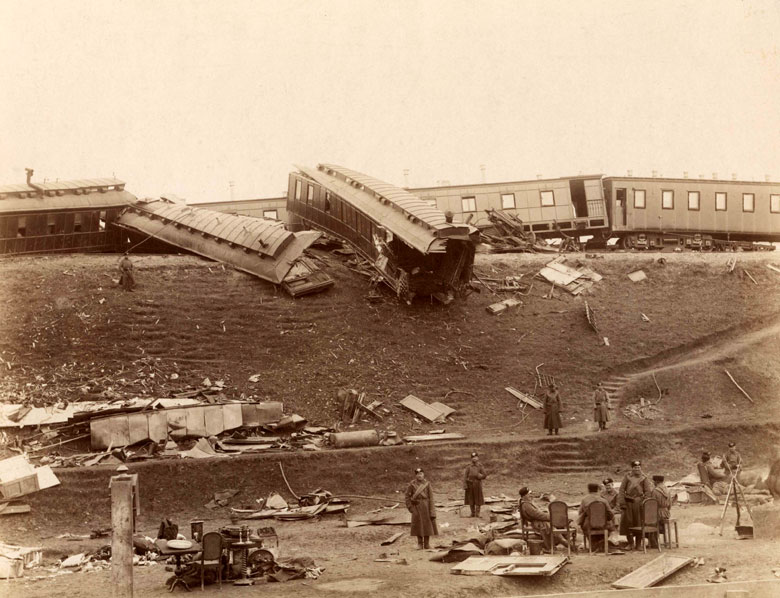
In October 1888, when Olga was six, the imperial family was returning from their summer residence in Crimea to Saint Petersburg. They were at lunch in the dining car when the train derailed at high speed near Borki station in the Kharkov Governorate. Twenty-one people died at the scene, two more later. The family survived.
Alexander III, according to the official account, held the collapsed roof of the dining car on his shoulders while his family escaped. The story became imperial propaganda almost immediately; its more verifiable truth is that the blunt trauma he suffered at Borki initiated the kidney failure that killed him six years later.Alexander III died in November 1894 at 49. Olga was 12.
Her brother Nicholas, 26, became tsar, and the younger generation of the family was pushed from the seclusion of Gatchina into the full glare of St. Petersburg court life. Olga hated it. She described her formal debut into Russian society as feeling caged and put on display.
The Wrong Marriage
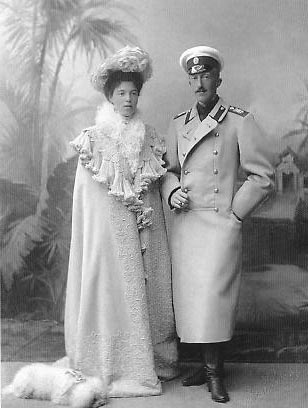
By the turn of the century, a husband had been identified. Duke Peter Alexandrovich of Oldenburg came from a dynasty related to the Romanovs on both maternal and paternal lines. He was 33, had shown no previous interest in women or matrimony, and was widely believed by those around him to be homosexual. They married in 1901, Olga at 19. The marriage was never consummated.
They occupied a 200-room palace in St. Petersburg in separate wings. He was not unkind. He funded her painting and gave her considerable freedom. But the arrangement was a slow ruin. By 1903, Olga had asked for a divorce. He refused. She fell into depression severe enough to cause significant hair loss, forcing her to wear a wig. For more than a decade she waited.
During these years, she drew closer to her brother Nicholas and his four daughters, serving as an unofficial aunt who escorted the girls to social events and painted in their company. She was especially devoted to the youngest, Anastasia, her goddaughter, whom she called Shvipsik, “little one.” The warmth she poured into that relationship would make the fraud that followed it all the more wrenching.
The officer Nikolai Kulikovsky had entered her life quietly, attached to the regiment commanded by her then-husband. For years, Tsar Nicholas II refused to sanction his sister’s desire to remarry below her station. Olga went ahead anyway and presented the tsar with the fact of the relationship. He relented in October 1916.
The marriage to Kulikovsky followed in November. The only guests were the Dowager Empress and a handful of officers. Their first son, Tikhon, arrived in 1917; their second, Guri, in April 1919, born in a rented five-room farmhouse in a Cossack village as a revolution consumed the world his mother had grown up in.
The Fall
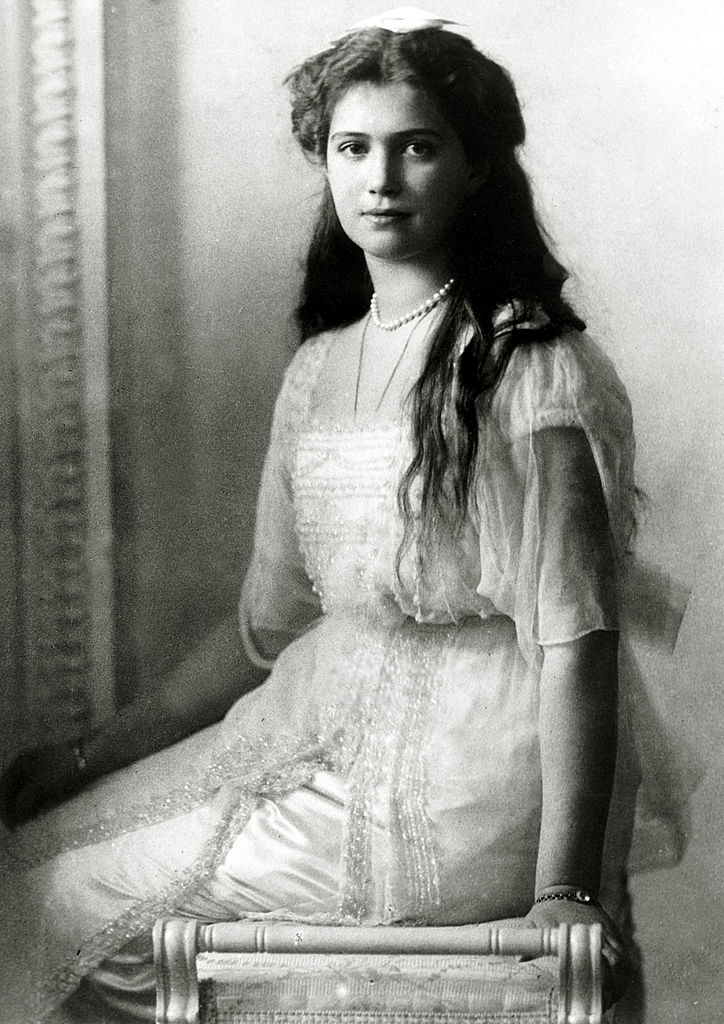
Nicholas II abdicated in March 1917. The October Revolution handed power to the Bolsheviks. By the early hours of July 17, 1918, the tsar and his entire immediate family had been executed in a basement in Yekaterinburg. Olga was in the Crimea with her husband, infant son, and mother, placed under house arrest, her fate balanced against the fortunes of a civil war she could not influence.
She was not on HMS Marlborough. When the British warship arrived in Yalta in April 1919, sent by King George V to evacuate his aunt the Dowager Empress, Olga and Nikolai refused to leave Russia. They stayed in the Kuban region, hiding in a bodyguard’s hometown, moving between villages while White Army positions collapsed around them. Guri was born during this period, malnourished and sickly enough that his parents feared he would not survive his first weeks.
In November 1919, they made their last attempt. Travelling through Rostov-on-Don to Novorossiysk, they found refuge in the residence of the Danish consul, Thomas Schytte, who informed them that the Dowager Empress was safely in Denmark.
From Novorossiysk they were shipped to a refugee camp on the island of Büyükada in the Dardanelles, where Olga, Nikolai and their two sons shared three rooms with eleven other adults. After two weeks, they were evacuated to Belgrade. They arrived in Copenhagen on the 2nd of April 1920, reuniting with Olga’s mother at the Amalienborg Palace. Easter that year fell on April 4.
Knudsminde
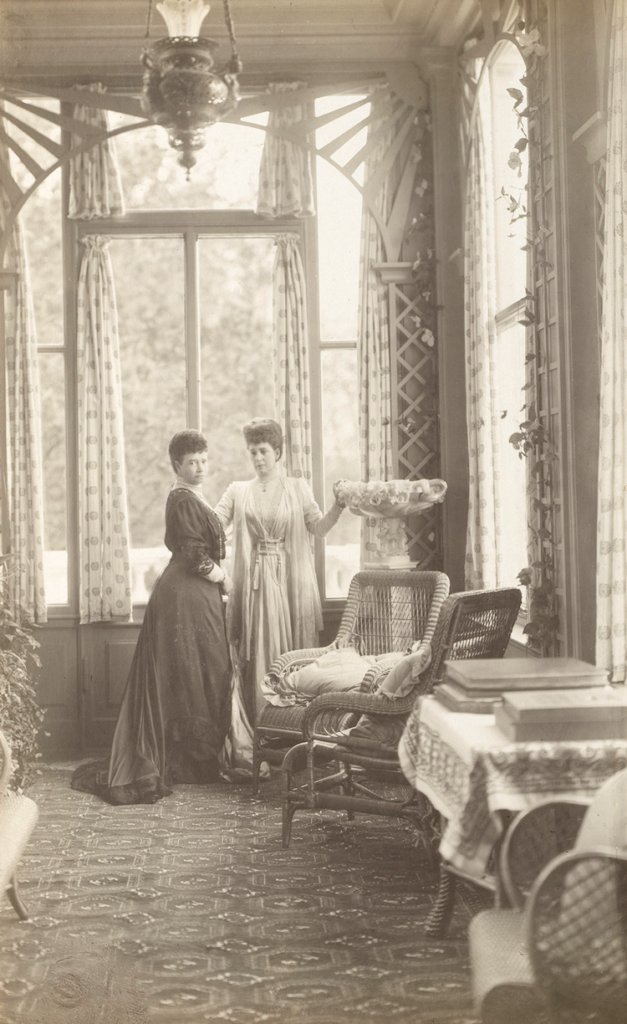
Her mother, the Dowager Empress, had settled at Hvidøre, the villa she had purchased in 1906 with her sister Queen Alexandra on the coast north of Copenhagen. Olga and her family joined her there.
The years that followed were shaped by her mother’s formidable personality, her husband’s resentment of his position as a consort in her shadow, and the vast loose network of Russian exiles who treated the household as a lifeline.When the Dowager Empress died at Hvidøre on October 13, 1928, her estate was sold. With her share of the proceeds, Olga purchased Knudsminde, a farm in Ballerup, fifteen miles outside Copenhagen.
The sister of the last tsar grew cabbages, kept Jersey cows, chickens, and geese, and painted. She produced more than 2,000 works over her lifetime: landscapes, flowers, portraits, still lifes. The paintings sold. The farm paid. The frugality held.
The Ghost in Berlin
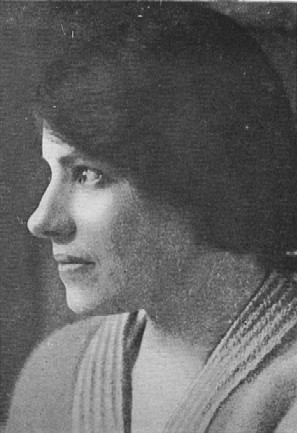
In the middle years of the 1920s, a woman in Berlin was making a claim that would outlast almost everyone it touched. Franziska Schanzkowska, a Polish factory worker who had survived a suicide attempt in the Spree River in 1920, had begun calling herself Anna Anderson and asserting that she was Grand Duchess Anastasia Nikolaevna, youngest daughter of the murdered tsar.
The Romanov impostors had multiplied in the years since the family’s death, made possible by the Soviet refusal to release information about where the remains lay. Olga had heard the claims before they reached her. In 1925, she travelled to Berlin to meet Anderson in person at the Mommsen Nursing Home, where the woman was being treated for tuberculosis. She came accompanied by the former imperial tutor Pierre Gilliard and his wife.
What she found did not persuade her. Anderson spoke only German. Anastasia had spoken German rarely if at all; her languages were Russian and English. Anderson appeared unable to speak either. The physical resemblance, across the admitted distance of years, struck Olga as irreconcilable.
She did not call Anderson a deliberate fraud. She believed she was ill and had constructed a delusion she genuinely inhabited. DNA testing in the 1990s confirmed what Olga had concluded in a nursing home in Berlin seven decades earlier: the woman was Franziska Schanzkowska, and Anastasia had died in Yekaterinburg in 1918.
Canada
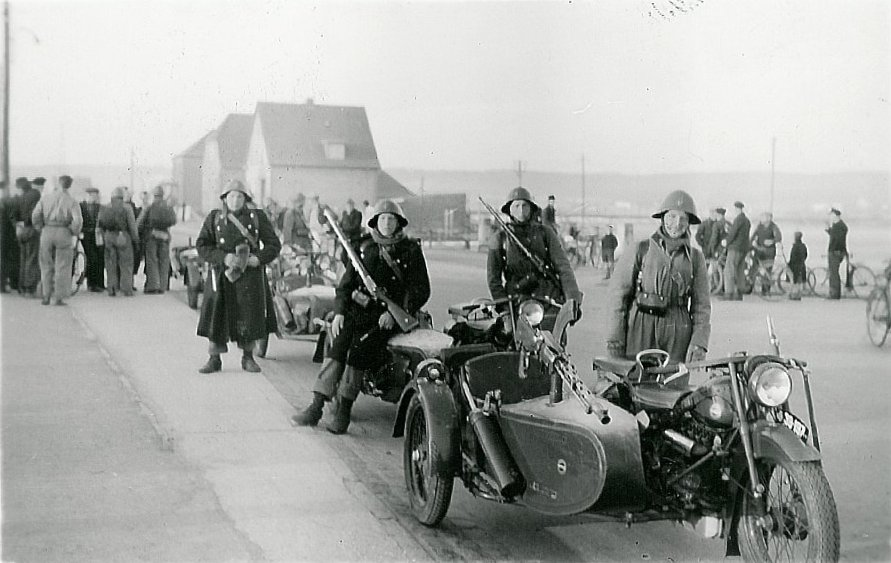
The Second World War reached Denmark in April 1940. Tikhon and Guri, both serving in the Danish army by then, spent a period as prisoners of war. When the Soviets occupied the Danish island of Bornholm in May 1945 and showed no immediate appetite for withdrawing, Olga began to recalculate. Stalin’s government had already written to the Danish authorities accusing her of conspiring against the Soviet state. The accusation was fantasy, but the machinery behind it was not.
In May 1948, the family travelled to London by Danish troopship and were housed in a grace-and-favour apartment at Hampton Court Palace while arrangements were completed for their passage west. King George VI was on the throne. On the 2nd of June 1948, Olga, Nikolai, their sons, daughters-in-law, and two grandchildren sailed from Liverpool aboard the Empress of Canada.
They settled first in Toronto, then purchased a 200-acre farm in Campbellville, Halton County, Ontario. It proved too much. Their sons had built their own lives in the city. Farm labour was scarce in the postwar economy. Nikolai’s health declined steadily. By 1952, Olga was 70, and they sold the farm and returned to Toronto, moving eventually to a bungalow near Cooksville.
In June 1959, Queen Elizabeth II invited Olga and her son Tikhon to a luncheon aboard the royal yacht Britannia during a Canadian tour. For the last time, the two ends of Olga’s life sat in the same room.
Nikolai died in August 1958. Two years later, as her own health collapsed, Olga moved into an apartment above a beauty salon at 716 Gerrard Street East, Toronto, staying with émigré friends whose connection to her was the regiment she had once commanded in another life. She fell into a coma on November 21, 1960, and died three days later, on the 24th, at 78.
Her funeral on November 30 drew crowds. Her coffin was draped in the Imperial Russian flag and sprinkled with Russian earth. She was buried beside Nikolai at York Cemetery, Toronto. Her estate, built from decades of painting and a notoriously spare way of life, was valued at more than $200,000 Canadian, roughly two million dollars in today’s terms.
Her sister Xenia had died in England seven months earlier. With Olga gone, the last child of any Russian tsar had passed. The cord connecting the modern world to the Romanov empire was cut, not in Yekaterinburg in 1918, but in East Toronto in 1960, quietly, after a coma, in a borrowed room above a salon.
Or discover more stories from history’s royal courts.
Leave a Reply